Your first excavator project in Brownwood, TX comes with a risk the rental brochure won't mention: Brown County ground rarely digs the same way twice. Sandy creek bottoms give way to caliche ridges within a few hundred feet, and the wrong machine size, or a skipped utility call, can turn a simple pad job into an expensive redo. Here's what actually drives machine choice, timeline, and cost before you break ground.
What Counts as a "First Excavator" Project in Brown County
Most first-time dirt-work jobs around Brownwood fall into a short list of categories. Knowing which one you're in shapes everything else: machine size, crew size, and how long the job realistically takes.
- Cut-and-fill for a building pad or house site
- Pond or stock-tank excavation
- Ranch road cutting and resurfacing
- Dozer-assisted site grading ahead of construction
- Drainage trenching around an existing structure
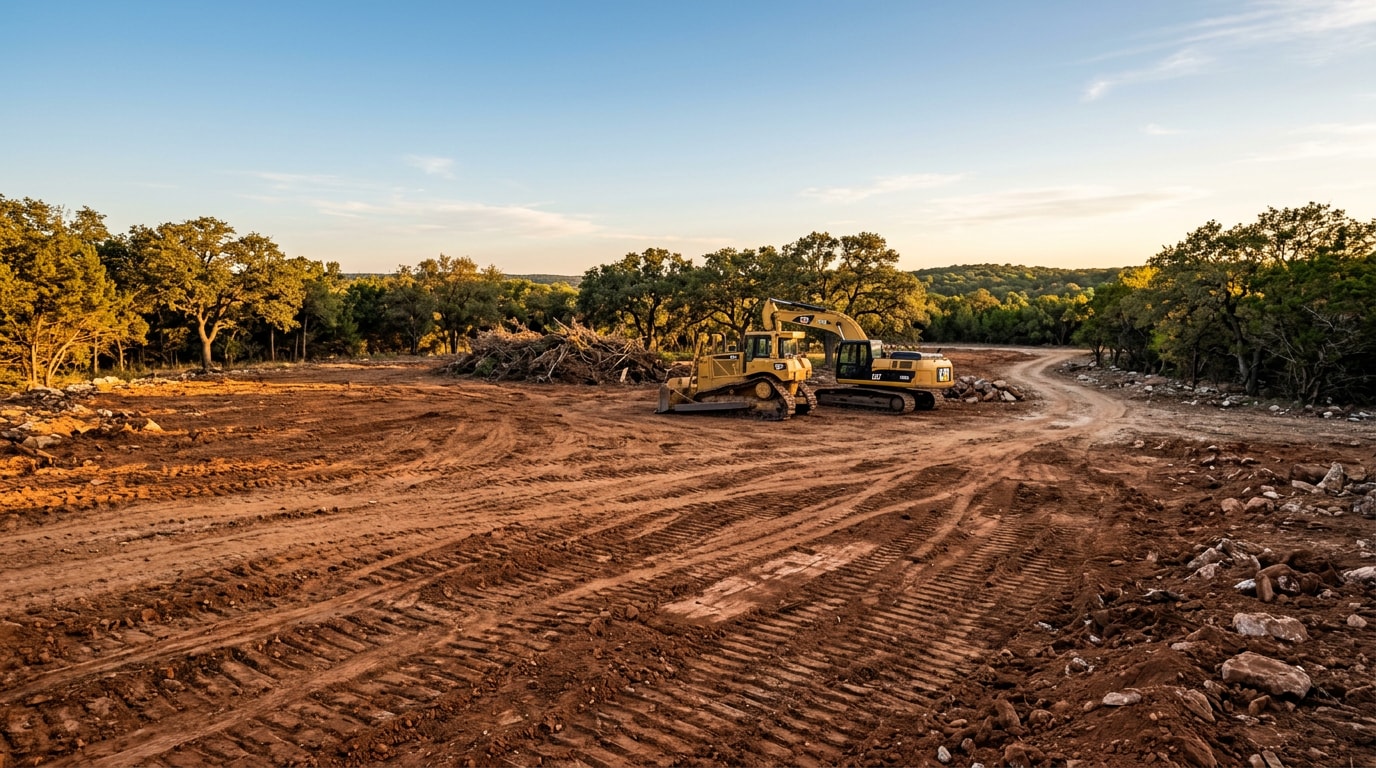
A locally based crew like Henderson Land Services handles these as one coordinated scope rather than separate rentals, with the excavator digging and hauling while a dozer shapes material to final grade. If you want to see which communities and ranch roads a Brown County crew has already worked, check the Brownwood, TX service area page.
Choosing the Right Excavator Size for Brown County Ground
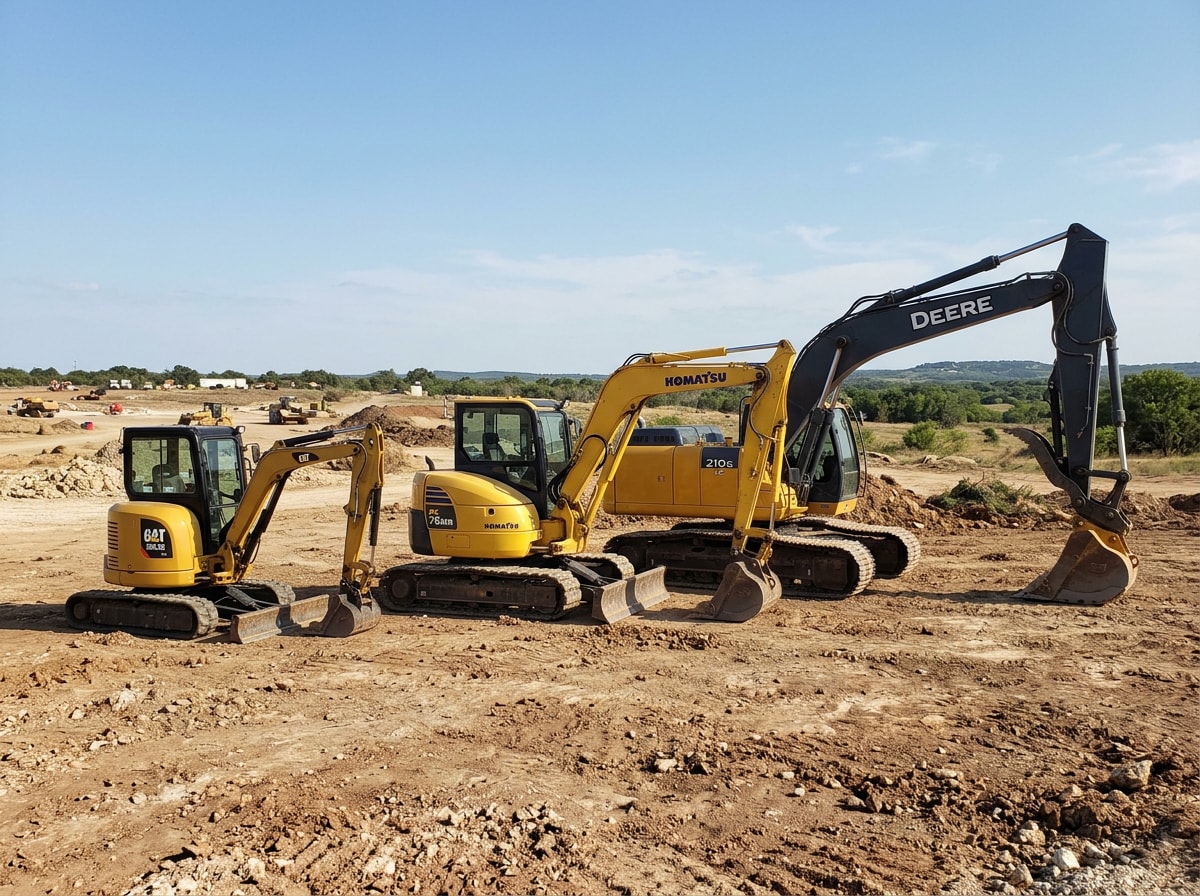
Excavators for Brownwood work generally fall into three size classes. The right one depends on access, depth, and what's actually in the ground, not just the acreage on paper.
| Class | Typical Weight | Max Dig Depth | Best For | Brown County Note |
|---|---|---|---|---|
| Mini | Under 10,000 lbs | 8–10 ft | Tight lots, gated access, small drainage | Easily fits through fence lines and gates |
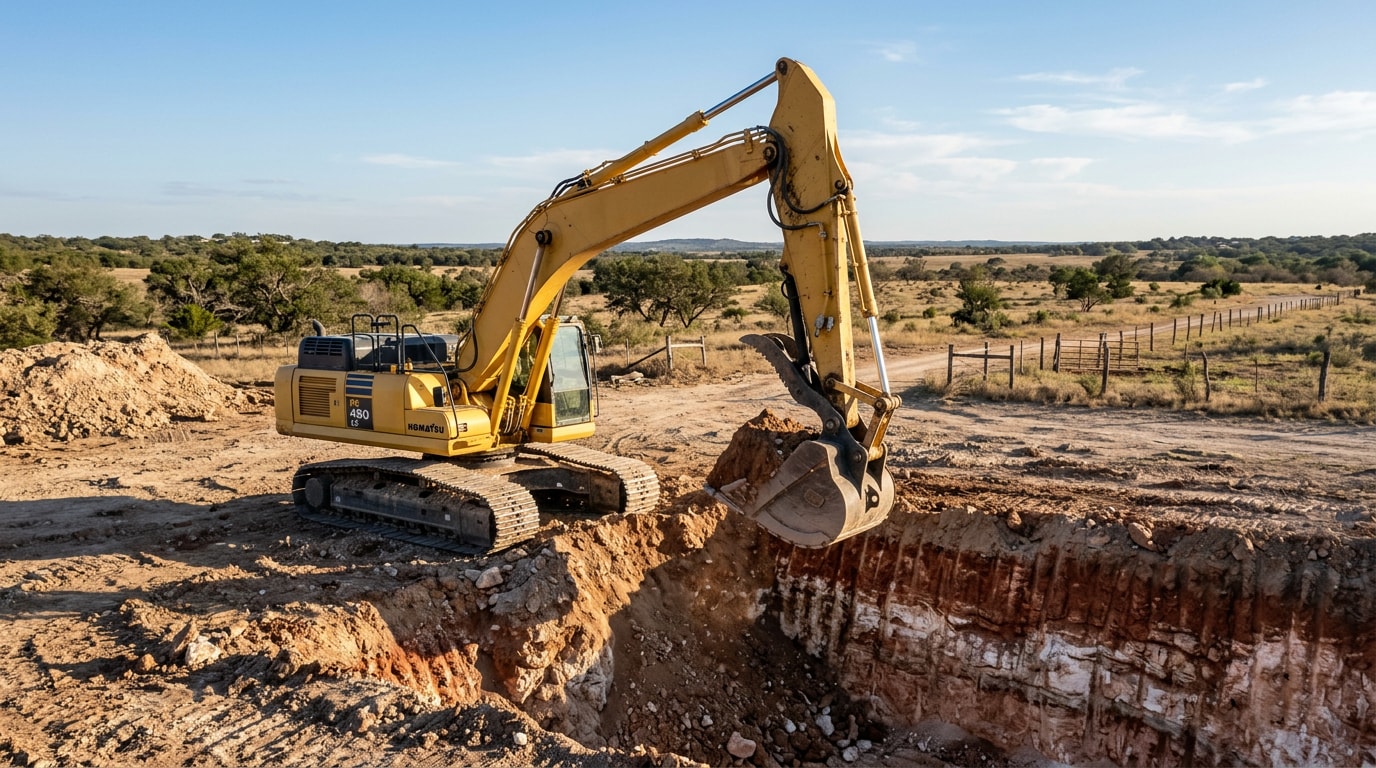
| Mid-size | 10,000–40,000 lbs | 14–18 ft | Pads, ponds, stock tanks | Handles most routine Brown County jobs |
| Full-size | Over 40,000 lbs | 20+ ft | Large-acreage clearing, deep utility trenching | Needed where caliche runs deep |
Caterpillar's current mini excavator lineup ranges from roughly 13 to 56 horsepower across its 1-to-10-ton models, with dig depths spanning about 5.5 feet to more than 13 feet , which is a useful baseline for sizing a job before a crew ever walks the property. That said, ridge rock and caliche common across Brown County add resistance that slows production and can shorten effective dig depth. A contractor sizing a machine purely off a spec sheet, without accounting for local rock, can under-power a job before it starts.
Land clearing and pad prep often happen back-to-back on the same property. See how that scope is handled on the Land Clearing and Site Preparation pages.
Permits, Utility Locates, and Compliance in Brownwood
Digging in Brownwood isn't just about horsepower. It's also about paperwork that protects you and your neighbors.
Texas law requires excavators to contact 811 at least two business days before excavating, excluding weekends and holidays , and that rule applies to homeowners working in their own yard, not just contractors. Making the call is free, and skipping it risks hitting a gas line, water main, or buried cable, a liability no property owner wants attached to a project.
Federal safety rules apply on top of the utility call. The OSHA standard for excavations describes the precautions needed for safe excavation work and requires that excavations five feet deep or greater use a protective system such as sloping, benching, shoring, or shielding . Established crews build the 811 request, permitting, and OSHA's excavation and trenching requirements into the project timeline instead of treating them as an afterthought.
If a dig ever exposes or damages a sewer line unexpectedly, that's a different kind of emergency. Our guide to a plumbing emergency in Brownwood, TX covers what to do next while the excavation crew handles the line itself.
What Excavation Costs in Brownwood, TX
Dirt-work pricing in Brownwood rarely comes down to a flat per-acre number. Quotes are typically scoped around machine days and site conditions, which is why two similarly sized properties can carry very different price tags.
A handful of variables move a quote more than anything else:
- Rock and caliche – slows digging and wears equipment faster, adding machine hours to a job that looked simple on paper
- Haul logistics – if spoil has to leave the site instead of getting reused as fill, trucking adds real cost
- Mobilization distance – getting heavy equipment to a remote ranch property takes time and fuel before the first bucket moves
- Access and gate width – tight entry points may require a smaller (and sometimes slower) machine class
The clearest way to pin down a number for your first excavator project is a site-specific look, not a phone estimate. Request a scoped quote based on your actual property instead of a generic per-acre guess.
How a Brownwood Excavation Project Runs
Most projects follow the same predictable sequence from first call to finished grade.
- Site walk-through – the crew checks soil, access, slopes, fence lines, and anything else that affects the plan
- Written estimate – scoped to the actual job, not a guess based on acreage alone
- Scheduling and mobilization – equipment moves to the site, which can take a few days to a couple of weeks depending on workload and distance
- Excavation and grading – the digging itself usually moves faster than the planning stages, especially on jobs under a few acres
- Final walkthrough – confirming drainage, grade, and any cleanup before the crew leaves
A realistic timeline accounts for weather delays, which in Brown County usually means rain softening the ground rather than heat slowing crews down. Jobs that also need house pad preparation or drainage solutions are typically folded into this same sequence rather than scheduled as separate visits.
DIY Rental vs. a Professional Excavation Crew
Renting a machine and handling it yourself looks tempting until the first unexpected rock ledge or drainage problem shows up. Professional crews bring quality control that comes from doing the same type of job repeatedly: knowing how deep to cut, how to keep slopes stable, and how to avoid over-digging.
Safety is the other half of the case. One square yard of dirt can weigh more than 3,000 pounds, about the same as a compact car, which is enough to fatally crush and suffocate workers in an unprotected trench. That's exactly why trained operators treat shoring, sloping, and bench checks as routine steps rather than something to skip to save time. The full category of services, from grading to trenching, is outlined on the Excavation Contractor page.
Proof From the Field: The Chisme Solar Project
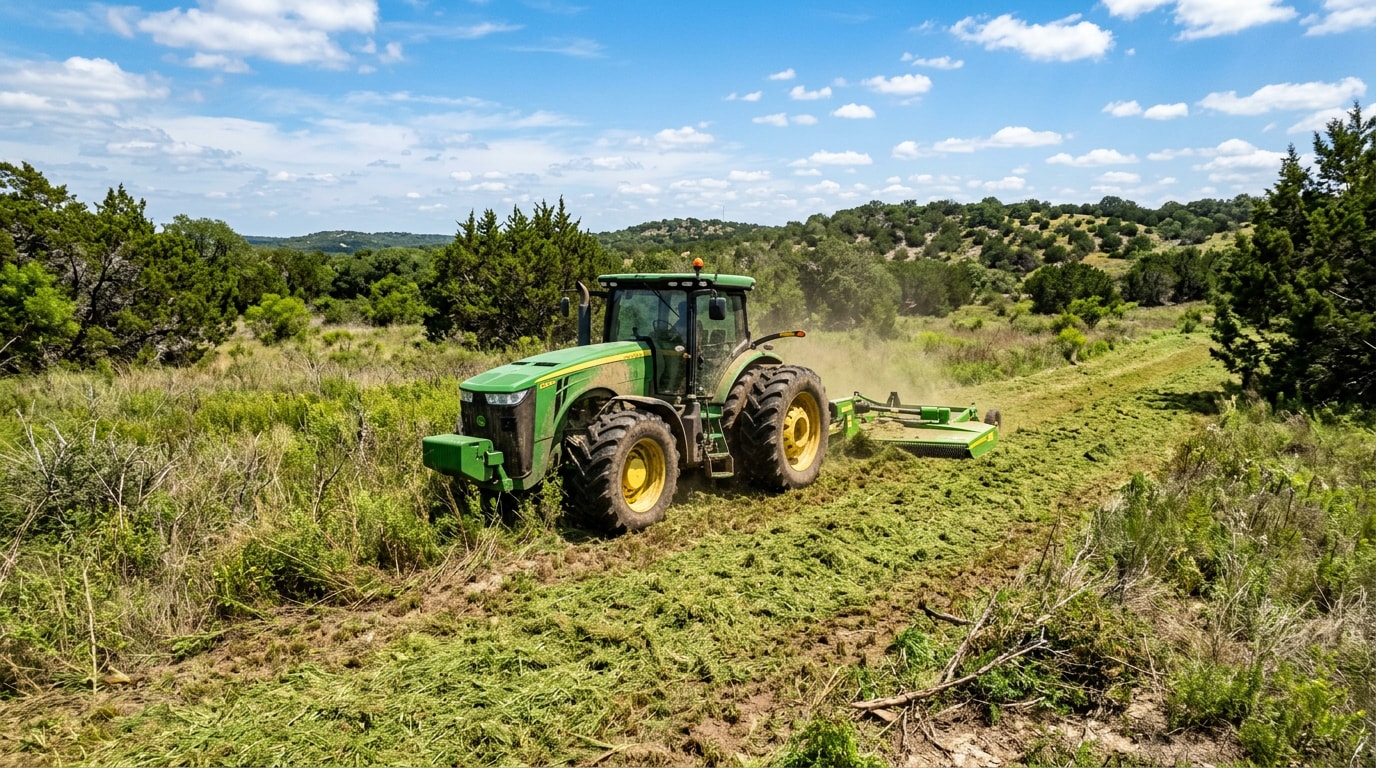
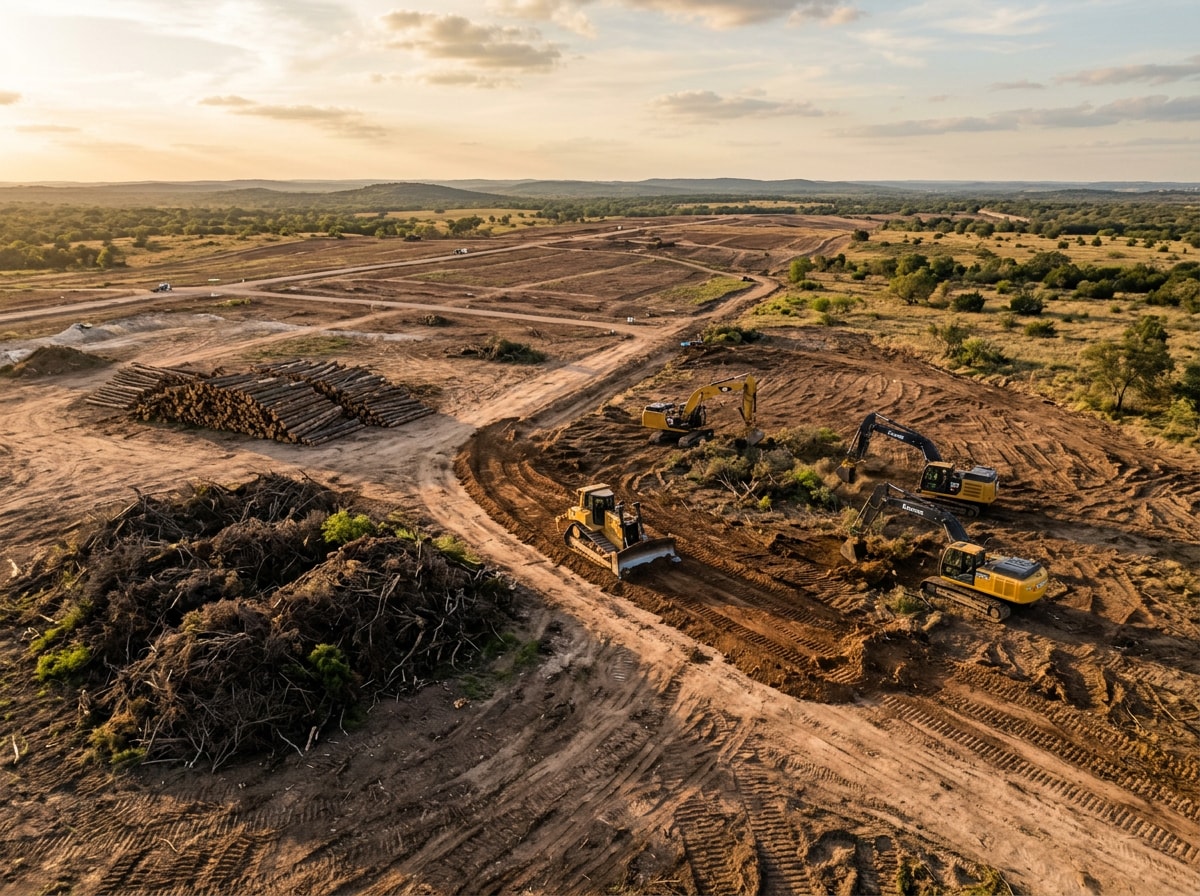
Claims about experience mean more with proof attached. One of the clearest examples of Brown County project scale is the Chisme Solar clearing project just outside Brownwood, an 800-acre job that's documented with photos showing the scope of work involved.
Clearing and preparing that much ground required the same core equipment and crew lineup now available for smaller, routine excavation jobs around Brownwood. We ran the excavator and dozer combination across both the sandy flats and the caliche ridge sections of that tract in the same digging season, which is the kind of mixed-condition experience that's hard to simulate on a smaller job. A crew that handled 800 acres without a stalled schedule has almost certainly seen whatever conditions a residential or ranch-sized job presents. You can see more completed work like this on the Projects page.
Ready to scope your own project? Get a free estimate and we'll walk the property before giving you a number.
FAQ
Do I need to call 811 before digging on my own property in Brownwood?
Yes. Texas law requires anyone digging 16 inches or deeper with mechanical equipment to contact 811 at least two business days ahead, even on your own land. The locate service is free and protects you from hitting gas, water, or electric lines.
What size excavator do I need for my project?
Mini excavators (under 10,000 lbs) handle tight lots and small drainage work. Mid-size machines (10,000–40,000 lbs) cover most pad, pond, and stock-tank jobs. Full-size excavators (40,000+ lbs) are for large-acreage clearing or deep utility trenching, especially where caliche runs deep.
Do you handle small Brownwood jobs or only big ones?
Yes. Clearing, grubbing, excavation, grading, and pad work are typically handled under one plan and invoice, whether the job covers two acres or two hundred. Small and residential jobs get the same attention as larger ones.
What is the difference between excavation and grading?
Excavation is the bulk dirt-moving stage: cutting, digging, and hauling material. Site grading is the finishing stage, shaping slopes and drainage once dirt is in place. Most projects need both steps to end up build-ready.
How much does excavation cost in Brownwood, TX?
Cost typically runs on an hourly or day-rate basis rather than a flat number, shifting based on soil, access, and scope. An accurate rate requires a site-specific quote rather than a phone estimate.
Can you take a site from raw brush to build-ready?
Yes. Clearing raw land through final grading can be handled as one coordinated scope with a single crew, taking a property from raw brush to build-ready without juggling multiple contractors. Request a quote to get started.