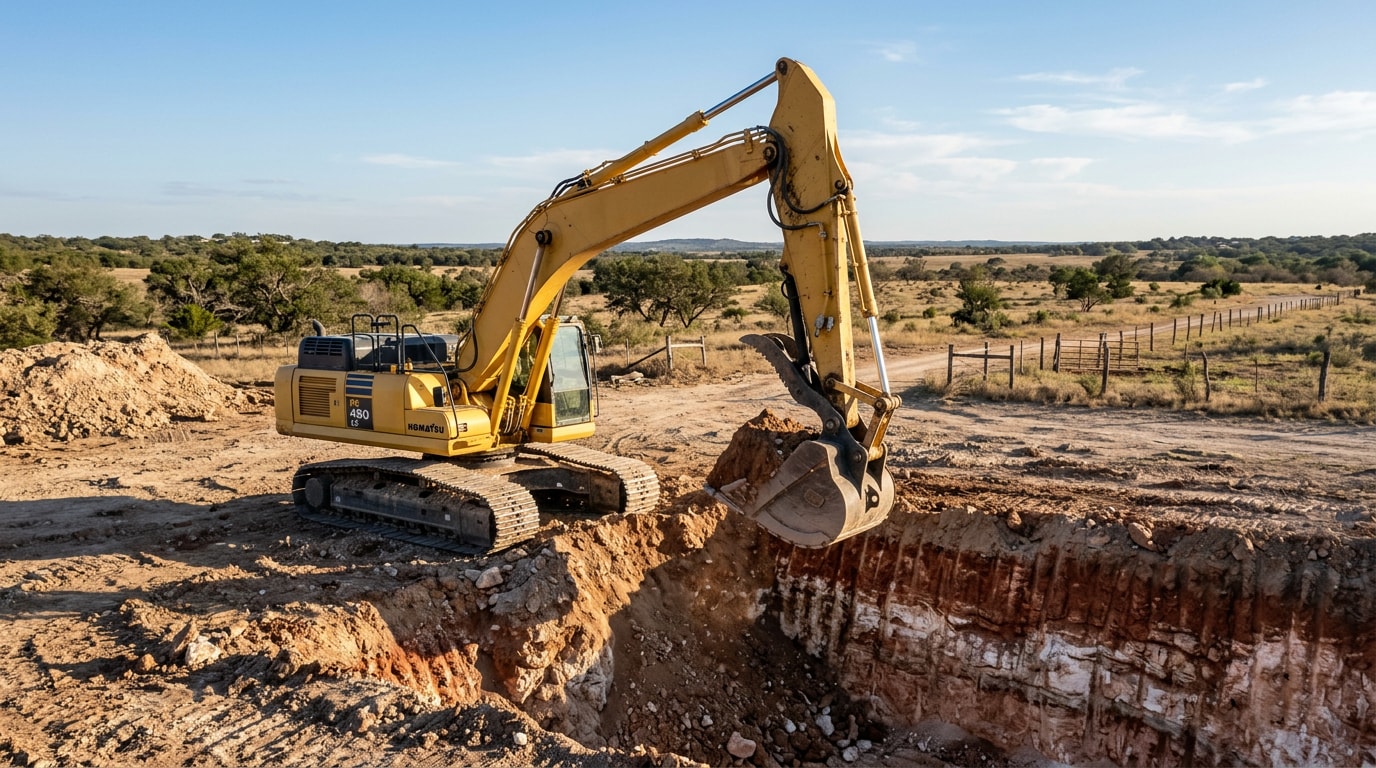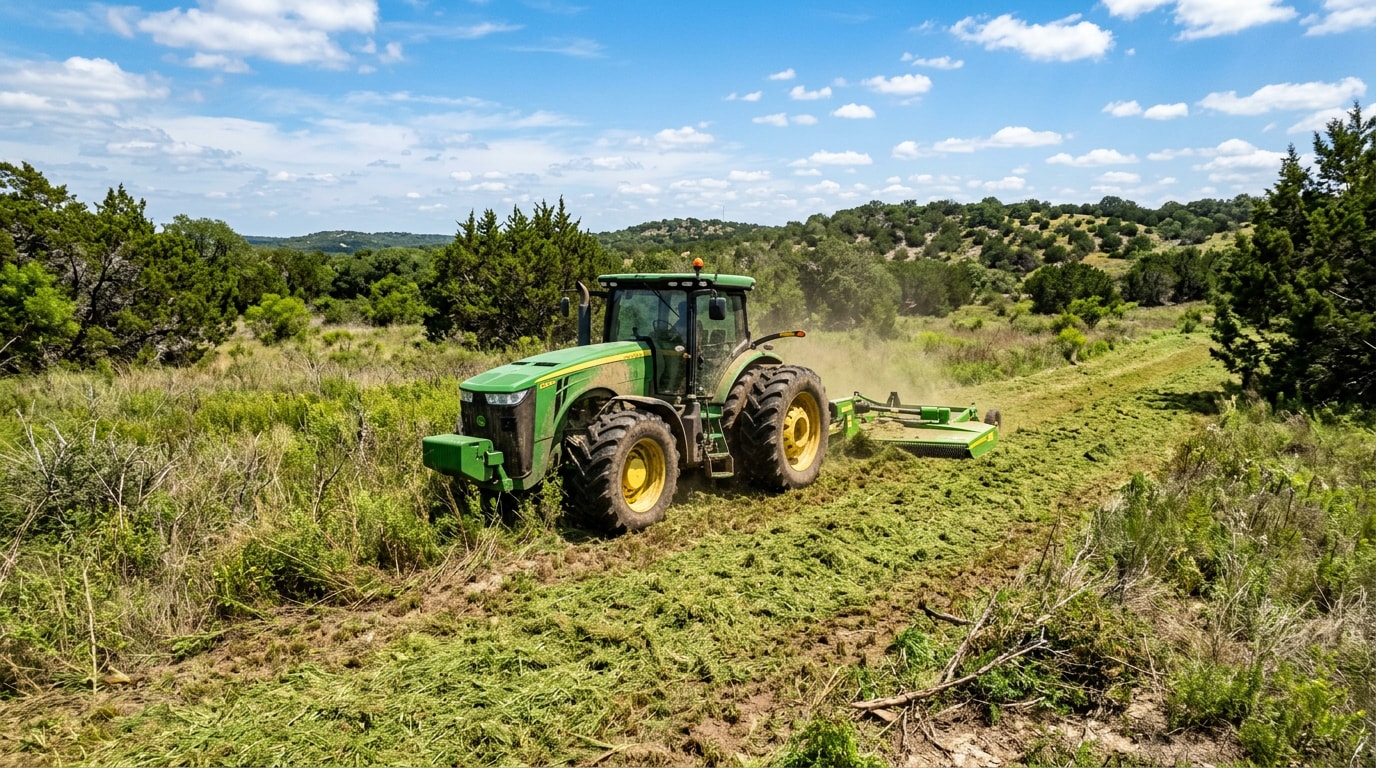
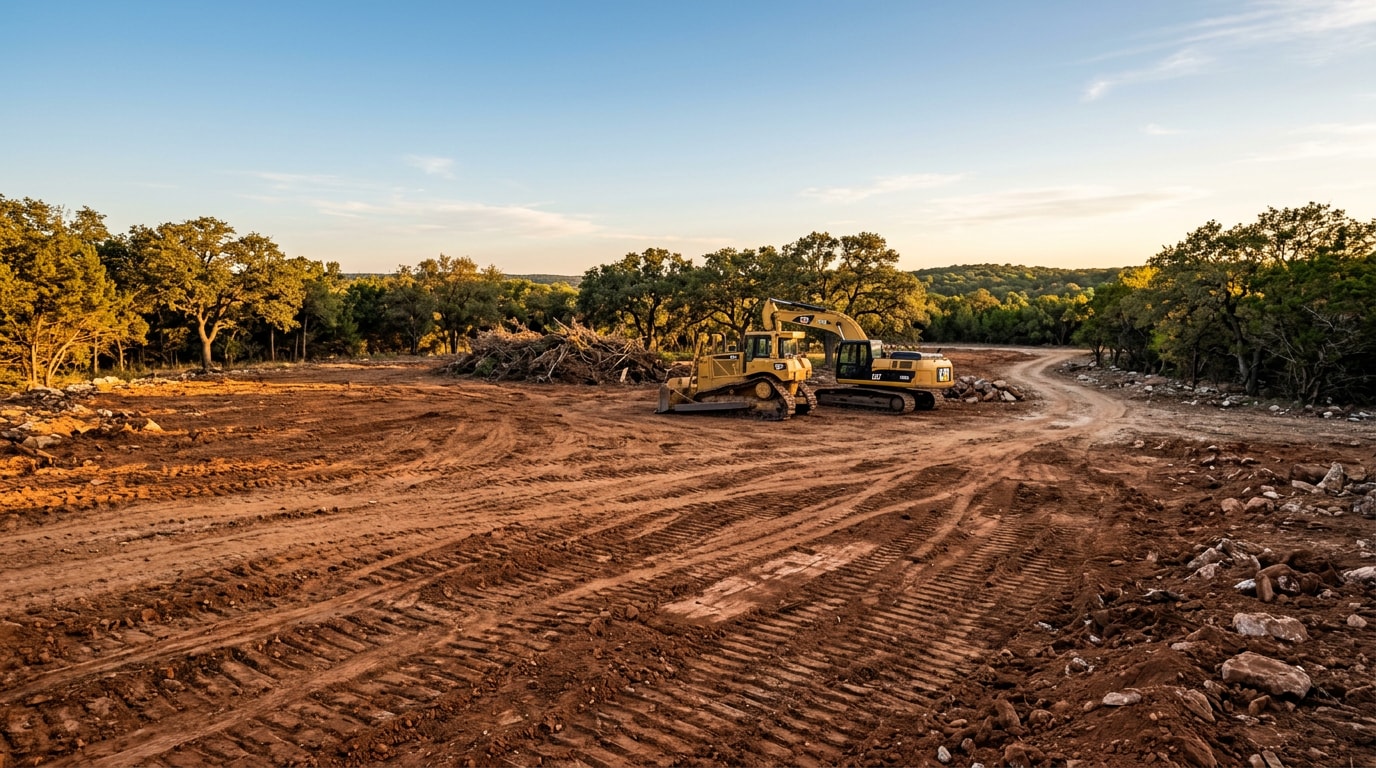
Land clearing and excavation in De Leon, TX turns rocky pasture, cedar thickets, and uneven ground into property you can actually build on, graze, or drive across. Most jobs here need both services together, not one or the other, because Comanche County land rarely comes ready-made for a house pad, pond, or driveway. This guide breaks down what each service actually involves, what it costs, and when to call a crew before your project stalls.
Land Clearing vs. Excavation: What's the Difference
These two jobs get lumped together, but they solve different problems.
Land clearing removes what's growing on top of the ground: brush, cedar, mesquite, stumps, and overgrowth that make a property unusable.
Excavation reshapes what's underneath: cutting, filling, and grading soil so a site drains correctly and sits level.
A pasture choked with cedar needs clearing first. A building pad on sloped ground needs excavation after the clearing is done. Most De Leon properties need both in sequence, which is why they're usually quoted as one project instead of two separate bids.
Services Available in De Leon, TX
Rather than one long list, it helps to think in categories.
- Brush and tree clearing for mesquite, cedar, and underbrush on pastures and building sites
- Grading and cut-fill work to level uneven ground and correct poor slope
- Drainage work that redirects runoff before it damages a foundation or washes out a driveway
- Pond construction and driveway installation, two of the most-requested projects on rural Comanche County tracts
- House pad preparation for new construction, barndominiums, and outbuildings
See our excavation contractor services for the full breakdown, including land clearing, site preparation, house pad preparation, and drainage solutions.
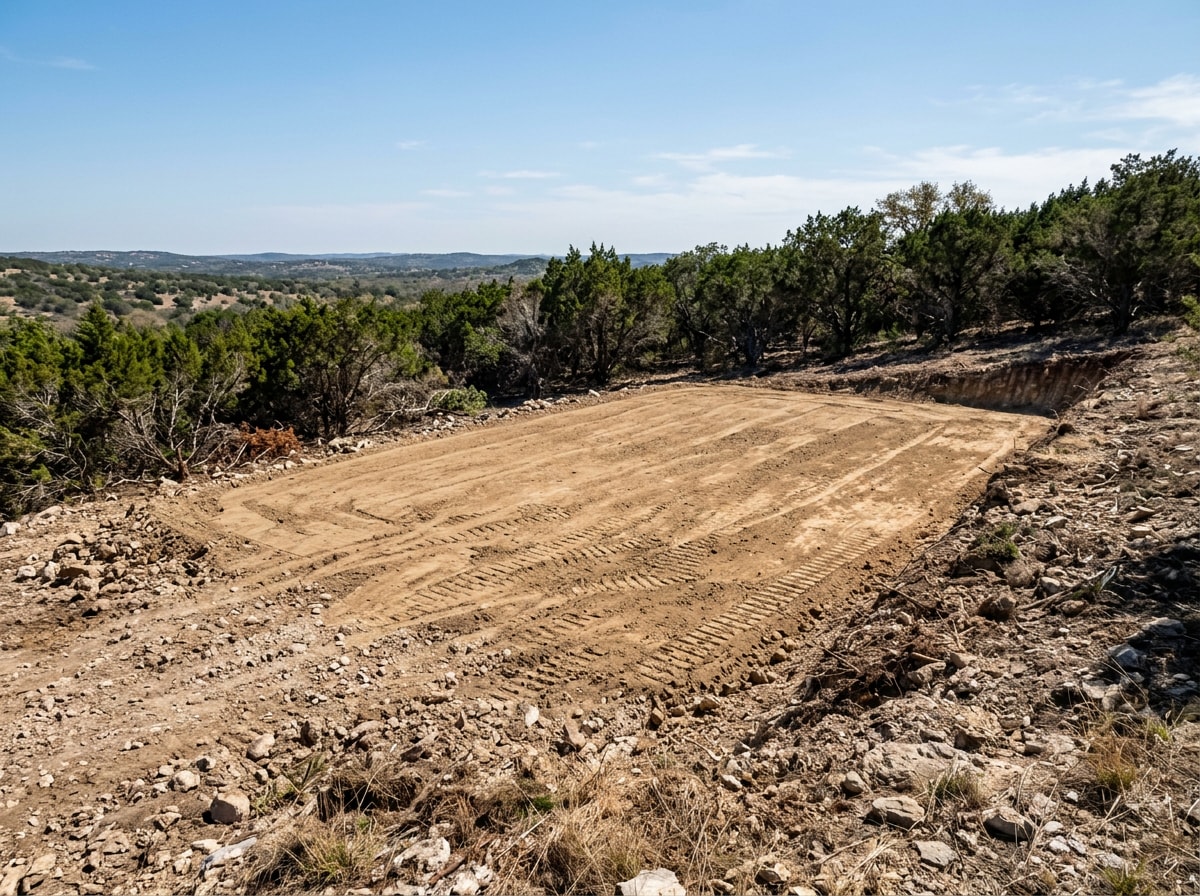
What Land Clearing and Excavation Cost in De Leon, TX
Pricing depends on acreage, vegetation density, and how much grading follows the clearing. The ranges below reflect what we typically quote on Comanche County properties after an on-site walk.
| Project Type | What Affects Price | Typical Scope |
|---|---|---|
| Brush/pasture clearing | Vegetation density, stump removal, haul-off vs. mulch-in-place | Priced per acre |
| House pad grading | Cut-fill depth, soil type, compaction needs | Priced per pad |
| Pond excavation | Basin size, soil class, spoil placement | Priced per pond |
| Driveway installation | Length, base material, drainage crossings | Priced per linear foot |
| Fence line/right-of-way clearing | Width cleared, grubbing depth | Priced per acre or per foot |
Ranch and pasture clearing typically runs lower per acre than pond excavation or pad grading, which require tighter cuts and more precise equipment work. For a general sense of statewide agricultural land-improvement rates, the Texas A&M AgriLife Extension custom rates survey tracks what Texas contractors charge for dozer work and land-improvement operations by region. An on-site estimate is still the only accurate way to price a specific De Leon tract, since rock, slope, and access vary block to block.
When You Need Clearing or Excavation Before Anything Else
Several projects almost always require clearing or excavation as the first step, not an afterthought.
- Pond installation needs the basin excavated and access cleared before equipment can work safely
- Septic system installation needs clearing and grading around the drain field; see our septic site evaluation service for how that assessment works
- New fence lines need brush and grubbed mesquite removed so crews and equipment can travel the line; our fence repair and livestock fencing teams coordinate directly with clearing crews on these jobs
- Right-of-way and easement access often sits unused for years until it's cleared and graded for the first time
- Storm-damaged lots sometimes need debris cleared before any new work can start; see storm debris removal
How We Plan a De Leon Land Clearing and Excavation Project
Every job starts the same way, whether it's two acres or two hundred.
- Walk the site. We read the terrain, soil type, drainage flow, and existing vegetation before any equipment moves.
- Map access. Rocky pasture and tight gate openings change which machines can get to the work area.
- Sequence the work. Clearing happens first, then grubbing, then grading or excavation, so each pass builds on the last instead of undoing it.
- Account for burn or haul-off. Brush either gets piled for burning, mulched in place, or hauled, depending on volume and county burn restrictions that week.
- Grade to the final plan. Cut-fill work finishes the site so it drains correctly and holds a foundation, driveway, or pond basin.
On a recent De Leon pad job, hardened summer soil meant our dozer needed two passes instead of one to get a clean cut, something a flat per-acre quote never accounts for. That's why every estimate starts on-site, not over the phone.
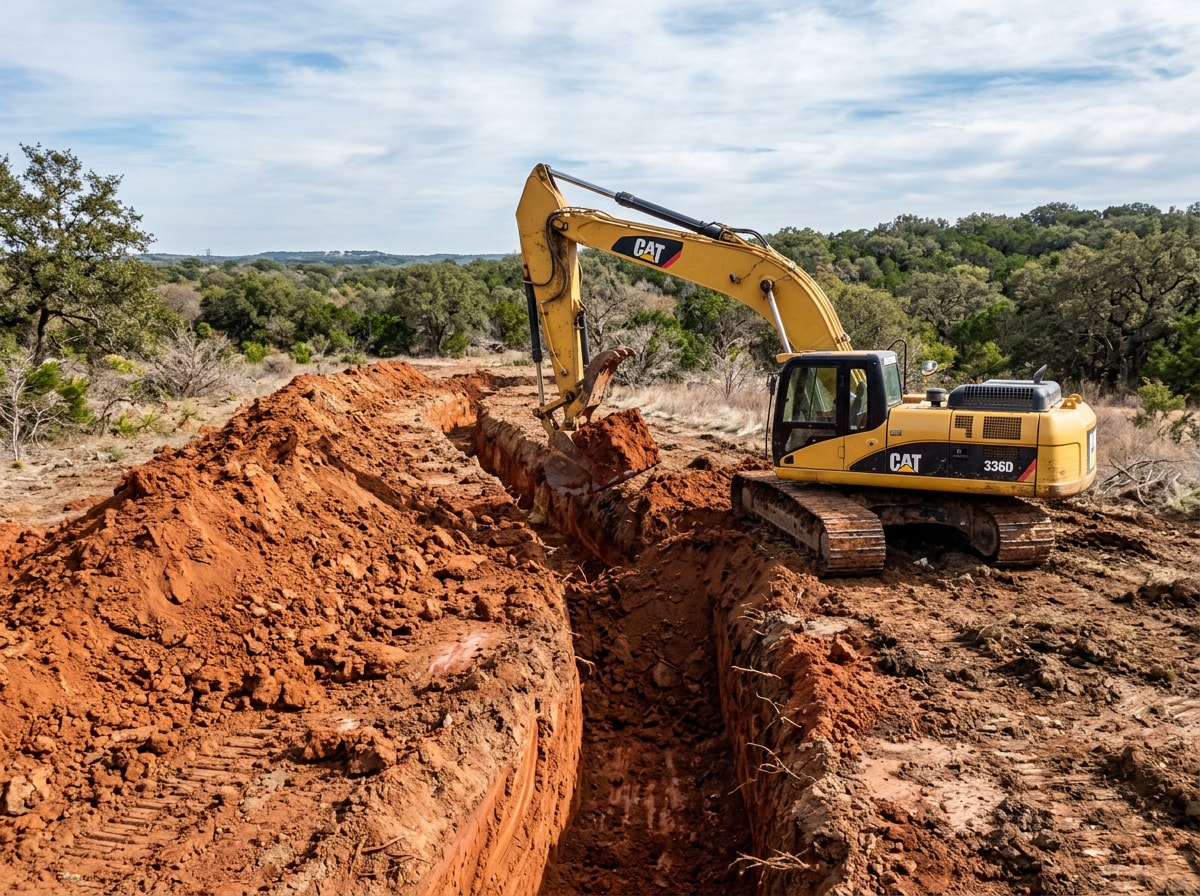
Local Conditions That Affect the Work
De Leon sits in Cross Timbers country, where SH 6 and SH 16 meet near the Leon River, a mix of oak thickets, mesquite flats, and rocky pasture that makes every clearing job a little different.
Drought is a real scheduling factor here, not a side note. Much of Texas has spent 2026 under active drought conditions, according to drought.gov's state-level monitoring, and dry conditions change how crews work. Drier cedar and mesquite burn hotter, so brush-pile burning gets scheduled around fire-risk windows, and equipment and water stay on-site during any clearing job. Hardened soil also limits how deep a blade cuts cleanly in one pass, which affects both ranch clearing timelines and excavation scheduling.
Deeper excavation work, like drain field trenches or pond cuts over five feet, falls under federal trenching and excavation safety rules. OSHA's excavation standards require protective systems like sloping, shoring, or shielding once a cut reaches that depth, which is one more reason this work belongs to an experienced crew rather than rented equipment and a weekend.
Why De Leon Property Owners Choose Henderson Land Services
- In-house crew. The same operators show up start to finish, not rotating subcontractors.
- On-site free estimates. We assess soil, grade, and access in person before giving a number.
- Local terrain knowledge. We work Comanche County ground regularly, so we plan around rock and drainage instead of guessing.
- One contractor for the whole project. Clearing, grading, drainage, septic prep, and fencing can all run through one crew instead of three separate bids.
Browse completed work on our projects page, or get a free estimate for your property.
Service Areas
Based in De Leon, TX, we also serve nearby Comanche County and Central Texas communities, including Dublin, Stephenville, Eastland, Brownwood, Granbury, Weatherford, and Glen Rose. Visit our De Leon, TX area page to confirm we reach your specific property, or check our homepage for our full service lineup, including demolition, brush burning, and debris removal.
If your project also involves plumbing or septic repairs after excavation work, our guide on sewer plumbing and trenchless repair in Brownwood, TX covers what to expect when excavation and sewer work overlap.
FAQ
What's the difference between land clearing and excavation?
Land clearing removes brush, trees, and overgrowth from the surface. Excavation moves and reshapes the soil underneath through cutting, filling, and grading. Most De Leon projects need both, done in that order.
How much does land clearing and excavation cost in De Leon, TX?
It depends on acreage, vegetation density, and how much grading follows the clearing. Brush and pasture clearing generally costs less per acre than pond excavation or pad grading, which require tighter, more precise cuts. An on-site walk is the only way to get an accurate number for your tract.
Do I need a permit to clear land in Comanche County?
Most rural land-clearing and grading work doesn't require a county permit, but brush burning is subject to local burn bans that change with drought conditions, and septic-related excavation falls under separate state rules. Check current burn ban status with the county before scheduling any pile burning.
How long does a land clearing or excavation project take?
A few acres of brush clearing typically takes one to three days. Larger ranch tracts, pond excavation, or full house pad prep can run one to two weeks depending on acreage, soil, and whether grading follows the clearing. Weather and soil moisture affect the timeline more than almost anything else.
Can you clear land before septic or foundation work begins?
Yes. Pre-construction clearing is common, and we plan around drainage patterns and site access so the clearing sets up the septic installation or foundation work that follows, instead of creating rework later.
What equipment do you use for land clearing and excavation?
Jobs typically use a mix of dozers for grubbing and grading, excavators for precise cuts like pond basins and drain fields, and forestry mulchers for brush and cedar where grinding in place beats hauling debris off-site.