Drain pipes in Granbury, TX fail for two very different reasons: something clogging the line inside the house, or something happening to the pipe itself underground. Hood County's mix of 1950s-era cast iron, Orangeburg, and newer PVC lines, sitting in notoriously reactive clay soil, means the same symptom (a slow drain) can point to a five-minute fix or a full excavation job. This guide breaks down both, so you know which one you're dealing with before you call anyone.
Signs Your Drain Pipes Need Attention in Granbury
A few warning signs show up on almost every drain pipe service call in Hood County. Watch for:
- Water draining noticeably slower than usual from one or more fixtures
- More than one drain clogging around the same time
- Gurgling or bubbling sounds coming from drains during or after use
- A persistent sewage odor near a drain, yard, or crawl space
- Water backing up into a different fixture when you run another one
- Clogs that keep coming back no matter how often you clear them
- Standing water or a soggy patch in the yard with no obvious source
A single slow drain is usually local buildup: grease, hair, or soap scum sitting in that one pipe. But when several fixtures slow down together, or you see standing water outside paired with indoor backups, the problem is often further downstream, in a pipe a snake can't reach or a chemical cleaner can't touch. That's the point where it stops being a plumbing call and starts being an excavation call.
Granbury's Soil and Pipe Age: Why Local Drain Lines Fail
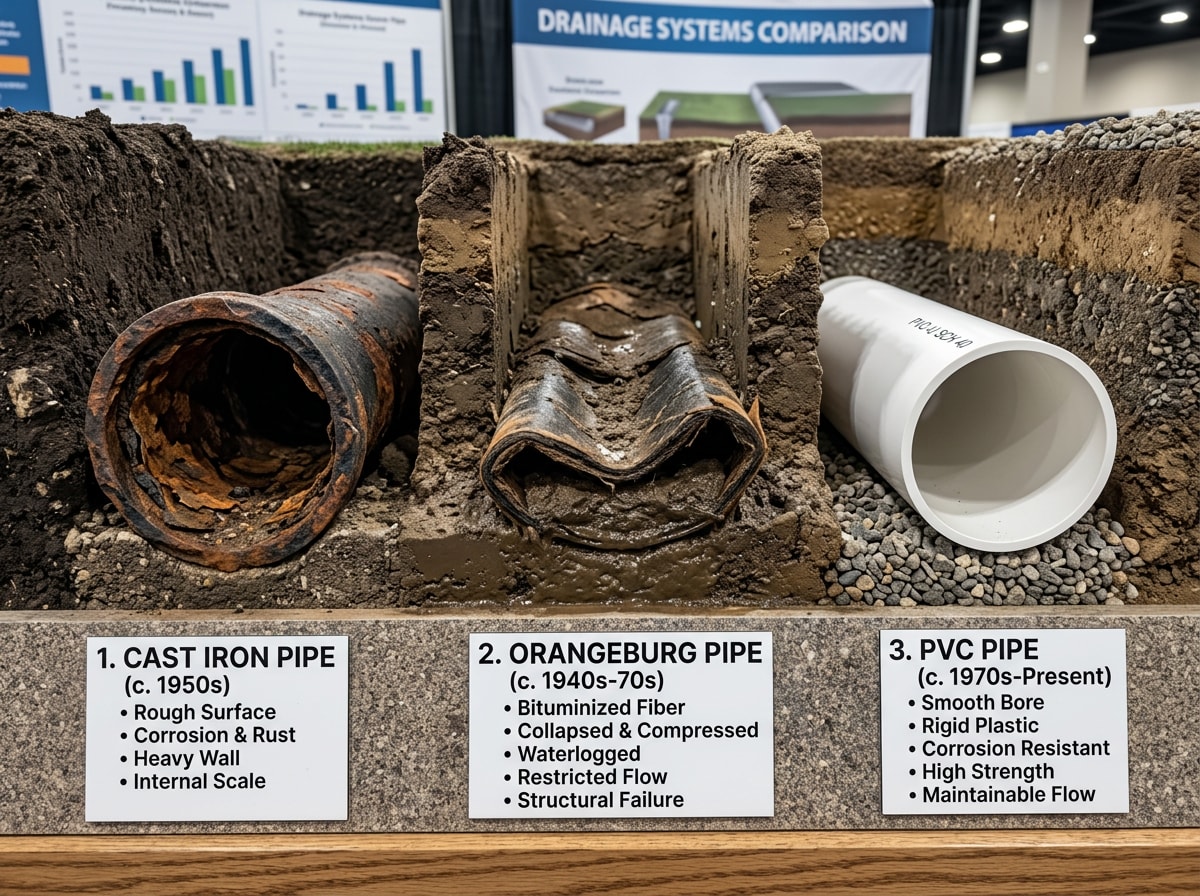
Homes built before the 1950s in and around Granbury typically run on cast iron or clay drain pipe. Homes from the 1950s through the 1970s often used Orangeburg pipe, a tar-paper composite that was cheap at the time but doesn't hold up. Most homes built after the 1980s use PVC, which resists corrosion and generally outlasts both older materials.
| Material | Typical lifespan | Common failure mode | Repair difficulty |
|---|---|---|---|
| Cast iron | 50–75 years | Internal rust, scale buildup, crumbling pipe wall | Moderate to high labor to cut and replace |
| Orangeburg | ~50 years, often less | Ovaling or full collapse under soil pressure | Usually full replacement of that run |
| PVC | 100+ years | Rare under normal conditions; joint separation from ground movement | Lowest cost per linear foot |
What shortens all three materials locally is the ground they sit in. Hood County sits within the Texas Blackland Prairie belt, where Vertisol clay is common. Vertisols have a high content of expanding clay minerals and undergo pronounced changes in volume with changes in moisture.
These soils are concentrated mostly in Texas, the lower Mississippi River Valley, and the valley of the Red River of the North. That shrink-swell cycle is what pulls pipe joints apart and cracks aging cast iron, even when the pipe itself still has decades of rated life left on paper.
Interior Clog or Exterior Pipe Failure? How to Tell the Difference
This is the question that actually determines who you call first.
Likely an interior clog if:
- Only one fixture is affected
- A plunger or short drain snake gets partial improvement
- There's no odor or standing water outside
- The problem started suddenly after a specific event (grease down the sink, a toy flushed)
Likely an exterior or structural pipe problem if:
- Multiple fixtures back up together, especially the lowest drains in the house first
- Clogs return within weeks of being cleared
- You see a wet or sunken patch in the yard, often tracking the path of the sewer line
- The home is older than 50 years and has never had the drain line replaced or relined
A camera inspection is the tiebreaker. If a plumber snakes a line and the camera shows a collapsed Orangeburg section, an offset joint from soil movement, or root intrusion into a cracked cast iron pipe, no amount of repeat snaking fixes that. At that point the pipe has to come up and out, which means excavation, not another service call with a cable machine.
Exterior Drain Pipe and Yard Drainage Solutions
Once the problem is confirmed outside the foundation, the fix usually falls into one of these categories:
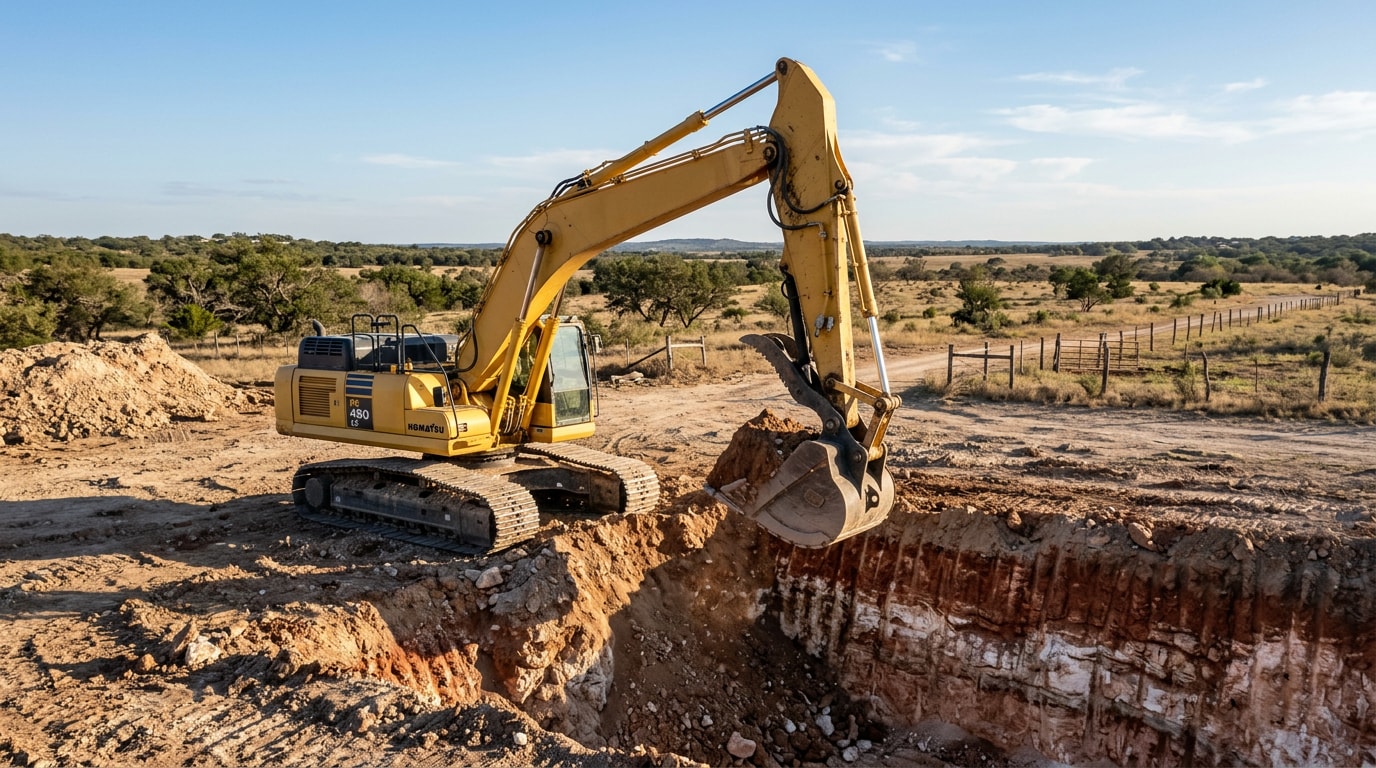
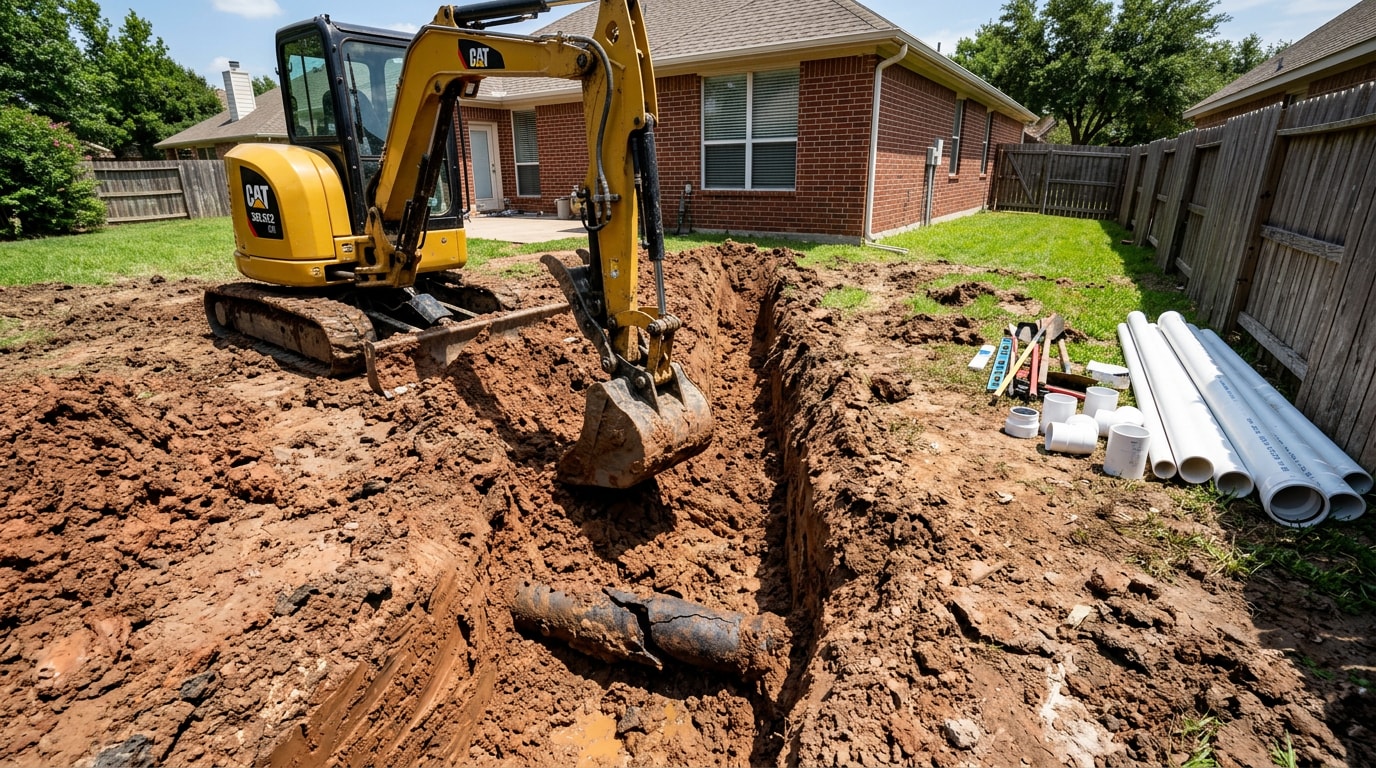
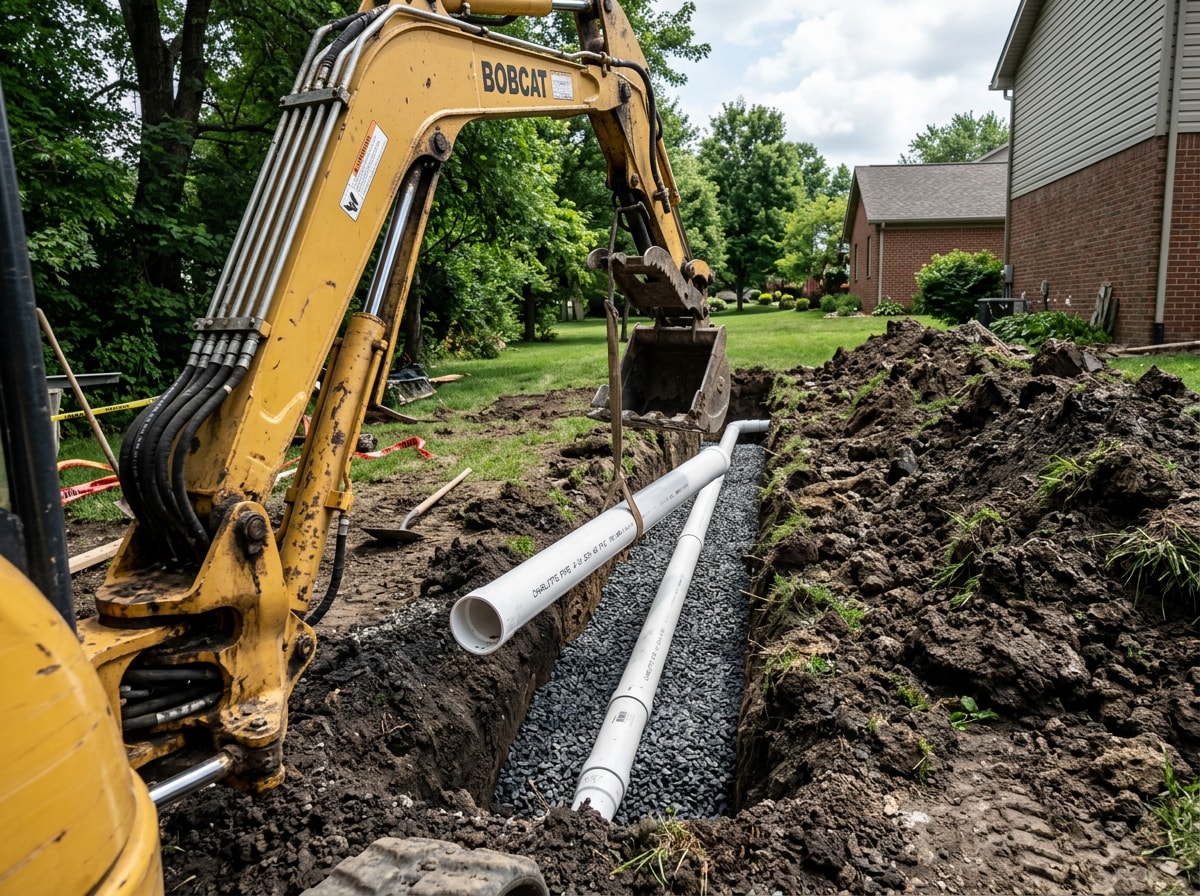
- Pipe replacement by open-cut excavation — digging down to the damaged section, removing the failed pipe, and installing new PVC at the correct grade.
- French drain or yard drain installation — redirecting surface and subsurface water away from a foundation or low spot before it ever reaches the sewer line or saturates the soil around it.
- Regrading around the house — correcting a slope that's been pushing water back toward the foundation for years, a common issue on older Granbury lots.
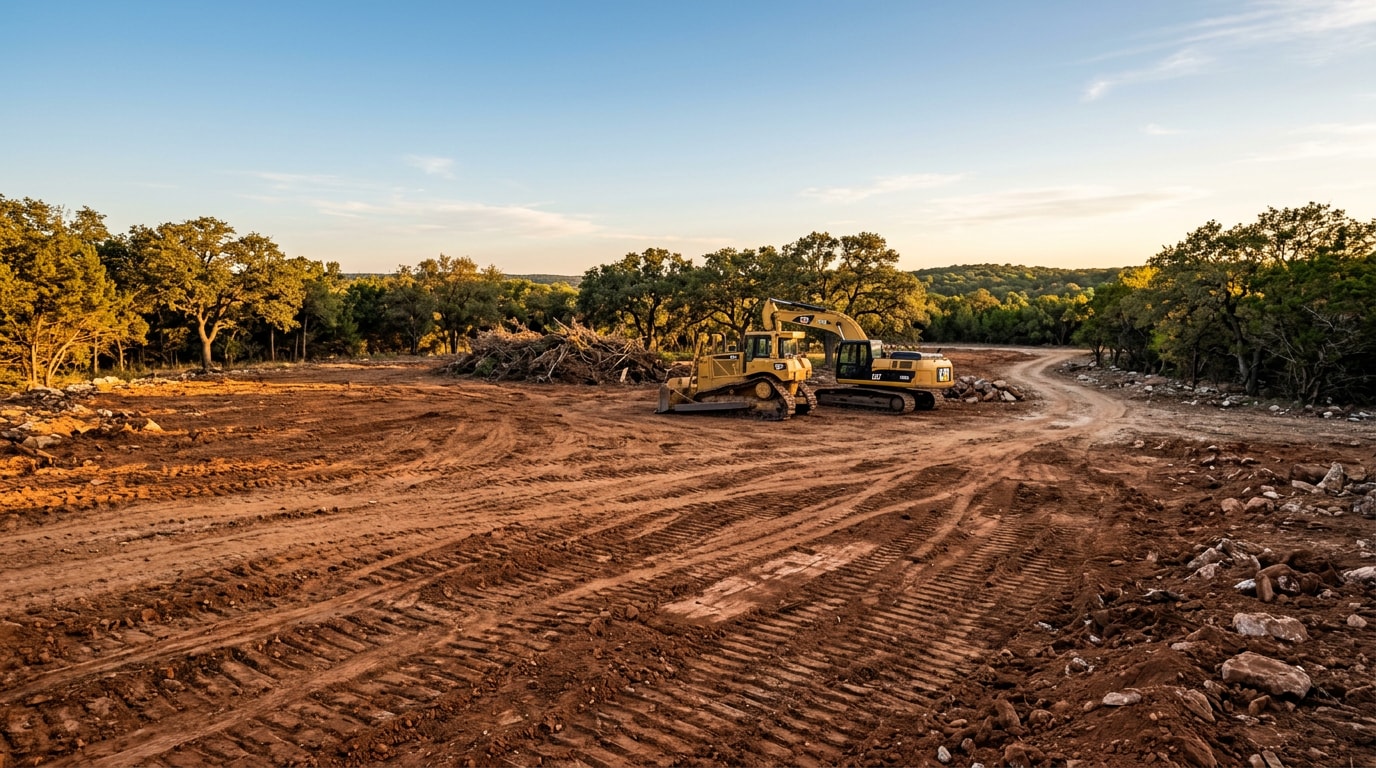
This is where our crew spends most of our time on drain-related calls. Henderson Land Services' drainage solutions cover exactly this kind of work, grading, French drains, and pipe excavation, for homes throughout Hood County. If you're not sure whether your yard needs a drain system or a drain line replacement, that's a judgment call worth getting in person rather than guessing from a symptom list. Request a free estimate and we'll walk the property with you.
One honest caveat: interior hydro-jetting and cable snaking, clearing grease and scale from inside a still-sound pipe, is plumber's work, and a good plumber should always try that first on a reachable line. Our crew steps in once the pipe itself, not just what's inside it, is the problem.
When a Septic Drain Field Is the Real Problem
A large share of homes outside Granbury's city limits run on septic rather than municipal sewer, and a "drain pipe" complaint is sometimes really a drain field complaint. Signs point to the field itself when you see slow drains throughout the house along with a soggy, foul-smelling patch of lawn over the tank or field area, especially after rain.
Chemical drain cleaners make this worse, not better. Many materials that might be poured down the drain do not easily decompose, which can be harmful to the healthy bacteria that grow in your septic tank and drainfield, and homeowners should not pour grease, liquid wastes such as pesticides and drain cleaners, household chemicals, paints, paint thinners, oils, or coffee grounds down the drain.
Instead, use boiling water or a drain snake for a minor clog near a septic system.
If the field itself has failed, cleaning the house-side drain won't help. That calls for a septic site evaluation to confirm whether the field needs repair, expansion, or full replacement.
After the Storm: Debris, Culverts, and Drain Pipe Damage
Hood County gets its share of hard rain events, and when a storm moves through, drain and culvert pipes are often the first thing to clog with branches, leaves, and washed-in silt. A yard drain that worked fine in dry weather can back up completely once debris lodges in the outlet. Clearing that blockage is sometimes a quick job, but when a storm has shifted soil, exposed a pipe, or downed trees over a drainage easement, it becomes a storm debris removal job before the drain pipe repair can even start.
Repair vs. Replace: What Drives the Decision
A few factors determine whether a damaged drain pipe gets a localized repair or a full replacement run:
| Factor | Favors repair | Favors replacement |
|---|---|---|
| Pipe material | PVC, isolated damage | Orangeburg, widespread cast iron corrosion |
| Extent of damage | Single crack or offset joint | Multiple failure points along the run |
| Soil movement history | Minimal, stable soil | Known shrink-swell clay, repeat failures |
| Access | Shallow, single dig | Long run, multiple obstacles |
Minor point repairs are typically the least expensive option when only one section has failed. A full replacement run, priced per linear foot, costs more up front but resets the clock on a line that's been failing repeatedly, which is often the better long-term value once a homeowner has already paid for two or three "repeat" repairs on the same aging section. We can walk your specific situation against past excavation and drainage projects to give you a realistic sense of scope before any digging starts.
FAQ
What's the best way to unclog a drain pipe in Granbury, TX?
It depends on where the clog sits. A plunger handles minor, surface-level blockages. Anything deeper needs a professional drain snake or hydro-jetting from a plumber. Boiling water or a drain snake is the safer option instead of chemical drain cleaners, and homeowners should never pour cooking oil or grease, oil-based paints, solvents, or large volumes of toxic cleaners down the drain. If the clog keeps returning after cleaning, the pipe itself, not just the clog, is likely damaged.
How often should drain pipes be inspected in Hood County?
Once a year is a reasonable baseline for most households. Homes with pre-1980s pipe, known clay soil movement, or a history of recurring clogs benefit from a camera inspection every few years to catch joint separation or root intrusion before it becomes a backup.
How much does it cost to repair or replace a drain pipe?
Minor point repairs are generally the least expensive option. A longer excavation run, especially one involving a damaged main line, costs more because of the labor and backfill involved. Full replacement is typically priced per linear foot, and the real cost driver is depth and access, not the pipe material itself. A walkthrough is the only reliable way to price your specific line.
How long do drain pipes last in Granbury's soil?
PVC can last 100 years or more under normal conditions. Cast iron typically holds up 50 to 75 years before internal corrosion sets in. Orangeburg and clay pipe often need attention well before the 50-year mark, and expanding clay soil that undergoes pronounced volume changes with moisture shortens all of these timelines compared to pipe sitting in stable, sandy ground.
Can tree roots really damage drain pipes in Granbury?
Yes. Roots seek out moisture, and a hairline crack or loose joint in an older cast iron or clay line is exactly what they find. Once a root gets a foothold inside the pipe, it widens the gap every year, turning a minor leak into a full blockage or collapse.
Do I need a permit to replace a drain line in Hood County?
Most excavation work that ties into a sewer line or septic system requires a permit from the local building or health department. USDA Natural Resources Conservation Service soil survey reports can also help determine the presence and location of expansive soils before a project starts, which some jurisdictions reference during permitting. Check with your local permitting office, or ask your contractor to confirm before digging.
Does a drain pipe need to meet a specific code for sizing?
Residential and commercial drain-waste-vent systems are sized according to tables in the Uniform Plumbing Code, which accounts for the number of fixtures and total pipe length on a given run. A licensed plumber or excavation contractor checks these standards before tying a new line into the existing system.
If you're seeing any of the warning signs above, or you've already had a plumber tell you the problem is outside the house, Henderson Land Services handles drain pipe excavation, exterior drainage, and septic work throughout Granbury and Hood County. For a related case where a sewer line problem turned into a full excavation job, see our plumbing emergency guide for Brownwood homeowners. Contact us for a free estimate before you start digging on your own.