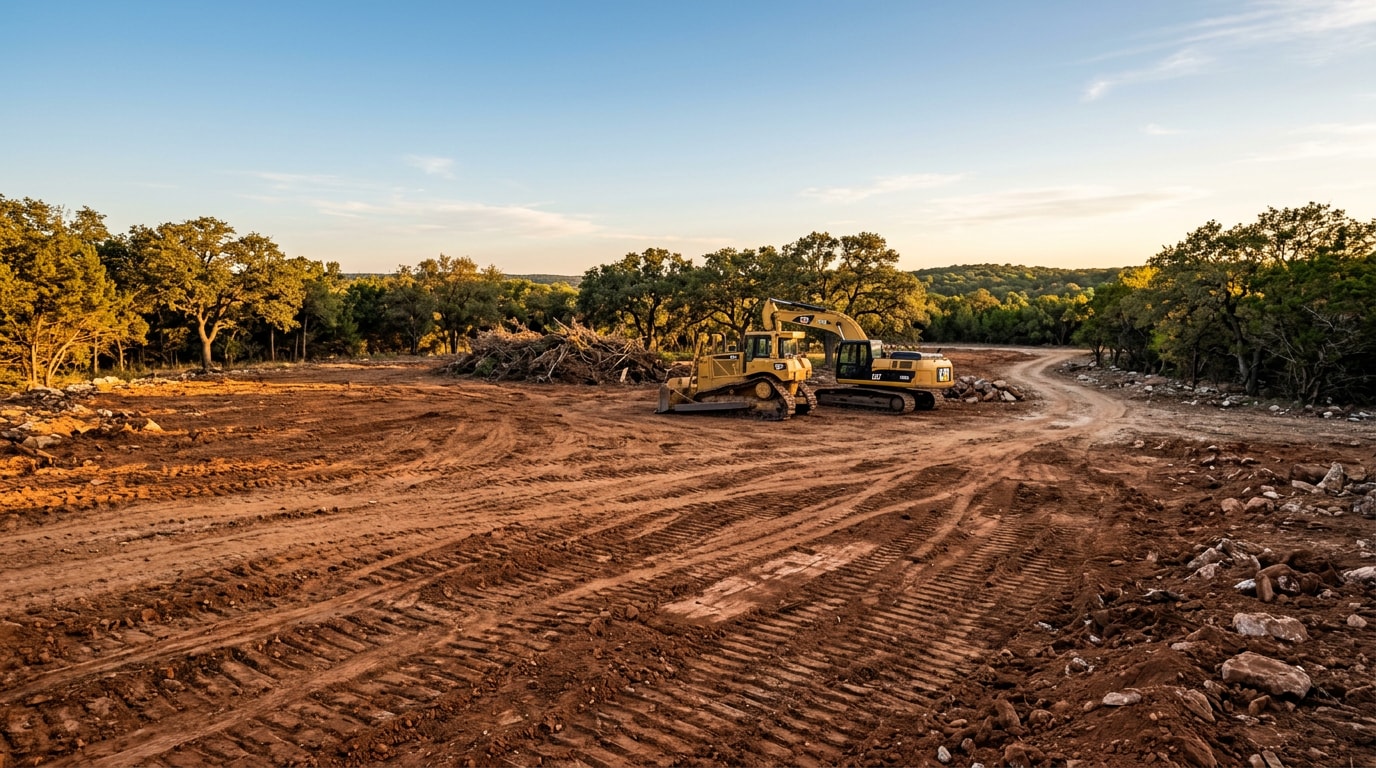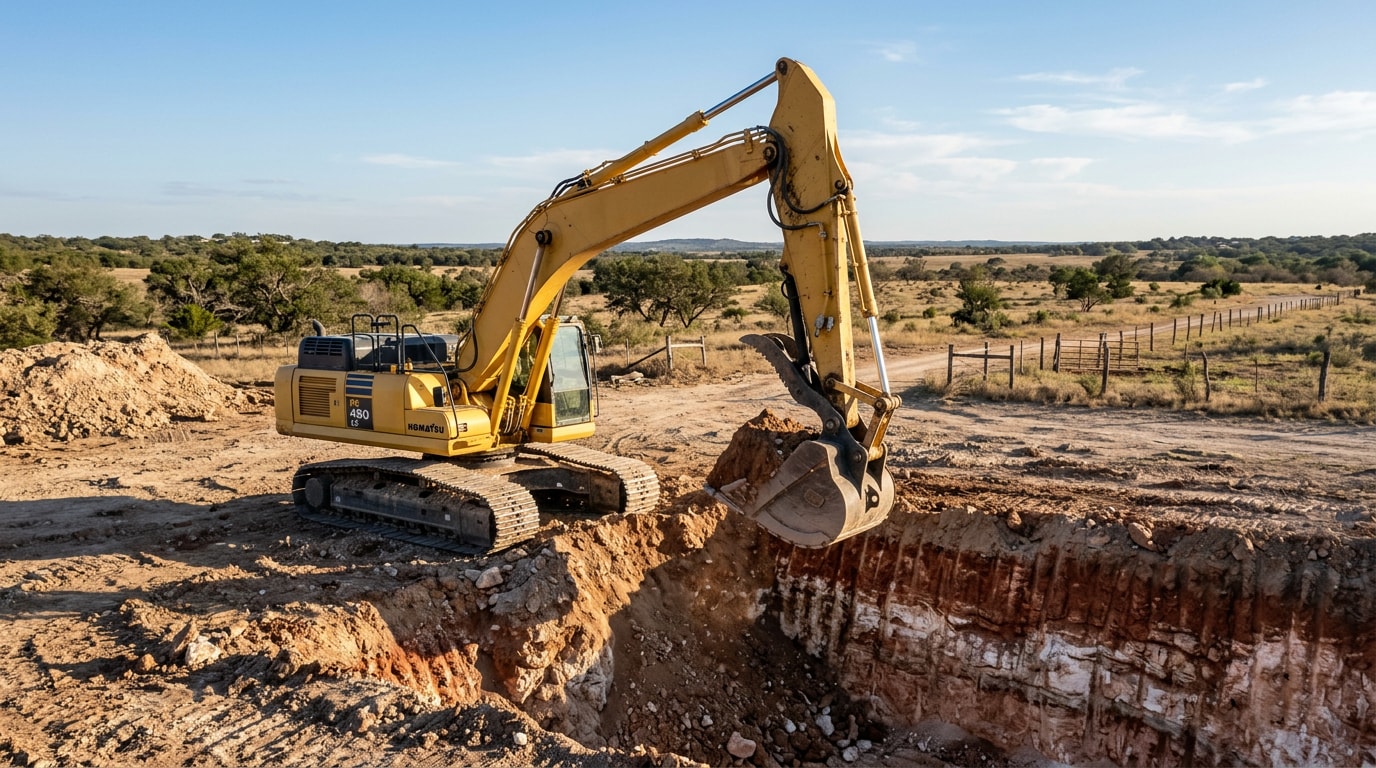
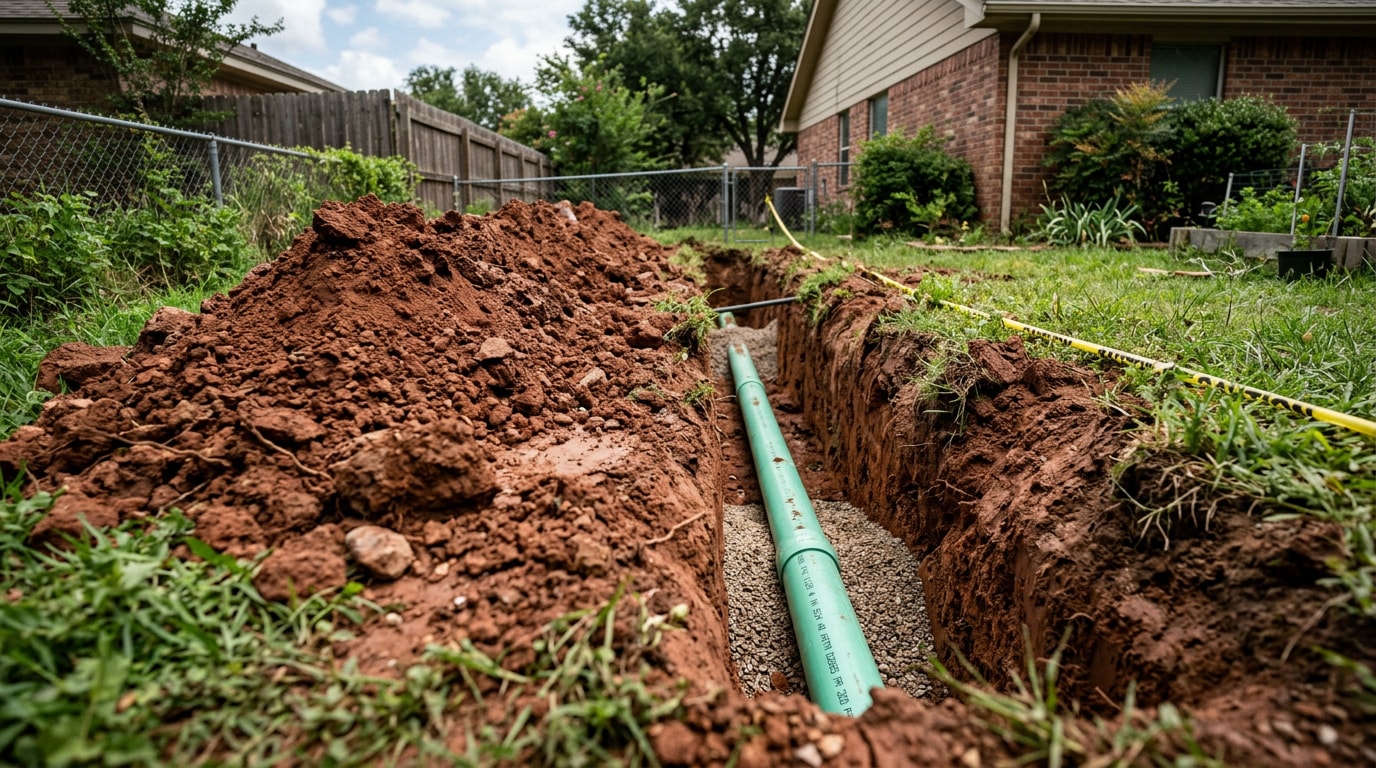
If you're dealing with sewer plumbing problems in Brownwood, TX, you already know the warning signs: a slow drain, a bad smell, or a soggy patch in the yard that won't dry out. This guide covers why Brown County's clay soil is so hard on sewer lines, which repair method fits which kind of damage, and where an excavation crew fits into the process once a plumber has diagnosed the problem.
Signs Your Sewer Line Needs Attention
Most Brownwood homeowners don't notice sewer line damage until it's already affecting the whole house. Watch for these signs:
- Slow drains in more than one fixture. A single slow sink is usually a local clog. Multiple fixtures slowing down at once points to a problem further down the line.
- Gurgling noises from toilets or drains when another fixture is used.
- Sewer odor near indoor drains or outside near the yard.
- A soggy yard patch that stays wet without recent rain, often a sign the line is leaking into the soil underneath.
- Recurring backups into tubs or floor drains, which usually means a partial or full blockage.
Catching these signs early, before a full backup forces an emergency call, generally means a smaller and less expensive repair.
What's Causing Sewer Line Failures in Brown County
Four things drive most sewer line failures in this part of Texas: tree root intrusion, aging pipe materials, shifting clay soil, and grease buildup.
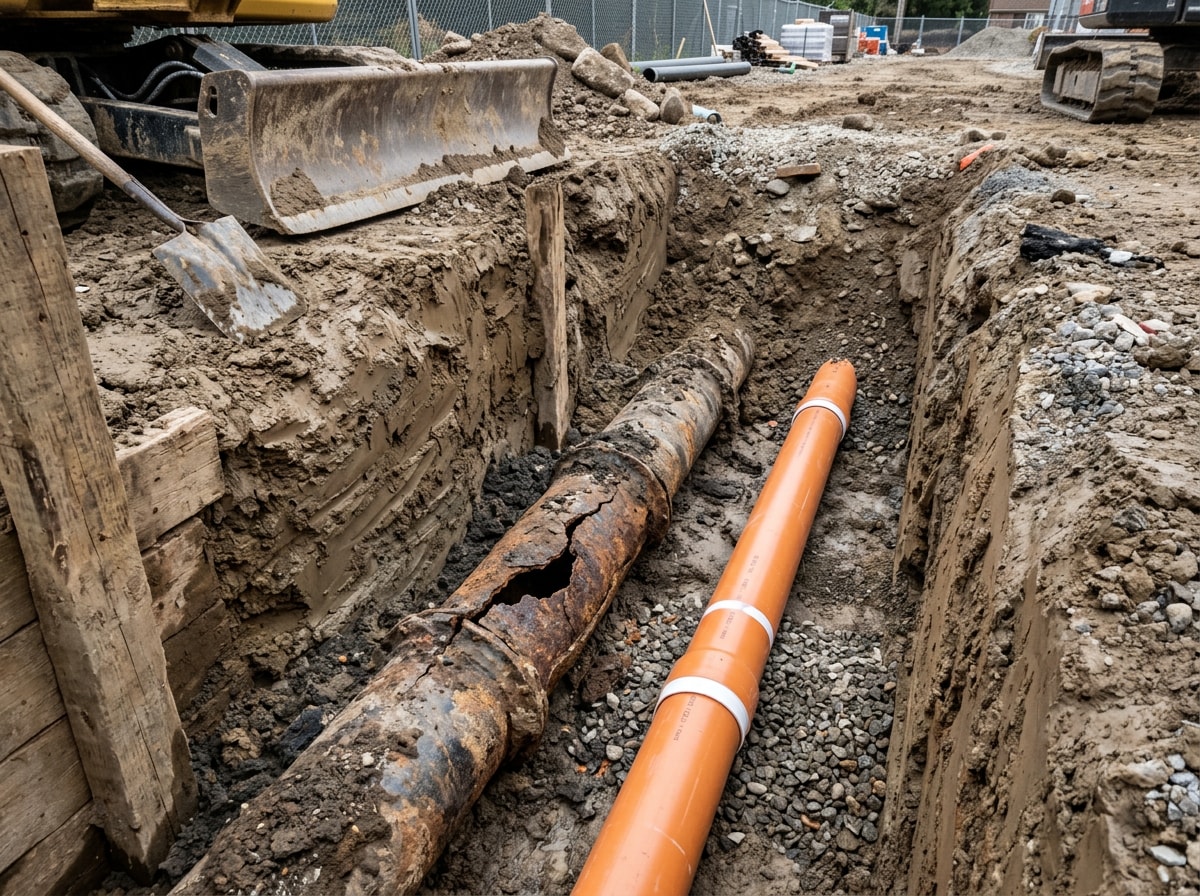
Older homes in and around Brownwood often still have clay or cast-iron sewer lines. Cast iron corrodes from the inside out over decades, and clay pipe joints separate as the ground moves beneath them. Tree roots take advantage of those gaps, working into even hairline cracks and widening them over time. Central Texas's expansive clay soil makes this worse than in many regions, since the soil swells when wet and shrinks when dry, putting steady stress on buried pipe.
Grease buildup is the other major culprit, and it affects septic systems as well as city sewer lines. The EPA recommends homeowners never pour cooking oil or grease down the drain for exactly this reason.
That distinction matters here because a lot of Brown County properties outside Brownwood's city limits run on septic rather than a municipal line. If your home is on an aerobic or conventional septic system, the warning signs look similar, but the fix is different. The TCEQ notes that if your OSSF is more than 15 years old, the system may need to be replaced , and any repair that changes how the system treats or disposes of waste requires a permit, since a person must hold a permit and an approved plan to construct, alter, repair, extend, or operate an on-site sewage disposal facility (or septic system) . If you're not sure whether you're on septic or city sewer, a septic site evaluation settles it quickly.
Trenchless Sewer Repair: CIPP Lining vs. Pipe Bursting
Trenchless repair fixes or replaces a damaged sewer line through small access points instead of a full trench across the yard. Two methods cover most residential jobs, and NASSCO, the trade association for the pipe rehabilitation industry, has tracked both for decades.
For over 50 years, cured-in-place pipe ("CIPP") lining has been a common trenchless rehabilitation technology for pipelines ranging in diameter from 2 inches to 120 inches . It works by inserting a resin-saturated liner into the existing pipe and curing it in place, creating a new pipe within the old one. Pipe bursting takes a different approach: technologies such as pipe bursting replace the old pipe with a new one without digging it up , pulling a new line through the old path while breaking the damaged pipe apart.
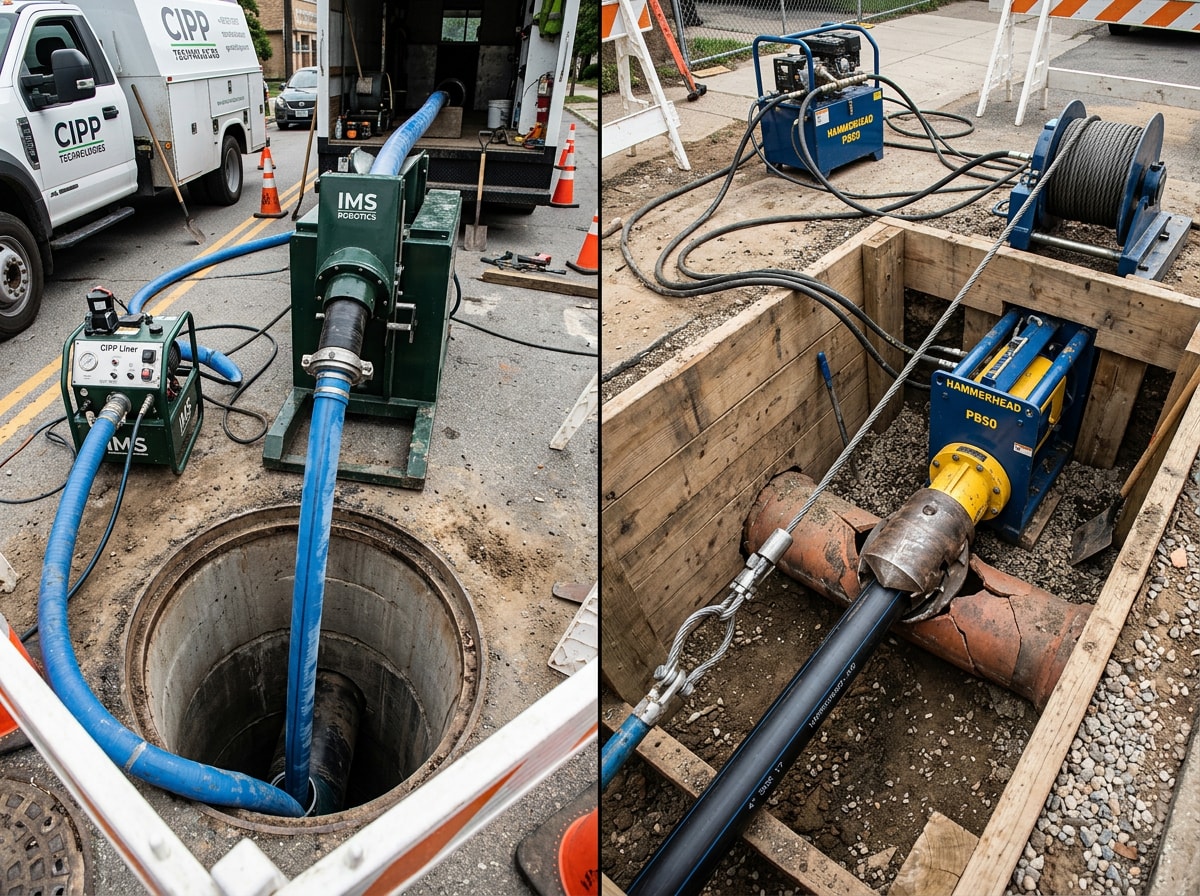
| Method | Best For | Excavation Needed | Notes |
|---|---|---|---|
| CIPP Lining | Cracks, root intrusion, corroded or leaking joints | None, works through existing cleanouts | Reduces inside diameter slightly as it cures in place |
| Pipe Bursting | Collapsed sections, undersized or severely damaged pipe | Two small pits, one for insertion and one for pulling | Can upsize the replacement pipe if needed |
A camera inspection is still the only reliable way to confirm which method applies, or whether the damage is severe enough that traditional open-trench replacement is the safer call.
Where Excavation Comes In: Access Pits, Full Replacement & Septic Tie-Ins
Trenchless repair sounds like a no-dig solution, and mostly it is, but almost every sewer and septic project still needs some excavation work. Pipe bursting requires two small pits. A fully collapsed line usually needs open-trench replacement. Septic tie-ins and new drain lines always need properly graded trenching to work correctly.
This is where Henderson Land Services comes in. We're the excavation contractor Brownwood plumbers and homeowners call when a sewer or septic repair needs more than a camera and a liner. On a recent job off a county road outside Brownwood, our crew hit a collapsed clay lateral nearly eight feet down, well past what any trenchless method could bridge. That's a dig-and-replace job every time, and getting the trench graded and backfilled correctly is what keeps the new line from failing again in a few years.
We also handle the drainage solutions that often follow a sewer repair, since a yard that's been saturated by a leaking line usually needs regrading or French drains to keep water moving away from the house. If storm damage knocked out a line or flooded a septic field, our storm debris removal crew can clear the site so repair work can start right away.
On the septic side, we handle the full scope: conventional septic installation, aerobic septic installation, and septic system design for new builds or full replacements. For a closer look at how we work alongside plumbers on urgent sewer and septic calls, see our guide on plumbing emergencies in Brownwood.
Henderson Land Services: Brown County's Excavation & Septic Partner
We're not a plumbing company, and we don't pretend to be. We're the excavation and septic crew that Brownwood plumbers, homeowners, and property managers bring in when a sewer line problem turns into a dig. Our team is licensed for septic system work in Texas and carries general liability insurance, and we've spent years working Brown County's specific mix of clay soil and aging clay or cast-iron pipe.
That local experience matters. A crew that's dug through this soil before knows how fast a trench wall can slump in wet clay, and how deep a lateral typically runs on an older Brownwood lot before they ever break ground. You can see examples of past excavation and septic work on our projects page.
Ready to get your sewer line or septic system dug right the first time? Get a free estimate and we'll walk the site with you before any digging starts.
Service Area
We serve Brownwood and the surrounding Brown County area, including properties well outside the city limits where septic systems are more common than municipal sewer. Check our Brownwood, TX service area page for details, and we also regularly work in nearby Eastland and De Leon for excavation and septic projects.
If your property sits inside Brownwood's city limits, the city's own ordinance sets a hard line on connections: all structures intended for human habitation or occupancy, containing sinks, toilets, bathtubs, or other waste discharging devices, situated on a lot within 100 feet of any public sewer, shall be connected to the public sewer . For questions on which section of a line is city property versus yours, the city's Public Works Department oversees engineering support, GIS, and water and sewer utilities , and can confirm the exact boundary for your address.
FAQ
How do you fix a sewer line without digging?
Sewer lines are commonly fixed without digging using CIPP lining or pipe bursting. CIPP lining installs a liner inside the existing pipe that cures into a smooth new pipe-within-a-pipe. Pipe bursting replaces the pipe entirely by pulling a new one through the old path while breaking the damaged pipe apart. Both access the line through small entry points instead of a full trench.
How much does it cost to repair a sewer line in Brownwood?
Cost depends on whether the job is a small point repair, a full replacement, or a trenchless method, plus the line's length, depth, and material. Trenchless repair often costs more per foot than open-trench digging but saves on landscaping and driveway restoration. Exact pricing always requires a site visit, so request a free estimate for a number specific to your property.
How do you know if your sewer line is broken?
A broken line usually shows multiple signs at once, including slow drains throughout the house, gurgling, sewer odor, and unusually lush or sunken yard patches, rather than just one isolated clog. If only one fixture is affected, it's more likely a local blockage than a full line break.
Who is responsible for sewer line repair, the homeowner or the city?
Homeowners typically own and are responsible for the sewer lateral running from the house to the city's main line, while the municipality owns and maintains the main line itself. In Brownwood, confirm the exact boundary with the city's Public Works Department before assuming who covers a repair.
Does Henderson Land Services work on septic systems too?
Yes. We install conventional and aerobic septic systems, handle septic system design and site evaluations, and do the excavation work for septic repairs and replacements across Brown County, alongside our sewer-line excavation work.
How long does a trenchless sewer repair project take?
Most residential trenchless jobs are completed in a day or two once the camera inspection confirms the method, though the exact timeline depends on pipe length, depth, and ground conditions. Jobs that require open-trench excavation, such as a fully collapsed line, typically take longer.