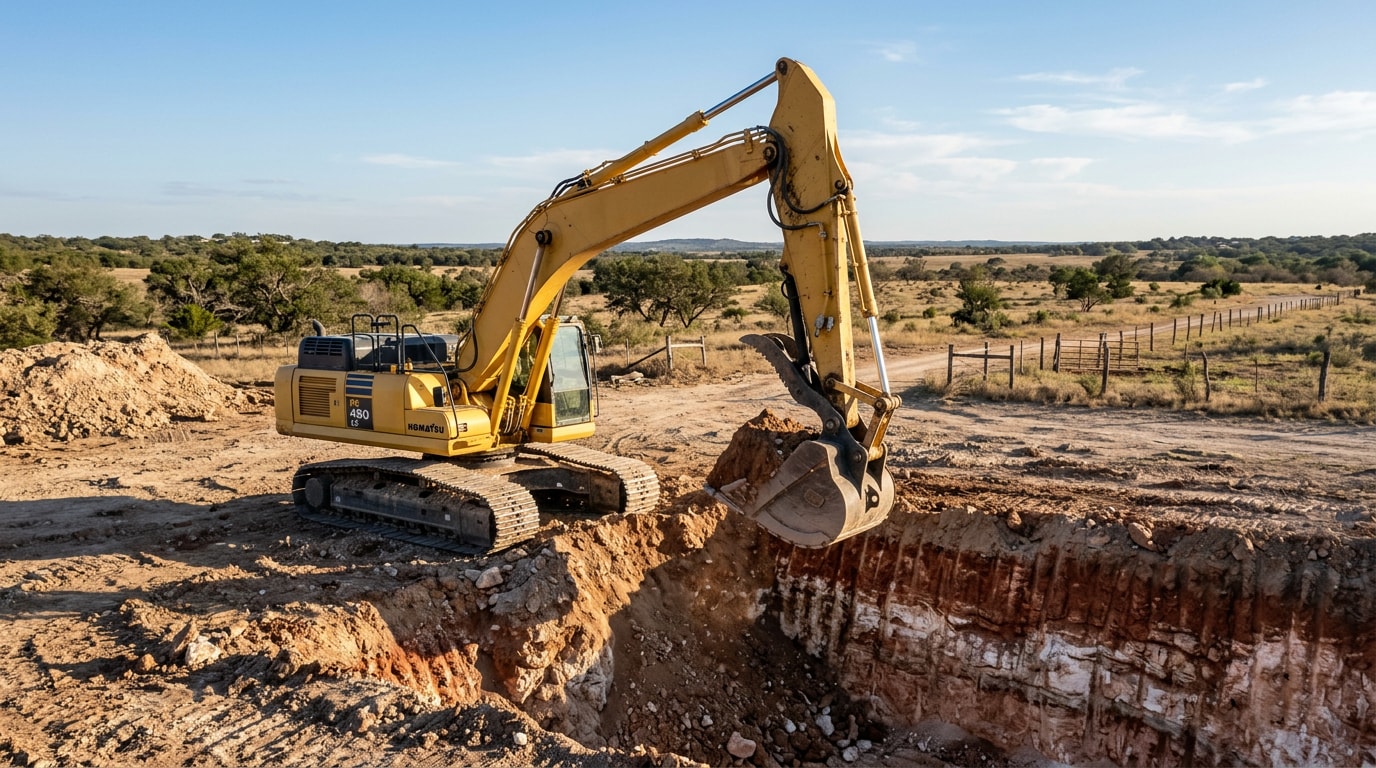
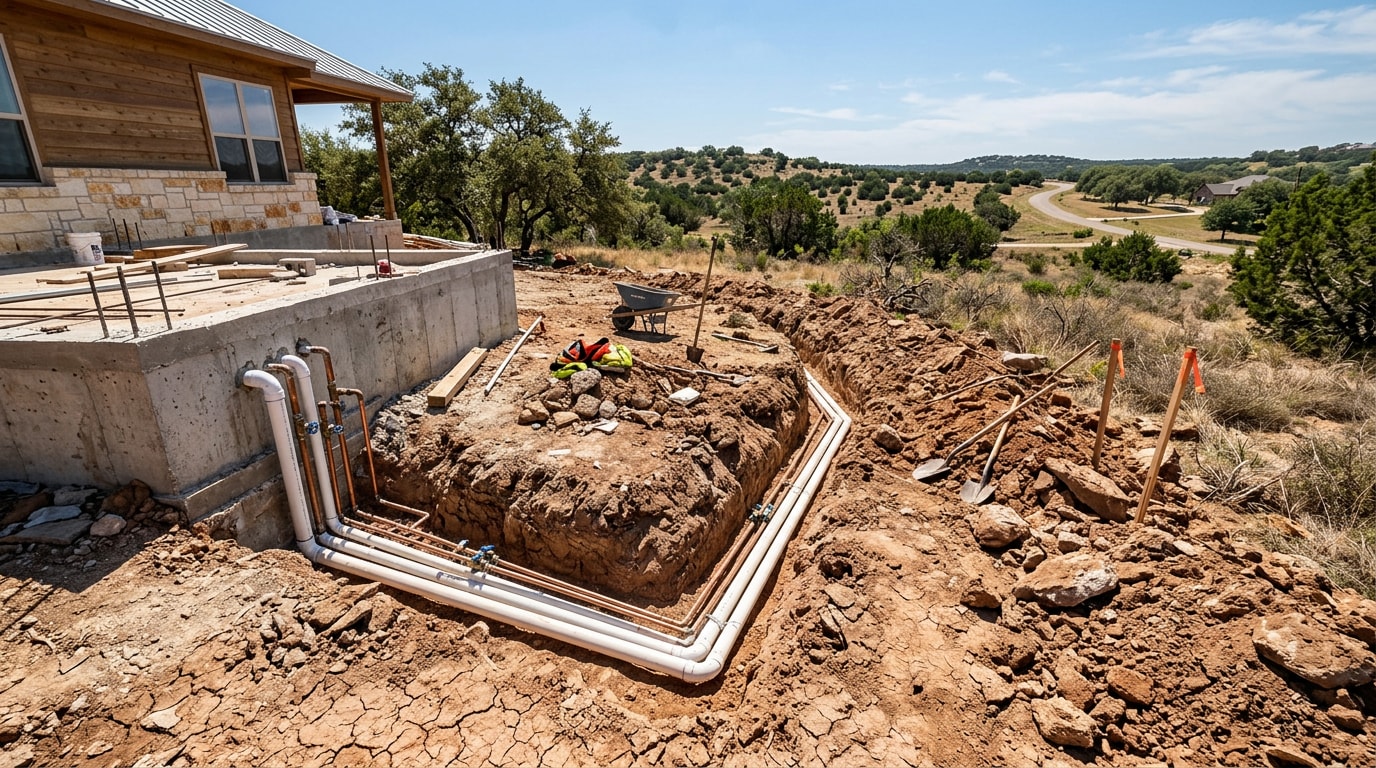
Plumbing basics in Stephenville, TX start with three things most homeowners never think about until something breaks: foundation type, water source, and the clay soil under the yard. Get those three right and routine maintenance stays simple. Get them wrong and a small leak turns into a slab repair, a failed septic field, or a washed-out drain line.
This guide breaks down what every Stephenville homeowner should know before calling a plumber, a septic contractor, or an excavation crew.
Foundation, Water Source, and Soil: The Three Plumbing Basics in Stephenville, TX
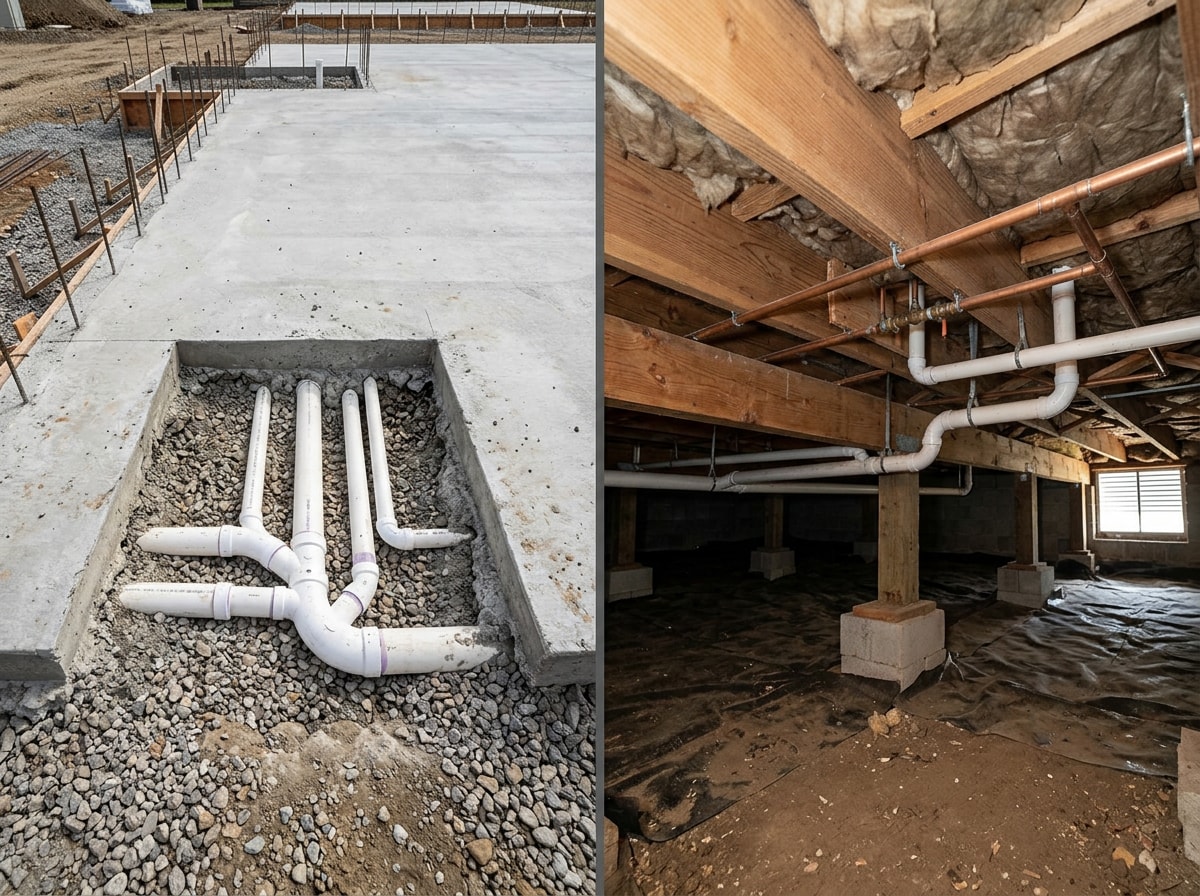
Foundation type shapes how easy, or expensive, pipe access turns out to be. Homes built on a slab route most supply and drain lines through or under a solid concrete pad. Any repair below grade means cutting through concrete first.
Pier-and-beam homes usually have a crawlspace instead. That gives plumbers and excavation crews direct access to pipes without demolition.
Water source matters just as much. Homes inside the Stephenville city limits draw treated water and connect to the city sewer. The City of Stephenville water supply utilizes 35 wells within the Trinity Aquifer, blended with treated water from the Upper Leon River Municipal Water District. Many properties on the outskirts, by contrast, rely entirely on a private well paired with a septic system. Each setup comes with its own maintenance routine, and the rural well-and-septic combination is where most homeowners run into surprises.
Soil plays a quieter but real role too. Clay soil throughout this part of Texas expands and contracts as moisture levels swing, which can shift, crack, or stress buried lines over time. Slab-foundation homes feel this the most, since the pad itself moves with the soil beneath it.
Slab + Municipal vs. Pier-and-Beam + Well/Septic
| Feature | Slab + Municipal Hookup | Pier-and-Beam + Rural Well/Septic |
|---|---|---|
| Pipe access | Requires concrete cutting for under-slab repairs | Crawlspace access, generally easier |
| Water source | City-treated, consistent pressure | Private well, pressure tank dependent |
| Waste system | City sewer connection | Septic tank, needs periodic pumping |
| Soil impact | Clay shifting can crack slab-embedded lines | Clay shifting affects pier leveling more than pipes directly |
If you're building new or replacing a failing system, Henderson Land Services works directly with these conditions across Stephenville, TX every week, from house pad grading to septic site layout.
What Services Do Stephenville Plumbing Companies Offer?
Most plumbing calls in Stephenville fall into four core categories. Knowing what each involves helps you describe the problem accurately and gauge how urgent the fix really is.
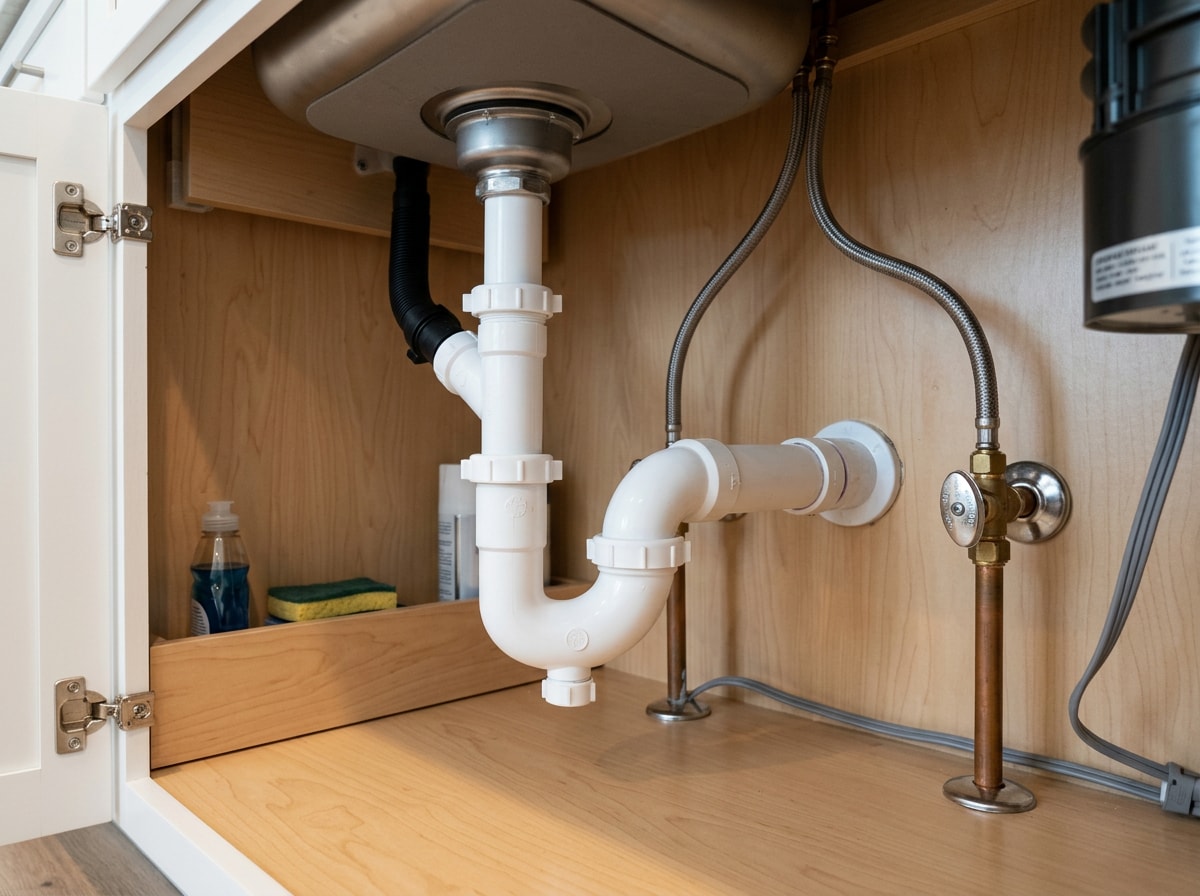
Leak Repair
Plumbers trace leaks back to their source using moisture meters, dye tests, or a careful visual inspection before cutting into any wall or floor. A small drip left unaddressed can quietly push water bills higher. Over months, it can also warp flooring or invite mold. Catching it early keeps the fix, and the cost, small.
Clog Repair
Clogged drains build up from grease, hair, and mineral scale until water backs up instead of flowing through. Left alone, a clog can force wastewater back into sinks or tubs. Running hot water after dishes and keeping grease out of the drain are simple habits that help prevent it.
Pipe Replacement
A few signs usually mean a pipe is past the point of a patch repair:
- Visible warping or flattening along the pipe
- Rust-colored stains at joints or fittings
- Recurring leaks in the same section
- Noticeably lower water pressure throughout the home
Once a section shows these signs, most plumbers recommend replacing it with modern, corrosion-resistant material rather than repairing the same spot again next year.
Gas Repair
If you ever smell gas inside or near your home, leave immediately and call your utility company from outside. Don't try to locate the leak yourself or flip any switches. Gas line work is licensed-only in Texas, and for good reason: a mistake here is a safety hazard, not a slow drip under a sink.
DIY vs. Professional Plumber: When to Call for Help
DIY repairs look like the cheaper option on paper, but plumbing systems are interconnected. A small mistake in one spot often shows up as a bigger problem somewhere else down the line.
Two reasons stand out for hiring a licensed pro instead of going it alone:
- Code compliance. A DIY vent pipe reroute that skips required slope or venting can fail inspection outright, forcing a homeowner to tear out and redo work they already paid for.
- Time and money saved. A licensed plumber already knows the code requirements going in, so the job passes inspection the first time.
That one detail, getting it right once, is usually what separates a weekend project from a drawn-out, costly redo.
Basic drain cleaning or fixing a leaking toilet flapper is reasonable for a handy homeowner. Anything involving water, gas, or sewer line breaks should go to a licensed professional.
Stephenville Plumbing Codes, Permits, and Licensing
Stephenville plumbing projects must follow codes covering pipe materials, installation procedures, and cross-connection control, all aimed at protecting public health and preventing water contamination. Texas has adopted the Uniform Plumbing Code as its statewide base code.
The Texas State Board of Plumbing Examiners' mission is to protect Texas citizens against the health and safety hazards that can result from improperly installed plumbing, gas, and medical gas systems. You can verify any Texas plumber's license directly through the TSBPE's public license search before signing a contract.
One detail most homeowners miss when checking credentials: Master Plumber license numbers begin with the letter "M." License numbers that begin with "A," "T," "J," or any other letter are not Master Plumber license numbers. If a contractor's advertised license doesn't start with an M but they're claiming Master Plumber status, that's worth a second look.
Septic work in Erath County carries its own permitting process, separate from plumbing permits. Texas on-site sewage facility (OSSF) installations require a permit and, in most cases, a site evaluation before any dirt moves. Henderson Land Services' septic site evaluation service handles that step for Stephenville-area properties, including the soil and percolation testing the county needs to issue a permit.
Well Water, Septic Systems, and Rural Stephenville Basics
Water quality is a real consideration for Stephenville-area properties on private wells, where treatment needs vary from one parcel to the next. As a water well owner, you are responsible for testing your well to make sure the water is safe to drink.
The EPA's rules that protect public drinking water systems do not apply to privately owned wells, and government officials do not regulate, treat, or monitor tap water from private wells.
At minimum, all well owners should test for nitrates at least once every year , along with total coliform bacteria and pH. The CDC's well water testing guidelines cover the full recommended schedule. A water test should guide whether a softener, whole-home filtration, or both is the right fix. Guessing at a solution often means paying for equipment you don't actually need.
On the septic side, rural Stephenville properties need a system matched to their soil and lot size, not a one-size-fits-all install. The options break down roughly like this:
- Conventional septic installation — standard gravity-fed systems for lots with good drain-field soil.
- Aerobic septic installation — treats wastewater more thoroughly, often required on smaller lots or poor-draining clay soil.
- Septic system design — engineering the layout before permits are pulled.
A failing septic system shows up as slow drains throughout the house, standing water or odor near the drain field, or a sudden spike in the grass's greenness over the lines. Any of those is worth a call before the system backs up into the house. Our full septic system contractor services page breaks down what each option costs to install and maintain.
Drainage, Clay Soil, and Foundation Protection
This is the part of plumbing basics most plumbers won't tell you, because it's not their trade. It's ours.
Expansive clay soil is the single biggest long-term threat to buried pipe in Erath County. As the clay swings between wet and dry, it heaves and settles, putting steady stress on drain lines, septic laterals, and slab-embedded plumbing. Proper site grading and surface drainage reduce how much water sits against a foundation or soaks into the soil right where pipes run.
That's why drainage work and plumbing longevity are more connected than most homeowners realize. Poor grading around a slab pushes more water into the soil beneath it, accelerating the expansion-contraction cycle that cracks embedded lines. Drainage solutions that redirect water away from the foundation address the cause, not just the symptom.
The same logic applies before a new build. Site preparation and house pad preparation that account for soil type and drainage up front mean fewer plumbing headaches five or ten years down the road.
Preventing Frozen Pipes and Freeze Damage
Stephenville properties, especially those on acreage with longer pipe runs or older infrastructure, are more vulnerable to hidden leaks and freeze damage. A few basic habits go a long way:
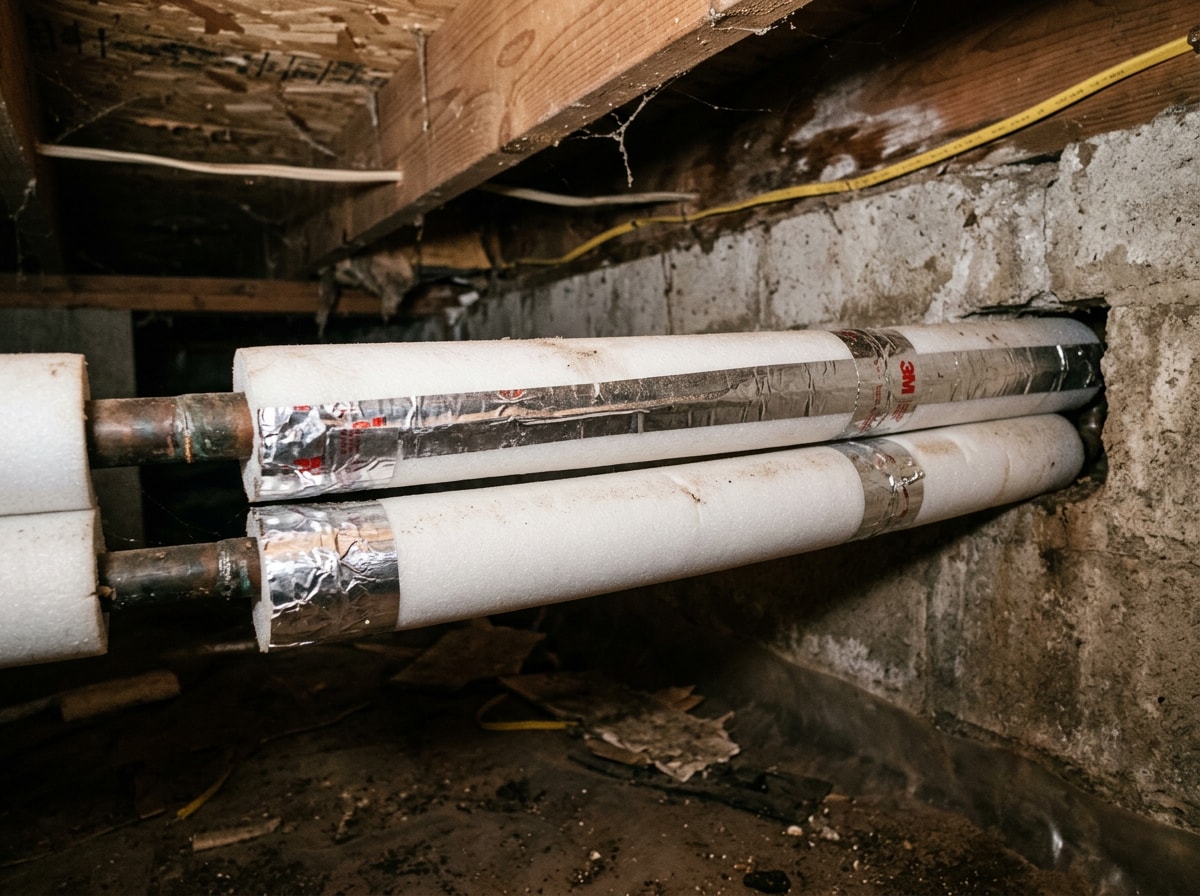
- Insulate exposed pipes in crawlspaces, garages, and exterior walls before winter hits.
- Let faucets drip slightly during hard freezes to relieve pressure inside the line.
- Disconnect garden hoses and cover outdoor spigots once nighttime temperatures start dropping.
If there are uninsulated water pipes in or near exterior walls, they can burst in freezing weather, which can be catastrophic. The Department of Energy's pipe insulation guidance walks through the materials and steps in more detail.
Common Plumbing Problems in Stephenville, TX
The most common plumbing problems Stephenville homeowners report include clogged drains, lack of hot water, low water pressure, leaks and water damage, running toilets, and septic or sewer line issues. Several of these show up more often locally because of mineral-heavy well water and shifting clay soil.
Clogged drains and low water pressure tend to appear more often here than in some other areas, partly because mineral content in well water can build scale inside older pipes faster than treated municipal water does. Running toilets and minor leaks are easy to overlook, but they add up on a water bill fast.
If the problem traces back to the sewer line or septic connection rather than the fixture itself, our plumbing and sewer repair guide for Stephenville, TX walks through diagnosis and next steps in more depth. You can also see recent septic and drainage work in our project gallery.
Henderson Land Services has handled septic installations, drainage corrections, and house-pad excavation across Erath County properties for years, and the pattern holds steady: the homes with the fewest plumbing emergencies are the ones where grading and septic design got attention before problems started. If your property's drainage, septic system, or site prep needs a second look, get a free estimate and we'll walk the property with you.
FAQ
Do I need a permit for plumbing services in Stephenville?
In most of Stephenville, plumbing work typically requires a permit, with fees varying by project scope. Most licensed contractors handle the application as part of their service, and inspections are usually required both before and after the work to confirm it meets code.
Are there plumbing issues in Stephenville I can fix myself?
Basic drain cleaning and fixing a leaking toilet are reasonable for someone with general handyman knowledge. Breaks or drips in water, gas, or sewer lines should go to a licensed plumber. DIY attempts on these can cause more damage and end up costing more than the original problem.
What is the best time of year for plumbing services in Stephenville?
Late summer or early fall is generally the best window, since it leaves time to address issues before winter freeze risk sets in. A pre-winter inspection can catch exposed or poorly insulated pipes before a hard freeze turns a minor gap into a burst-pipe emergency.
What are signs that my pipes might need to be replaced?
Recurring leaks, a noticeable drop in water pressure throughout the home, discolored water, and visible corrosion on exposed pipe sections all point to a repipe worth considering. Catching these signs early, rather than patching the same spot repeatedly, is usually the more cost-effective path.
Is well water safe in Stephenville without treatment?
Not automatically. Private wells aren't regulated or tested by any government agency, so safety depends entirely on the owner testing and treating the water. An annual test for bacteria, nitrates, and pH is the baseline most health agencies recommend.
What should I do if my septic system backs up or my well runs dry?
Stop using water in the house immediately to avoid pushing more wastewater into a failing drain field, and call a septic contractor for an evaluation. For a dry well, a licensed well contractor can check pump depth and static water level before assuming the aquifer itself is the problem.