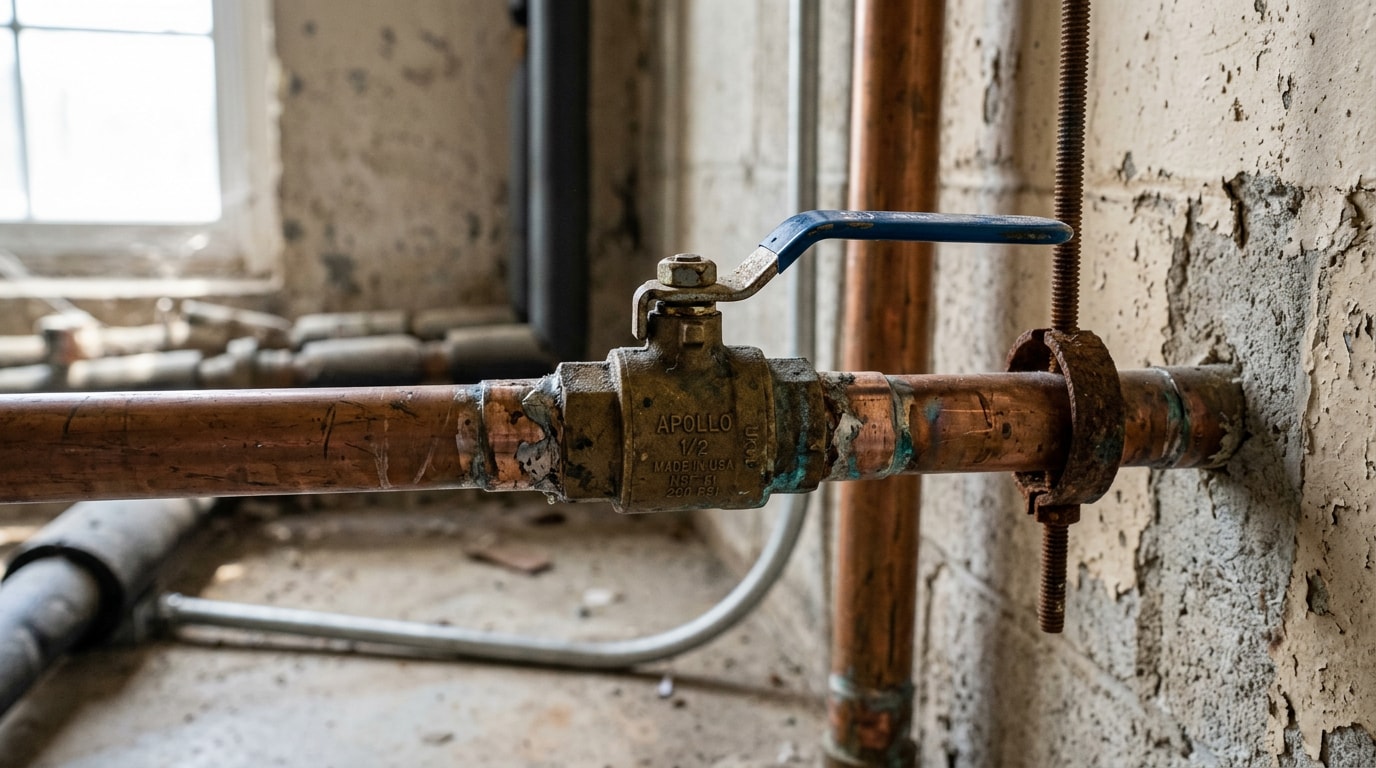
Every home and ranch property in De Leon depends on a handful of plumbing valves most owners never think about until something leaks. Knowing where your plumbing valves in De Leon, TX are located, and what type you have, can mean the difference between a quick fix and a flooded utility room or pasture line. This guide walks through the valves you'll actually encounter, from the meter box out front to the shower stop behind your tile, plus the valve issues that show up specifically on Comanche County's rural and well-fed properties.
Why Valve Knowledge Matters More on De Leon's Rural Properties
A city-lot home in a bigger town usually has one water entry point and a handful of fixture stops. A De Leon property often has more moving parts: a well pressure tank, a septic system with its own riser and distribution valves, irrigation lines feeding pasture troughs, and a municipal or co-op line in addition to all of it. Each connection point is a place a valve can fail quietly for years before anyone notices.
Our crew at Henderson Land Services sees this pattern constantly on excavation and septic jobs around De Leon: a homeowner calls about a soggy yard, and the real cause traces back to a stuck or corroded valve at a septic distribution box or a well line junction that hasn't been touched since the property was built.
Where Are the Shut-Off Valves Located in the Home?
Most homes have several layers of shut-off valves, starting with the whole-house main and working down to each individual fixture.
Where Is the Main House Valve Located?
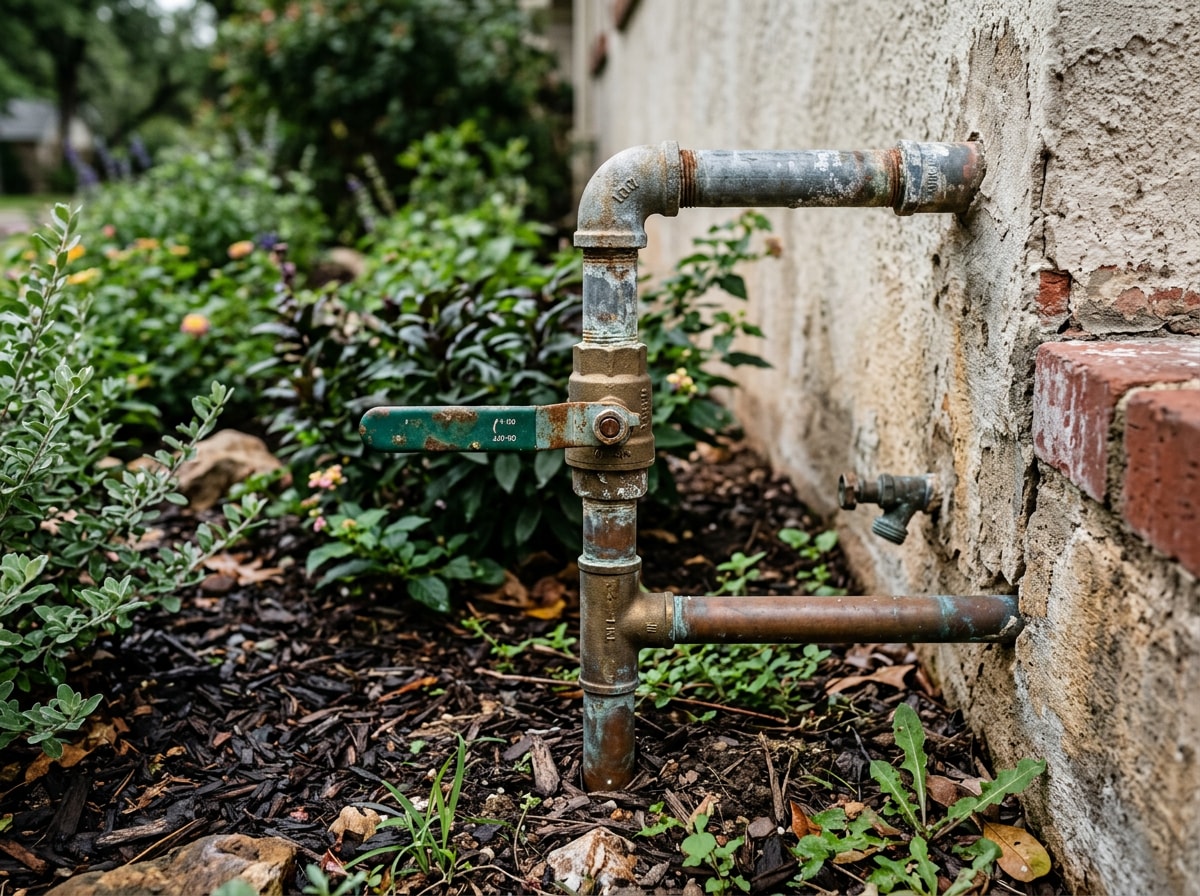
The main house valve is typically found where the water line enters the home, near a slab foundation flower bed on older De Leon homes, or in a garage or utility room on newer construction. A separate city-side valve sits near the street or meter.
Rural De Leon properties often add a third point: a shut-off at the well pressure tank or an outbuilding supply line, something generic shut-off guides written for subdivision homes rarely mention. Plumbing code backs up why this main valve matters: shutoff valves are required on the fixture supply to each plumbing fixture other than bathtubs and showers, and on the water supply pipe to each sill cock , and access must be provided to all full-open valves and shutoff valves , per the International Plumbing Code.
What Is Inside My Water Meter Box?
The box at the curb holds more than just the meter itself, and knowing its layout helps during a street-side emergency. A typical meter box contains the city-side shut-off valve, the consumer's shut-off valve, the line running to the house, and the utility line coming from the street main. Homeowners are generally permitted to operate the consumer shut-off only; the city valve is reserved for utility staff.
Kitchen, Tub & Shower Valve Locations
Under most kitchen sinks you'll find two angle stops, one hot and one cold, plus a third valve for the dishwasher if one's installed. Shower valve stops are less visible. They're usually integral valves hidden behind the trim plate or faceplate, not exposed like kitchen angle stops. Locating them often means removing a small access panel in an adjacent closet or wall.
What Type of Shut-Off Valve Do You Have?
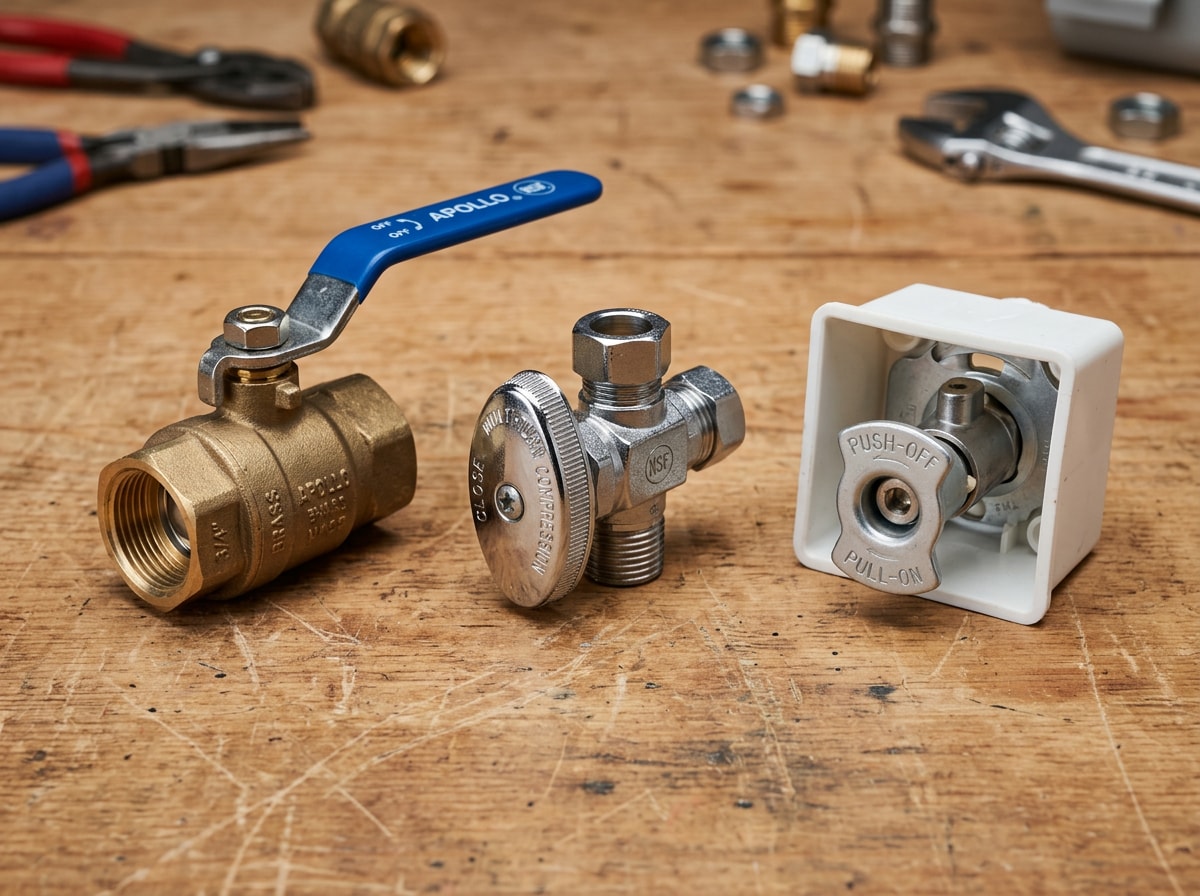
Identifying your valve style ahead of time helps a repair crew arrive with the right parts the first trip.
| Valve Type | How It Operates | Common Failure Point | Where You'll Find It |
|---|---|---|---|
| Quarter-turn ball valve | Quarter-turn handle, full open or closed | Handle can snap if forced when seized | Main house shutoff, modern fixture stops |
| Multi-turn compression valve | Several turns to open or close | Stem packing wears and starts weeping | Older homes, exterior hose bibs |
| Recessed box "pull-stop" valve | Pull-to-close mechanism in a wall box | Seizes shut from infrequent use | Older slab homes, exterior valve boxes |
Replacement cost varies by access difficulty, valve material, and whether the surrounding pipe also needs attention, so get a quote for your specific setup rather than assuming a flat number. Residential valves sold today must also meet health-effects standards: EPA's Office of Research and Development participates in the NSF International committees responsible for developing NSF/ANSI/CAN 61 , the standard covering the materials used in valves and fittings that touch drinking water.
Backflow Preventers and Septic-Adjacent Valves in De Leon
A backflow preventer valve stops contaminated water from siphoning back into the clean supply line, a real risk anywhere irrigation, livestock troughs, or well systems tie into household plumbing. Backflow is the unintended reversal of water flow through a cross-connection, which can result in a potentially serious public health hazard , and a cross-connection control and backflow prevention program helps prevent contaminants from entering a drinking water distribution system , according to EPA guidance.
Backflow prevention matters for De Leon properties specifically because many homes blend municipal or co-op water with ag or irrigation lines, creating a cross-connection risk that a typical suburban home never sees. If your property also runs on well water, keep in mind there's no state agency routinely checking your private system: there is no regulation for ensuring that private wells meet safe drinking water standards, though private well owners can have their wells tested and use federal drinking water standards as a guide for assessing water quality , per the Texas Groundwater Protection Committee. That responsibility extends to the valves on your well line and pressure tank.
Septic systems add another layer most plumbing guides skip entirely. The distribution box that routes effluent to drain field lines has its own valves or flow devices, and a stuck one can send all the flow to a single line until it saturates. If you're planning new construction or a septic repair, a proper septic site evaluation identifies where those control points need to sit before anything gets buried.
How to Shut Off Your Water in an Emergency
- Start with the house valve nearest the water entry point.
- If it's stuck, corroded, or you can't find it, move to the meter or street valve instead.
- Don't force an old valve that won't turn. Forcing it can snap the stem and make the leak worse.
- If the valve won't budge or you're not sure which one controls the affected line, get a free estimate and have a crew confirm it before the next heavy rain tests it again.
Find the Shut-Off Valve on Your Property Inspection Report
A home inspection report's plumbing section usually photographs and notes the shut-off valve location. New De Leon homeowners should pull that report and mark the spot before an emergency happens, not during one.
When Excavation or Septic Work Means New Valves
Valve problems don't always stay contained to a single fixture. If a main line valve has failed for years, the surrounding soil can erode, pipe runs can shift, or a yard can stay soggy long after the visible leak stops. That's when the fix moves from a wrench to a shovel.
Projects where this comes up often around De Leon:
- Replacing a buried main line during site preparation for a new structure or addition.
- Regrading a yard with drainage solutions after a slow valve leak has saturated the soil for months.
- Relocating or adding valves during a conventional septic installation or an aerobic system upgrade.
If a sewer or septic valve issue has already turned into a backup, our write-up on handling a plumbing emergency in nearby Brownwood walks through what a local excavation crew actually does on that kind of call.
Henderson Land Services works throughout De Leon, TX and the surrounding area on exactly these jobs, pairing excavation know-how with septic system design and repair. Visit our homepage to see the full range of services, or view recent projects completed around the area.
FAQ
How often should shut-off valves be replaced?
Most shut-off valves last many years depending on type and water quality, but there's no fixed replacement schedule. Replace one sooner if the handle feels stiff, the stem leaks, or mineral buildup prevents a full seal.
Where is the main water shut-off valve located?
It's usually near the water line's entry point into the home, covered in detail in the section above. Rural De Leon properties may also have a second shut-off at the well pressure tank.
What type of valve is used in plumbing?
Homes commonly use ball valves, compression (multi-turn) valves, and angle stops for individual fixtures. See the comparison table above for operation style and common failure points.
How do I know if my shut-off valve needs replacing?
Warning signs include a handle that won't turn, leaking around the valve body when operated, visible corrosion, or water that still flows after it's supposedly shut off.
Do rural De Leon properties on well water need different shut-off valves?
Not a different valve type, but an extra one. Well-fed properties typically need a shut-off at the pressure tank or wellhead in addition to the standard house and fixture valves, since there's no municipal utility managing that connection point for you.
What is a backflow preventer, and does my De Leon property need one?
A backflow preventer stops contaminated water from siphoning back into your clean supply line. It's especially important on properties where irrigation, livestock troughs, or well systems connect to household plumbing, since that's where cross-connection risk is highest.