Shaft sinking in Stephenville, TX is one of the least common but most misunderstood excavation requests Erath County contractors field. The term comes from mining, but it shows up today in conversations about deep drilled foundations, water wells, and storm shelters. Here's what the process actually involves, and why getting it wrong underground costs far more than getting it wrong on the surface.
What Is Shaft Sinking?
Shaft sinking is the controlled excavation of a vertical opening into the earth, built to reach a specific depth for mining access, deep foundations, utility corridors, or underground storage. Crews stabilize the walls as they dig, matching the method to local soil and rock conditions.
The term originated in mining, where shaft mining or shaft sinking is the action of excavating a mine shaft from the top down, where there is initially no access to the bottom. The underlying techniques, controlled drilling, wall support, and depth management, also apply to drilled pier foundations, deep water wells, and some utility installations common in North Texas.
At Henderson Land Services, we've had more than one Stephenville landowner call asking about "shaft sinking" when what they actually needed was a deep drilled pier for a barn foundation or a cased water well. The vocabulary overlaps. The equipment, permitting, and cost do not.
Common Shaft Sinking Methods
A few methods dominate modern shaft sinking work. The right choice depends on depth, soil type, and groundwater conditions.
| Method | Best For | Typical Depth | Key Equipment |
|---|---|---|---|
| Drill-and-blast | Rock formations where mechanical digging isn't efficient | Hundreds of feet | Drill jumbos, explosives |
| Shaft boring machine | Smooth, consistent bores with less manual labor | Hundreds of feet | Purpose-built boring rig |
| Raise boring | Connecting to an existing lower access point | Varies by project | Raise borer |
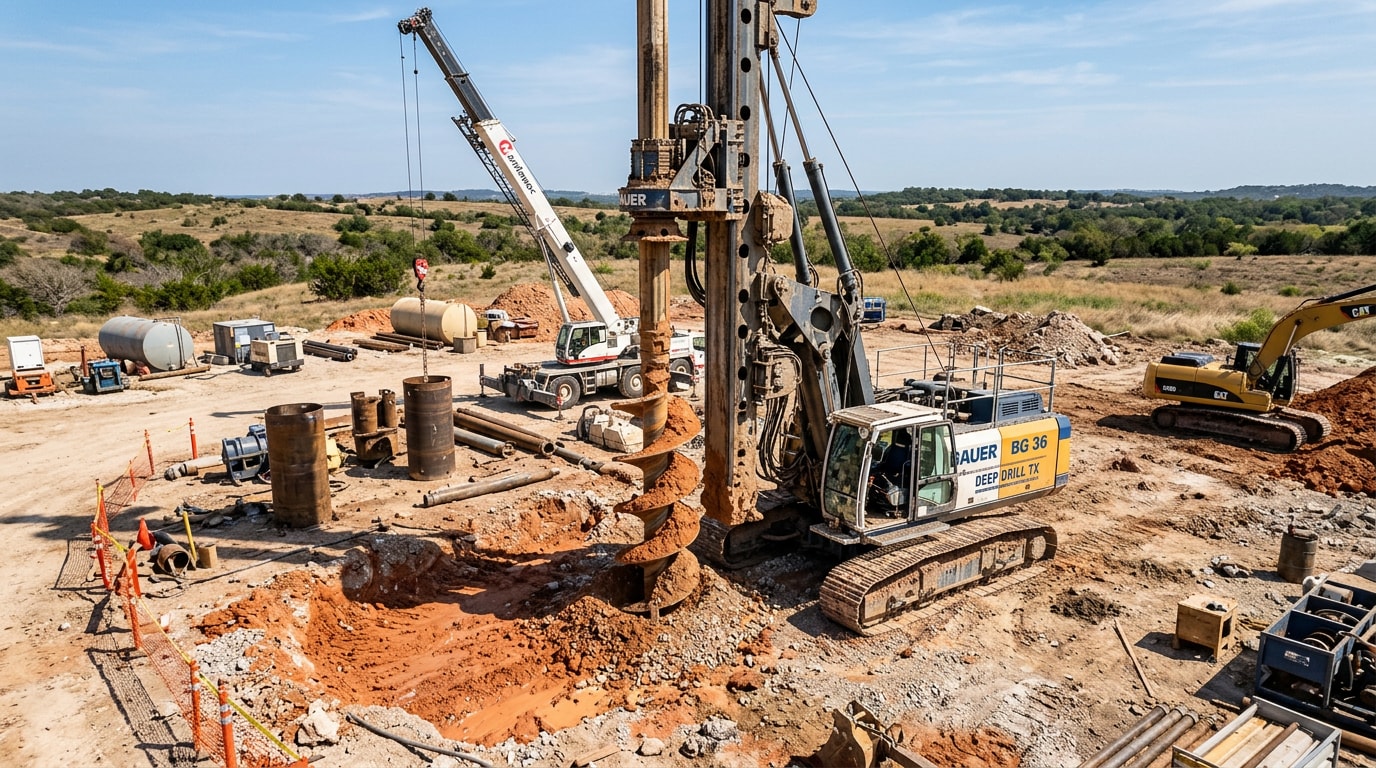
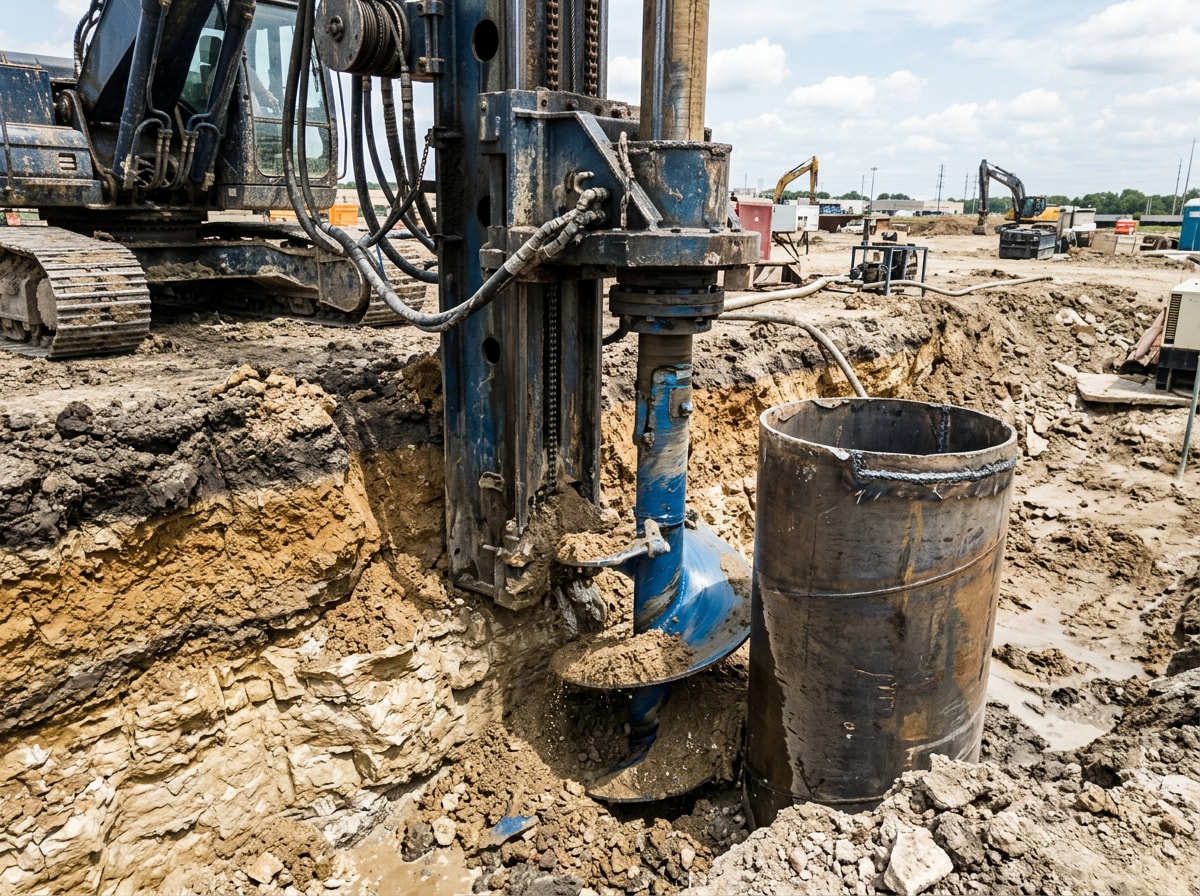
| Drilled pier (auger) | Foundation work at shallower depths | A few dozen feet | Large-diameter auger rig |
Each method requires different equipment and crew expertise, which is a big part of why project costs and timelines vary so widely from site to site. Most work that touches Stephenville falls into the drilled pier category rather than true mining-style shaft sinking.
Why Shaft Sinking Comes Up in the Stephenville Area
Erath County has no active underground mining industry, so industrial-scale shaft sinking is rare here. The term still matters locally, mostly in the context of deep drilled foundations, agricultural water wells, and occasional storm shelter installations.
Stephenville's geology is part of the reason. Erath County's surface is dominated by a mix of formations that behave very differently once you start digging. Paluxy Sand covers about 30% of the county at the surface , while Glen Rose Limestone covers roughly 28% and Walnut Clay makes up another sizable share. Sand drills easily but needs wall support fast. Limestone holds a bore shape well but can turn drilling into a slow, equipment-intensive grind. A contractor who only has experience in one of these conditions can misjudge a project in the other.
When a project calls for depths beyond typical foundation work, contractors sometimes borrow shaft sinking principles even if they don't use the exact mining terminology. If someone brings up "shaft sinking" for a Stephenville project, it's worth clarifying up front whether they mean a literal mine-style shaft or a deep drilled foundation or well. The two involve very different equipment, permitting, and cost structures.
The Shaft Sinking Process, Step by Step
Every shaft sinking project follows a similar sequence, though the specific equipment changes based on depth and ground conditions.
- Site assessment and soil testing — geotechnical data determines the method and support system needed.
- Permitting and utility location — required before any ground disturbance begins.
- Initial excavation — crews remove material in controlled stages, not all at once.
- Wall support installation — shoring, casing, or lining prevents collapse as depth increases.
- Dewatering, if needed — groundwater intrusion is managed throughout the dig.
- Final lining or casing — the finished shaft is sealed and stabilized for its intended use.
Depth and soil conditions can stretch this timeline considerably. A shallow drilled pier might take a day. A true deep shaft can take weeks.
Safety Standards and Regulations for Shaft Sinking
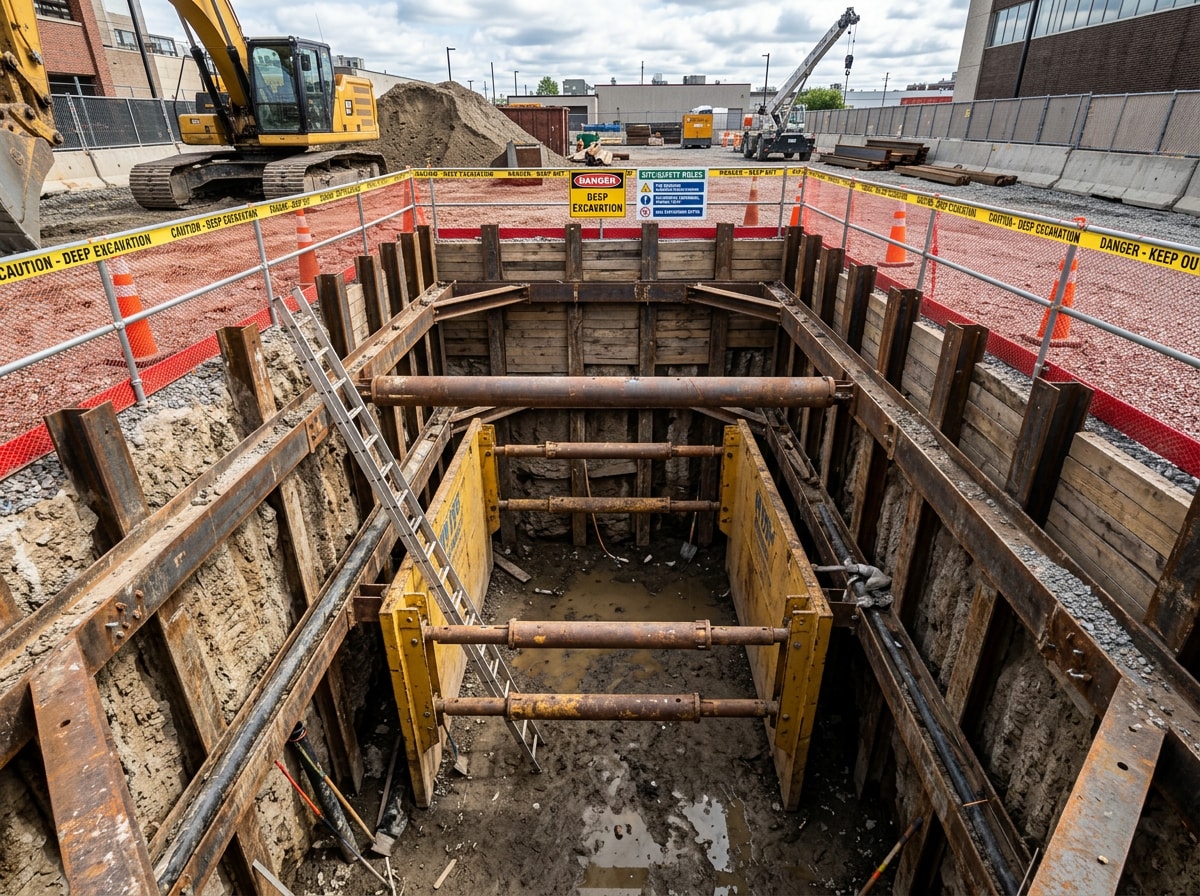
Shaft sinking carries real risk: cave-ins, falling debris, and poor air quality in deeper excavations are the main concerns. Because of this, the work is governed by strict occupational safety requirements around shoring, utility location, and fall protection.
In the United States, excavation and shaft work for construction projects generally falls under OSHA's excavation standard, 29 CFR 1926 Subpart P. The estimated location of utility installations, such as sewer, telephone, fuel, electric, water lines, or any other underground installations that reasonably may be expected to be encountered during excavation work, shall be determined prior to opening an excavation. Protective systems against cave-ins are also mandatory once an excavation reaches a certain depth. Each employee in an excavation shall be protected from cave-ins by an adequate protective system except when excavations are less than 5 feet in depth and examination of the ground by a competent person provides no indication of a potential cave-in.
Mining-specific shaft sinking falls under a separate set of federal mine safety regulations when the work supports an active coal mining operation. Under 30 CFR 77.1900(a), each operator of a coal mine must prepare and submit for approval by the district manager a plan providing for the safety of workmen in each slope or shaft that is commenced or extended. That plan requirement does not apply to the deep drilled foundations and wells typical of Erath County projects, but it shows how differently regulators treat true mining shafts versus construction excavation.
If a project involves a water well, there's one more layer to know about. A license is required to drill a water-related well in Texas and to install a pump for a water-related well. Anyone sinking a well-style shaft in Erath County should confirm the driller holds a current Texas Department of Licensing and Regulation well driller license before work starts.
These rules aren't optional, and requirements can shift depending on project classification, depth, and whether the work is mining-related or construction-related. Anyone planning a project like this should confirm current requirements with a licensed engineer rather than relying on general guidance alone.
Shaft Sinking vs. Drilled Pier Foundations
These two terms get used interchangeably in casual conversation, but they aren't the same project.
| Shaft Sinking | Drilled Pier Foundation | |
|---|---|---|
| Purpose | Mine access, deep storage, utility corridors | Supporting a building foundation |
| Typical depth | Dozens to hundreds of feet | A few dozen feet |
| Governing rules | OSHA construction rules, or MSHA mine safety plans for mining shafts | OSHA construction excavation rules |
| Common in Stephenville? | Rare | Occasional, on problem soils |
| Equipment | Boring machines, drill-and-blast rigs | Auger drill rigs |
If a quote mentions "shaft sinking" for a residential or agricultural project in Erath County, it almost always means the drilled pier column on the right side of this table, not a mining-scale bore.
Choosing a Shaft Sinking Contractor in Stephenville, TX
Given how specialized this work is, not every excavation company has the equipment or training for true deep vertical excavation. A few things worth checking before hiring:
- Relevant experience with deep excavation or drilled shaft foundation work, not just standard digging.
- Proper licensing and insurance for the scope of work involved.
- Geotechnical partnerships — a contractor who works with soil engineers tends to plan more accurately.
- Clear communication about which method they'll use and why it fits the site.
Garrett Henderson, co-owner of Henderson Land Services and an OSSF Level 2 licensed site evaluator, reviews soil and groundwater conditions on-site before recommending a method for any deep excavation project in Erath County. That step matters more in Stephenville than it would somewhere with uniform soil, because a site can shift from sand to limestone within a short distance.
For property owners comparing options, it helps to review our excavation contractor services and house pad preparation work before requesting quotes, since pricing and scope vary significantly between drilled pier work and true shaft excavation. If the project touches a private water source or septic field, a septic site evaluation is worth scheduling at the same time, since both require similar soil data.
Getting more than one assessment is reasonable here. Because deep shaft projects are uncommon in this area, even experienced local contractors may need to bring in outside expertise or equipment for deeper or more technical jobs. Our crew has also walked property owners through excavation sequencing on related projects, like the one described in our first excavator cost and process guide, which covers a lot of the same site-assessment groundwork.
Henderson Land Services serves Stephenville, TX and the surrounding Erath County area with dirt work, drilled foundation prep, and septic system installation. You can see examples of completed excavation and site work in our project gallery, or visit the homepage for a full list of services. If a project on your property might call for a deep vertical excavation, contact us for a free estimate before you commit to a method.
FAQ
Is shaft sinking common in Stephenville, TX?
No. True industrial shaft sinking is uncommon in Erath County because the area has no active underground mining industry. Related deep excavation techniques, like drilled pier foundations and deep water wells, do show up occasionally.
How deep does a shaft sinking project typically go?
Depth varies widely by purpose. Drilled pier foundations might reach a few dozen feet, while mining-related shafts can extend hundreds of feet underground depending on the operation.
What's the difference between shaft sinking and drilled pier foundations?
Shaft sinking is a broader excavation category that includes mining shafts and other deep vertical bores. Drilled pier foundations are a specific construction application using similar excavation principles at shallower depths.
Who regulates shaft sinking safety?
Safety oversight depends on the project type. Construction-related excavation generally falls under OSHA's excavation standard, while mining-related shaft work falls under separate federal mine safety regulations.
How much does shaft sinking cost in Stephenville, TX?
There's no single rate, because drilled pier work and true mining-style shafts are priced completely differently. Depth, soil type, groundwater, and whether shoring or casing is required all move the price. A soil assessment and written scope from a licensed contractor is the only reliable way to get an accurate number.
Do I need a permit to drill a deep water well on my property near Stephenville?
You need a licensed driller either way. A license is required to drill a water-related well in Texas, though no state-level site permit is required for most private domestic wells; local rules can still apply, so check with the driller and your county before work starts.