Shower hoses in Glen Rose, TX have to survive harder water and heavier mineral buildup than most hoses sold on a standard hardware store shelf are built for. That's why the generic "universal fit" pick so often cracks, stiffens, or starts leaking within a year or two of installation. This guide breaks down materials, thread sizes, lengths, and a step-by-step replacement process, then flags the exact point where a hose problem turns into something bigger.
Types of Shower Hoses
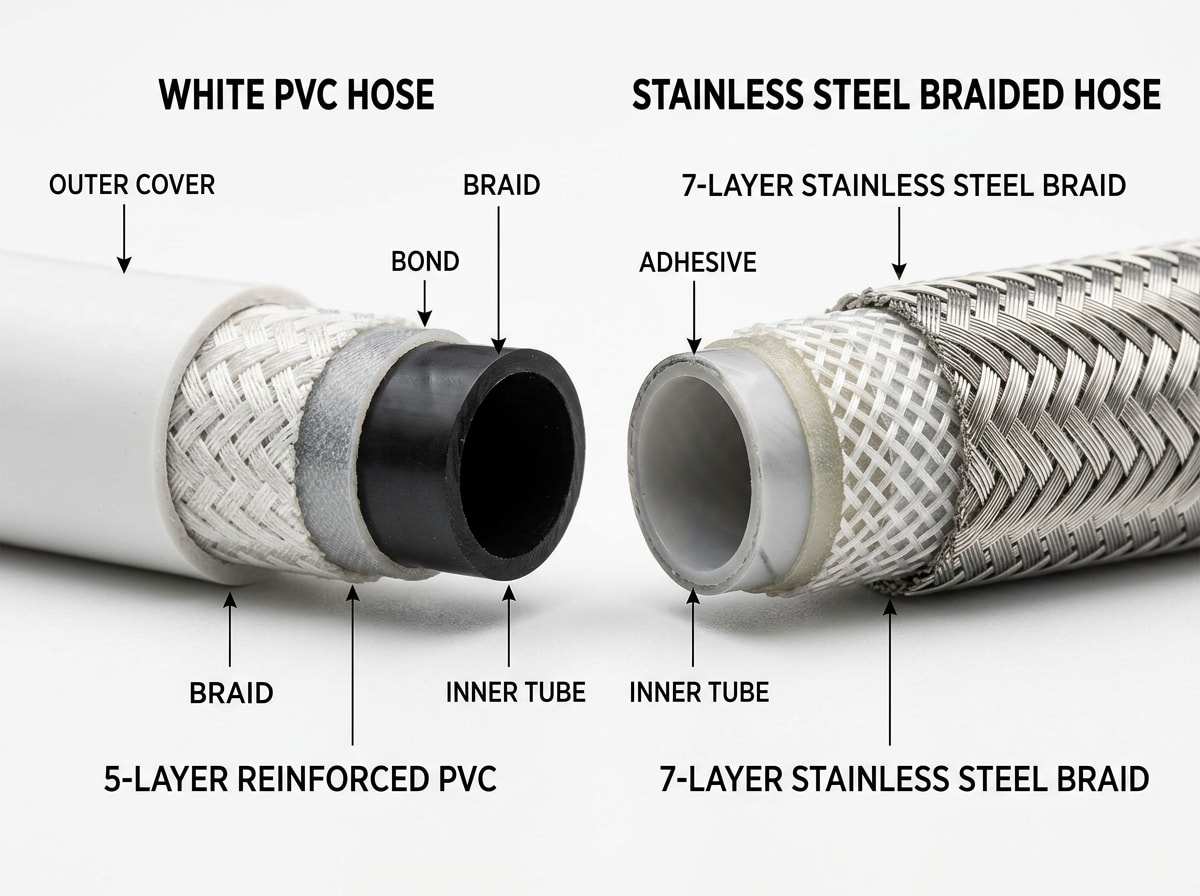
Material is usually the first decision anyone makes when shopping for a replacement. It affects price, flexibility, and how long the hose lasts before it needs swapping out again. The two main categories, PVC and metal, handle those trade-offs very differently.
PVC (Polyvinyl Chloride) Shower Hoses
PVC shower hoses are the budget-friendly option you'll find on most hardware store shelves. They're lightweight, flexible, and easy to install without any tools beyond your hands.
That affordability comes with trade-offs. PVC doesn't hold up as well under constant heat and water pressure as metal does. The material can crack, kink, or develop a chalky texture after a few years of daily use. If you're on a tight budget, or replacing a hose in a rarely-used guest bathroom, a plastic shower hose is a reasonable, low-cost fix. For a primary bathroom that sees daily use, the shorter lifespan may mean replacing it more often than you'd like.
Metal Shower Hoses
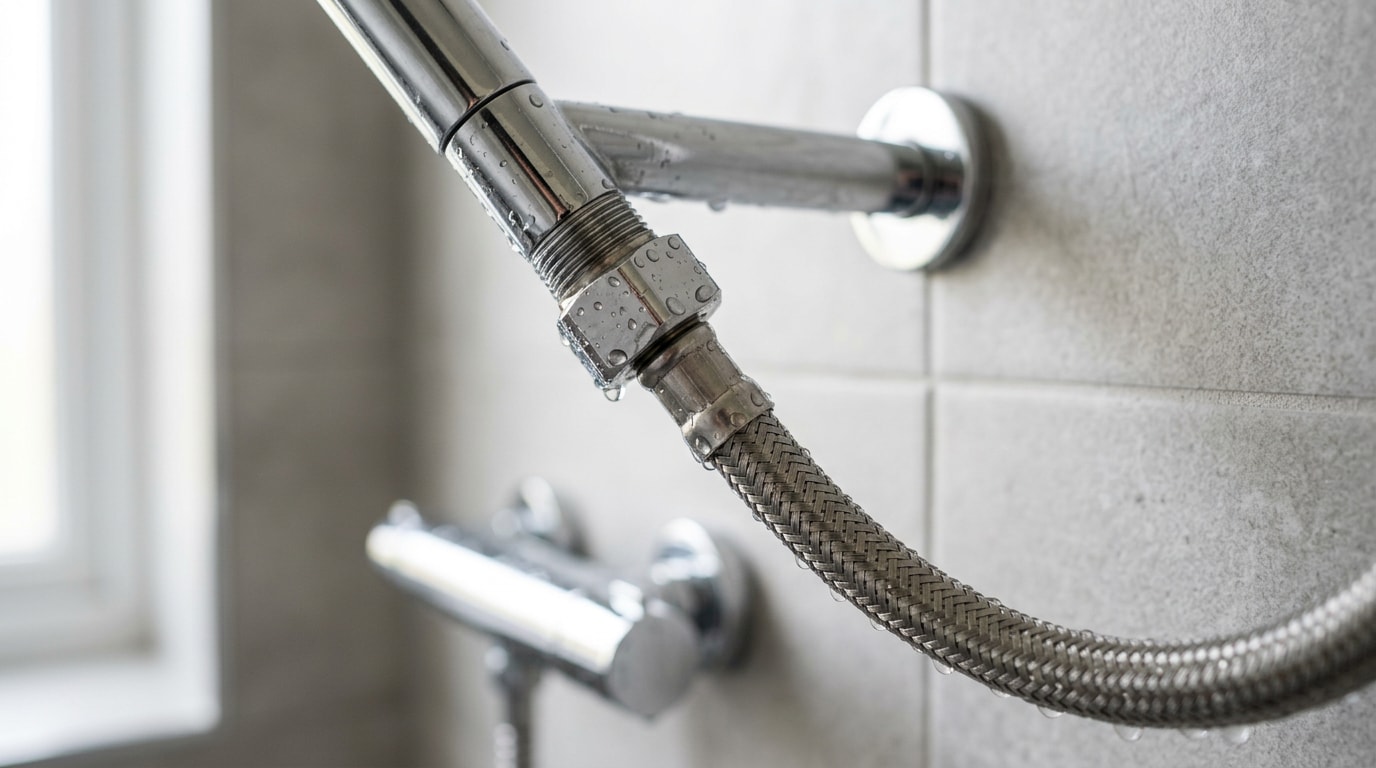
Stainless steel and brass hoses cost more upfront, but they're built for the long haul. The braided stainless steel exterior resists kinking, corrosion, and the wear that comes from daily on-off use at the shower valve.
A quality stainless steel hose generally outlasts a comparable PVC model by a meaningful margin, especially in homes with hard water. Brass fittings at the connector ends add another layer of corrosion resistance, which matters more than you'd think here (more on that below). For most homeowners replacing a hose for the last time in a while, metal is worth the extra cost.
Choosing the Right Hose for Glen Rose's Hard Water
Material and price only tell half the story in Somervell County. The water itself is the bigger factor working against your hose, and it's specific to this part of Texas.
Why Glen Rose Water Is Harder on Hoses
The City of Glen Rose draws its supply from both surface water and groundwater. The city's own water quality report confirms it pulls from the Wheeler Branch Reservoir and from wells pumping the Trinity Aquifer in Somervell County, an aquifer system that runs through heavy limestone formations. Limestone-fed groundwater carries more dissolved calcium and magnesium, which is the textbook definition of hard water.
Texas A&M AgriLife Extension's water quality research notes that the minerals responsible for hardness actually coat and protect the inside of metal pipes, while softened water lacking those minerals can be more corrosive to plumbing over time. That's a double-edged sword for homeowners: hard water protects the pipes, but it also means scale builds up fast at hose connectors, inside washers, and around shower valve threads.
After years spent evaluating septic sites and grading house pads across Somervell County's limestone shelf, I've pulled more corroded shower valves and crusted-over hose fittings off rural properties than almost any other fixture. Mineral buildup, not hose age, is usually the real culprit.
Price and Longevity
| Material | Typical Price | Typical Lifespan | Best For |
|---|---|---|---|
| PVC | $10-$20 | 2-4 years | Guest baths, tight budgets |
| Stainless steel (braided) | $20-$45 | 5-8 years | Primary bathrooms, daily use |
| Brass-fitted premium | $45+ | 7-10 years | Hard water, well water homes |
The real cost comparison isn't the sticker price. It's price divided by years of service. A $15 PVC hose replaced every two years costs more over a decade than a $35 stainless steel hose that lasts seven or eight.
If your current hose leaks at the wall connection rather than along the hose itself, the problem might not be the hose at all. It could be a mineral-fouled washer or a corroded valve, which is a sign to look past the hose and at what's feeding it.
Is Your Shower Hose Fitting Compatible?
Shower hoses look pretty standardized at a glance, and most are labeled "universal fit." In practice, that label glosses over real differences in thread size and type that can leave you with a hose that just won't thread onto your shower arm or handheld bracket.
What Makes a Shower Hose Universal?
Hand-held shower connections in North America are governed by a specific standard. The ASME A112.18.1/CSA B125.1 plumbing supply fittings standard is jointly maintained by ASME and the Canadian Standards Association. That standard specifies hand-held shower connection threads as 1/2-14 NPSM or ISO 228-G1/2 B, which is why the 1/2-inch BSP fitting (often just called G1/2) shows up on nearly every residential showerhead and handheld bracket sold in the U.S.
Higher-flow or commercial setups sometimes use a larger G3/4 fitting instead, which won't thread onto a standard connection. Confusion often comes from mixing up BSP (British Standard Pipe) threads, common on shower hardware, with NPT (National Pipe Taper) threads used elsewhere in U.S. plumbing. They look similar but aren't interchangeable, and forcing one onto the other can strip the threads or crack the fitting.
| Thread Type | Common Use | How to Check at Home | If You Force the Wrong Type |
|---|---|---|---|
| G1/2 (BSP) | Standard showerheads, hoses | Outer diameter about 0.75 inch across | Won't seat fully; leaks at the connection |
| G3/4 (BSP) | High-flow or power showers | Outer diameter about 1 inch across | Hose won't thread on at all |
| NPT | General U.S. plumbing, not shower-specific | Threads taper slightly toward the tip | Cross-threading, stripped fittings |
A cheap tape measure and a close look at whether the threads taper will save you a return trip to the hardware store. When in doubt, bring the old hose or connector with you to match it in person.
What Length Shower Hose Do You Need?
Length affects comfort and function just as much as material does. Too short, and you're hunched over. Too long, and the extra hose tangles at the bottom of the tub.
Standard Length (1.5 Meters / 5 Feet)
The standard shower hose length is about 1.5 meters, or roughly 5 feet. That size works for most bathrooms and most people, giving enough slack to rinse over a bathtub, wash a child, or reach across a standard shower stall.
Taller households or walk-in showers with handheld brackets mounted higher up often do better with a 6- to 7-foot hose instead. Smaller enclosures or corner showers may only need a shorter length to avoid a tangled mess on the shower floor. When in doubt, measure your current hose before buying a replacement.
One thing length won't change: your water pressure. The EPA's WaterSense program caps showerhead flow at 2.0 gallons per minute regardless of hose length, and that limit is tested with the full hose assembly attached. A longer hose doesn't bypass that cap or meaningfully reduce flow on its own.
How to Replace a Shower Hose: A Step-by-Step Guide
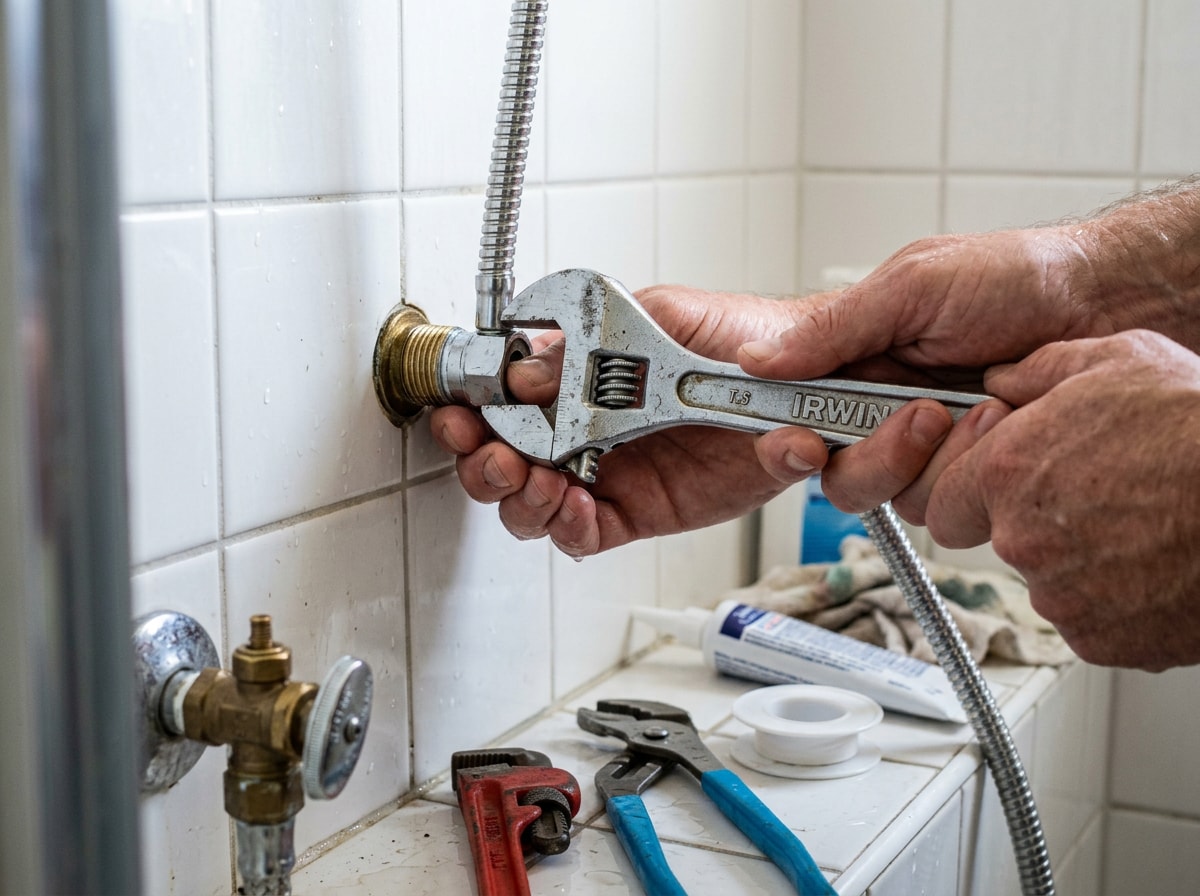
Replacing a shower hose is one of the more approachable DIY plumbing jobs out there. Most homeowners can finish it in under 30 minutes with basic tools.
- Shut off the water supply to the shower, or the main water valve if there's no dedicated shutoff.
- Unscrew the old hose by hand or with pliers wrapped in a cloth, turning counterclockwise at both the showerhead and wall connection.
- Inspect the rubber washer inside each connector and replace it if it's cracked, flattened, or missing. A worn washer is a common cause of leaks that outlasts the hose swap itself.
- Attach the new hose, hand-tightening both ends, then giving each connection a quarter turn with pliers. Tight enough to seal, not so tight you strip the threads.
- Turn the water back on and run the shower for a few minutes, checking both connection points for drips.
When a Hose Swap Isn't the Real Fix
Even a hose that isn't leaking yet has a shelf life. Most shower hoses should be replaced every five to eight years regardless of visible damage, since rubber seals and flexible materials degrade gradually with age and water exposure. A quick visual check during routine cleaning, looking for discoloration, stiffness, or a slow drip at the connector, is usually enough to catch problems early.
If your household is on well water or hasn't installed a softener, it's reasonable to plan on the shorter end of that window. Frequent use from a large family or multiple daily showers compounds the effect, since more on-off cycles mean more wear at the connection points.
If you're still seeing a leak after reinstalling the washer and tightening the connections, or the wall-mounted valve looks corroded or scaled over, stop troubleshooting there. That points to something bigger than the hose: a failing supply line, a drainage problem backing up pressure, or, on rural properties, a septic or well issue feeding mineral-heavy water straight to your fixtures.
Henderson Land Services handles that side of the equation for homes across Glen Rose, TX, including septic site evaluations for properties on well water and drainage solutions for sites where standing water or poor grading is pushing sediment back into the plumbing. If you're dealing with a recurring leak tied to a septic or sewer line rather than a simple fixture problem, our plumbing emergency guide for Brownwood walks through how a local excavation crew handles that kind of call.
Ready to get the real problem diagnosed instead of swapping parts twice? Contact us for a free estimate and we'll take a look at what's actually feeding your fixtures.
FAQ
Which material is better: a metal or plastic shower hose?
Stainless steel hoses generally win for durability. They resist pressure, corrosion, and daily wear better, making them the stronger long-term investment. PVC hoses are lighter, more flexible, and usually easier to clean, which some people prefer for everyday handling, but they tend to wear out sooner. For heavy daily use or hard water, metal is the safer bet.
Are all shower hose fittings the same size?
No. Most residential shower hoses use a G1/2 (1/2-inch BSP) connector, the standard set under ASME A112.18.1, which fits the large majority of household showers and handheld brackets. Higher-pressure systems sometimes use a larger G3/4 fitting instead, and older or custom-built showers can have unique thread sizes.
What is the best hose length for tall people?
A good rule of thumb is choosing a hose that's roughly 4 to 12 inches (10-30 cm) longer than your height. That extra length gives taller users enough reach to shower comfortably without stretching toward a fixed showerhead position.
Will I lose water pressure with a longer hose?
No. Length alone shouldn't noticeably affect your water pressure, as long as the rest of your plumbing is in good shape, and federal flow limits are tested with the hose attached. Pressure problems usually point to something else, like a clogged showerhead, worn valve, or mineral buildup inside the pipes.
Does Glen Rose's hard water really affect how often I replace a shower hose?
Yes. Groundwater pumped from the Trinity Aquifer runs through limestone, which adds dissolved calcium and magnesium that scales up washers and valve threads faster than in areas with softer water. Homes on well water without a softener should plan on replacing hoses closer to the four- to six-year mark instead of the full eight.
How do I tell if it's the hose or the valve behind it that's leaking?
Dry the area completely, then run the shower and watch where water first appears. Drips along the hose body point to a worn hose. Water pooling at the wall connection, even after you've replaced the washer, usually means the valve or supply line behind the wall needs attention, not another hose.
Visit our homepage to see the full range of excavation, septic, and drainage work we handle for homeowners across Somervell County.
Garrett Henderson is an OSSF Level 2 Licensed Site Evaluator and owner of Henderson Land Services, based in De Leon, TX and serving Glen Rose and the surrounding counties.