A toilet plumbing diagram turns a confusing fixture into a short list of parts you can check before calling anyone. In Eastland, TX, where most homes run on private septic systems rather than city sewer, knowing these parts matters even more. What a toilet does internally, and what goes down it, affects a lot more than the bowl.
Toilet Plumbing Diagram: Tank, Bowl, and Seat at a Glance
Every toilet, regardless of brand, breaks down into three sections: the tank, the bowl, and the seat. The tank stores and releases water. The bowl holds waste and routes it toward the drain. The seat is just the comfort layer on top.
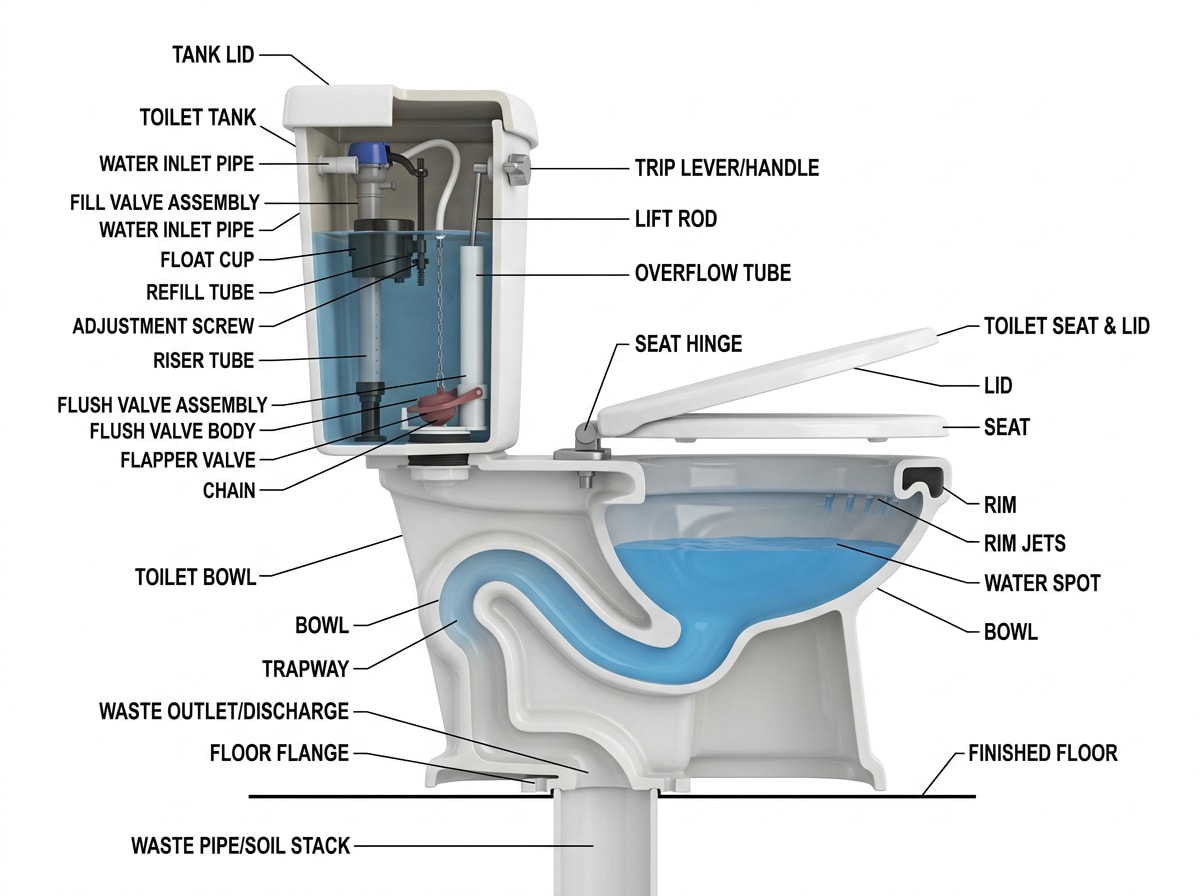
Toilets also come in two layouts. A two-piece toilet has a separate tank bolted to the bowl, which is the most common and least expensive setup. A one-piece toilet molds the tank and bowl into a single unit, which costs more but has fewer seams where leaks start. Both styles use the same internal parts covered below.
Toilet Tank Parts Explained
The tank holds almost every moving part in the fixture. Most DIY repairs start here, under the lid.
| Tank Part | What It Does | Common Failure Sign |
|---|---|---|
| Fill valve | Refills the tank after each flush and shuts off at the right water level | Hissing sound, slow refill |
| Flapper | Lifts to release water into the bowl, then reseals the opening | Toilet runs constantly |
| Flush valve | The opening in the tank floor the flapper seals against | Leak between tank and bowl |
| Overflow tube | Routes excess water into the bowl if the fill valve fails | Tank water near the rim |
Toilet Fill Valve
The fill valve connects to the home's water supply line and uses a float to sense water height, shutting off once the tank reaches the correct level. Older toilets may still use a ballcock assembly instead of a modern fill valve, though most replacement kits sold today use the newer design. A hissing sound or slow refill after flushing usually points to a worn or misadjusted fill valve, and it's one of the easier tank parts to swap out yourself.
Toilet Flapper
Pushing the flush lever lifts the flapper off its seat, letting tank water rush into the bowl. As the tank empties, the flapper drops back and reseals so the tank can refill. This rubber seal is the single most common cause of a running toilet. Because it sits in water constantly, it degrades, warps, or collects mineral buildup, any of which can break the seal.
Toilet Flush Valve
The flush valve sits at the center of the tank floor, directly under the flapper. The whole flush valve assembly anchors to the tank with a gasket that forms the tank-to-bowl connection. Because this gasket bridges two separate pieces of porcelain, it's also a common leak point, even when the flapper itself seals correctly.
Toilet Overflow Tube
The overflow tube is a safety valve. If the fill valve fails to shut off, excess water runs down the tube and into the bowl instead of over the tank's rim, quietly routing extra water into the drain where it belongs.
Toilet Bowl Parts Explained
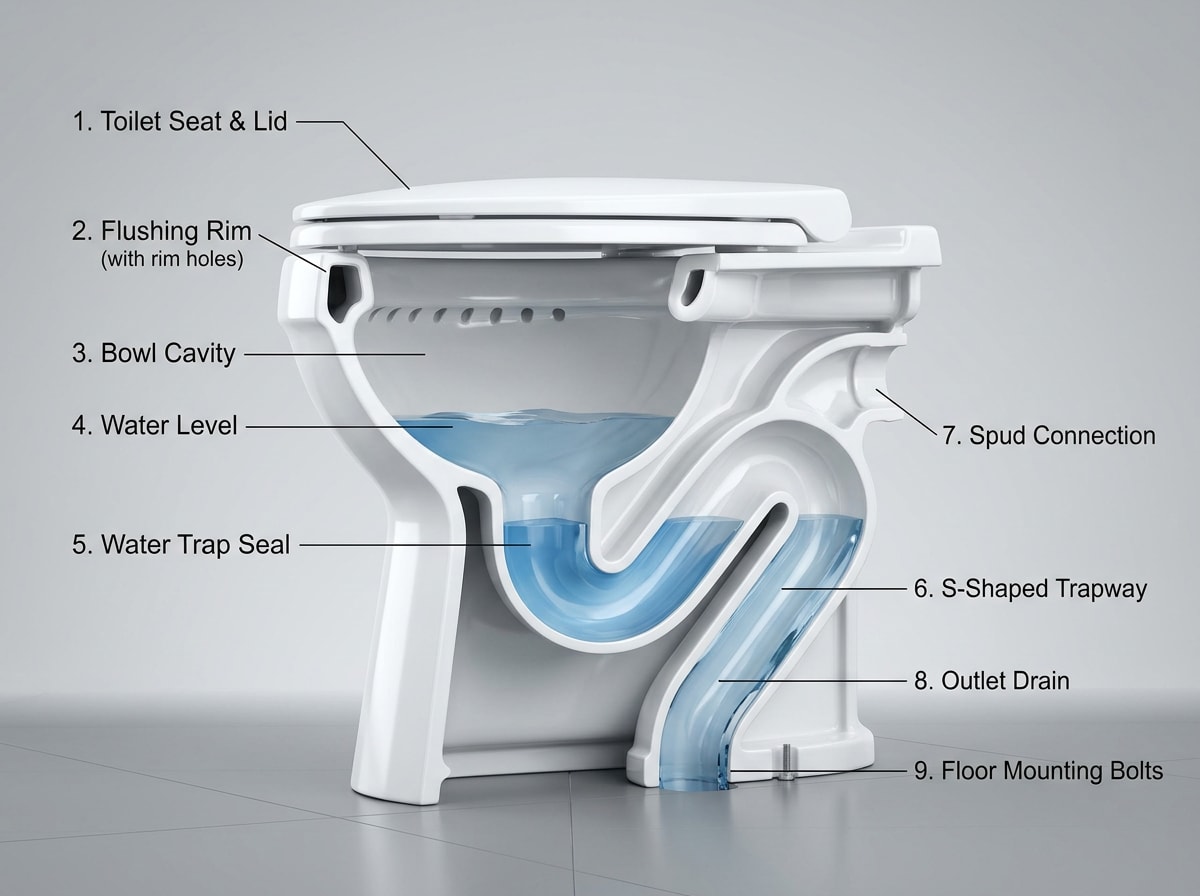
The bowl has no moving parts. It relies entirely on gravity and water flow, shaped to create a strong siphoning action with every flush.
Toilet Trapway
The trapway is the S-shaped channel built into the base of the bowl. It does two jobs: it lets waste and paper pass toward the drain, and its curve holds standing water that blocks sewer gas from entering the bathroom. This same S-trap shape is what creates the siphon effect once enough water is moving through it. Because the trapway is relatively narrow, it's also the most likely spot for a clog if too much paper or a foreign object goes down at once.
Where the Toilet Meets the House: Wax Ring and Floor Flange
Beyond the porcelain, a few hidden connections tie the toilet into the home's drain system. These matter most during installation, since a poor seal here is the leading cause of leaks around the base.
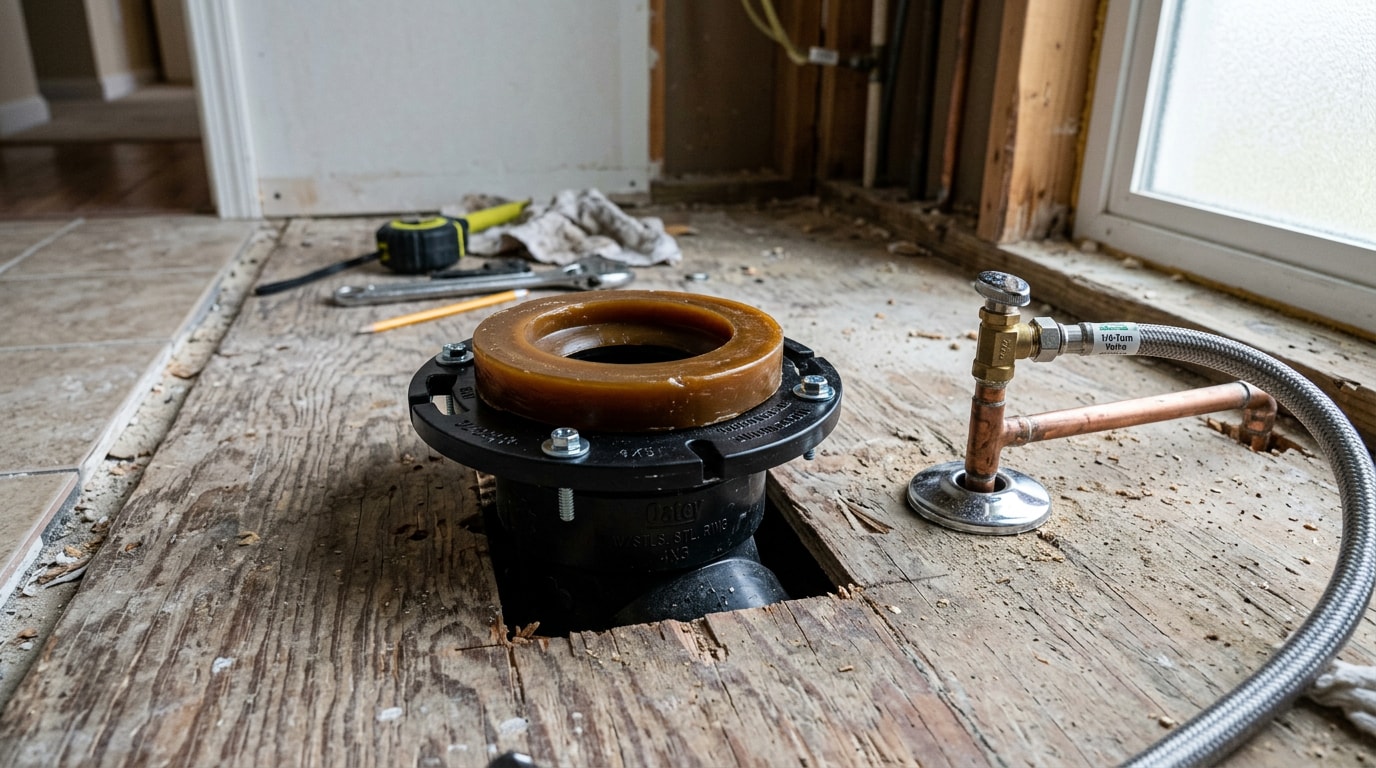
The floor flange is a pipe fitting anchored over the drain opening. The wax ring sits between the flange and the toilet's horn, compressing into a watertight, airtight seal when the toilet is bolted down. That seal stops water from leaking out during a flush and keeps sewer gas from seeping up around the base.
A failing wax ring causes slow, hard-to-notice leaks that can damage flooring and subfloor before anyone spots the problem. Homeowners also have the option of a wax-free gasket, a rubber or foam alternative that does the same job without the mess, which is useful if the toilet is likely to come up again for repairs.
How a Toilet Flush Works, Step by Step
- Pressing the lever pulls a chain that lifts the flapper off the flush valve.
- Water stored in the tank drops through that opening into the bowl.
- Incoming water moves through rim holes around the bowl's edge, rinsing the sides.
- That rush of water triggers the siphon action in the trapway, pulling waste through the drainpipe.
- The bowl refills with a small amount of standing water once the siphon breaks.
Federal rules shape this cycle too. Design improvements have allowed toilets to use 1.28 gallons per flush or less while still providing equal or superior performance, which is 20 percent less water than the current federal standard of 1.6 gallons per flush. That difference matters because it directly affects how much water pressure is available to create a strong siphon, which is part of why flush mechanism design has gotten more sophisticated over the past two decades. The current criteria are published on the EPA WaterSense program page.
Why This Diagram Matters More on a Septic System
Here's the piece most toilet-parts guides skip: in Eastland County, a toilet isn't just plumbing, it's the front door to your septic system. Everything that clears the trapway ends up in the tank and drainfield we install and service across this area.
Your septic system is not a trash can, and an easy rule of thumb is not to flush anything besides human waste and toilet paper. A flapper that leaks a slow trickle around the clock, or a fill valve stuck in refill mode, can send hundreds of extra gallons into a septic tank every week. That's a hydraulic load the drainfield wasn't sized for, and it's a common, preventable cause of early septic strain.
The septic tank is a large container into which the wastewater flows, and when you flush a toilet, wash a load of clothes, or take a shower, the wastewater flows into the septic tank. On crews we've run across Eastland, Stephenville, and Brownwood, a surprising share of "mystery" septic backups trace back to something this simple: a worn flapper or a bad wax ring nobody caught in time, not a failed drainfield at all. Checking the tank parts above before assuming the worst about your septic system can save a pumping call you don't actually need.
If a professional look at your system makes sense, our septic system design and septic site evaluation teams work throughout Eastland, TX and the surrounding county.
Toilet Troubleshooting: Common Issues and Fixes
Toilet Keeps Running
A toilet that runs long after flushing almost always traces back to a worn flapper. As the rubber ages, it loses its ability to seal the flush valve opening, letting water trickle from the tank into the bowl, sometimes quietly enough that homeowners don't notice until the water bill arrives.
- Shut off the water supply at the valve behind the toilet.
- Drain the tank by holding the flush lever down.
- Remove the old flapper and install one that matches the flush valve opening.
- If running continues, check the fill valve and float next.
Leaks Around the Base
Water pooling around the base after a flush usually signals a failing wax ring seal between the bowl and the flange. The fix typically means pulling the toilet, scraping away the old wax, and setting a new ring or wax-free gasket before reseating the fixture. Left alone, this kind of leak softens subfloor material and leads to repairs well beyond the toilet itself.
If a base leak keeps coming back, or if you're seeing slow drains and wet spots in the yard at the same time, that combination points toward the septic line rather than the toilet itself. That's a job for an excavation crew, not a wrench. Our drainage solutions team can trace the line and find out which one it is.
For a real example of how this plays out, see how our crew handled a plumbing emergency in Brownwood, TX that started as a toilet complaint and ended up being a collapsed sewer line.
When to Call a Local Septic and Excavation Crew
A toilet diagram can only tell you so much once the problem moves past the fixture itself. Standing water in the yard, gurgling drains across the house, or a septic alarm going off alongside a toilet backup are signs the issue is in the line or the tank, not the bowl.
Henderson Land Services handles conventional septic installation, site evaluation, and drainage work across Eastland County and nearby towns. If a toilet problem turns out to be a septic one, get a free estimate before it turns into a bigger repair.
FAQ
What is the hole in the toilet bowl called?
The drain opening at the base of the trapway is called the horn. It connects to the drainpipe through the wax ring, forming the final link in the toilet's drainage path.
What are the 2 holes at the bottom of a toilet bowl?
These are the flange bolt holes, which secure the toilet to the floor flange. A wax ring sits between the base and the flange, creating a watertight, airtight barrier that keeps sewer gas from escaping around the base.
Why does my toilet keep running?
Most often, a worn flapper no longer seals properly. A misadjusted float or a faulty fill valve can also keep water trickling into the bowl. Check the flapper first, then the float adjustment.
What is a standard toilet rough-in measurement?
The standard toilet rough-in is 12 inches, measured from the finished wall to the center of the floor flange. Some older homes use 10-inch rough-ins instead, so measure before buying a replacement toilet.
Can a running or leaking toilet hurt my septic system?
Yes. A leaking toilet can send hundreds of unnecessary gallons into the system and increase the risk of hydraulic overload. On a septic system, that extra water can push solids into the drainfield before they've settled, shortening its life.
Is a toilet backup always a septic problem?
Not always. A single slow toilet is often just a clogged trapway. But a backup paired with slow drains elsewhere in the house, wet spots in the yard, or sewer odors usually means the problem is downstream of the fixture, in the line or the tank.
Henderson Land Services is a Texas septic and excavation contractor serving Eastland, Stephenville, Brownwood, and the surrounding county. Questions about how your toilet connects to your septic system can go to the team directly through {{SITE_URL}}/contact, or start by browsing {{SITE_URL}} for the full list of septic, excavation, and drainage services.