Commercial plumbing maintenance in De Leon, TX is what keeps your doors open instead of taped shut with an "emergency repair" sign. Running a business here means juggling customers, staff, and a building that has to keep working no matter what. This checklist breaks down exactly what to check, how often, and who should be doing it, from daily staff walkthroughs to the annual jobs that legally require a licensed plumber.
Key Takeaways
- Commercial plumbing maintenance protects against costly downtime, not just leaky faucets. A single failed water line can shut down a storefront or restaurant for a full day.
- A reliable maintenance checklist runs on four cadences: daily, monthly, quarterly, and annual.
- Some tasks, like backflow testing, sewer inspections, and water heater servicing, legally require a licensed plumber or certified tester. Staff can't sign off on these.
- De Leon, TX businesses that follow a preventive maintenance program tend to catch small problems before they become five-figure repairs.
Why Commercial Plumbing Maintenance Matters in De Leon
Reactive plumbing, meaning waiting for something to break before calling anyone, almost always costs more than prevention. A slow leak behind a wall can run for weeks before anyone notices. By then it's drywall, flooring, and possibly mold remediation stacked on top of the original repair.
Commercial systems also carry more risk than residential ones. They have more fixtures, heavier daily use, longer pipe runs, and often serve the public directly, which raises liability if a bathroom floods or hot water scalds a customer. Minor leaks account for nearly one trillion gallons of water wasted each year in U.S. homes , and leaks also happen at businesses, and can sometimes be even worse because people aren't always there to notice if a leak starts .
De Leon's commercial base is a mix of in-town retail, food service, and agriculture-adjacent operations, many of which run well water or a commercial septic system alongside standard municipal connections. That combination makes a preventive maintenance program especially valuable here, since business downtime from an unplanned shutdown hits smaller operations harder than it would in a larger market. We've spent years digging, inspecting, and repairing the underground lines and septic systems that feed buildings across De Leon, TX, and the pattern holds: buildings on a maintenance schedule call us for planned visits, not floods.
A quick look at our homepage outlines the kind of ongoing excavation and septic support a local partner can offer, but the checklist below works whether you handle daily checks in-house or bring in a professional for the rest.
The Complete Commercial Plumbing Maintenance Checklist
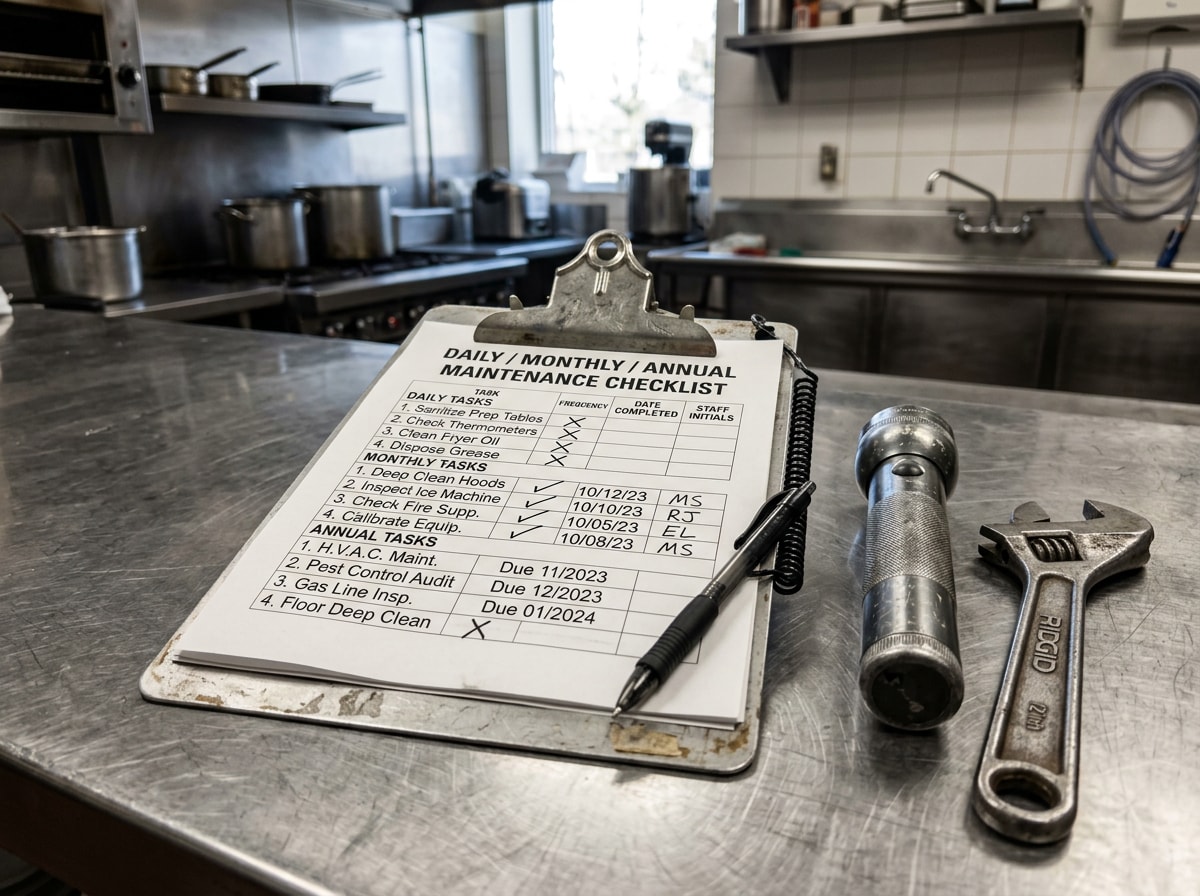
A usable maintenance checklist has three tiers: things staff can check daily or weekly, things that need a closer monthly look, and things that require a licensed plumber on a quarterly or annual basis. Mixing these up, or skipping the tiers that need a professional, is where most commercial plumbing problems start.
| Tier | Frequency | Who Performs It | Example Tasks |
|---|---|---|---|
| Daily/Weekly | Every shift or week | Staff on site | Visual leak checks, restroom function tests, floor drain checks |
| Monthly | Once a month | Facilities manager or contractor | Pipe corrosion checks, pressure checks, grease trap cleaning |
| Quarterly | Every 3 months | Staff + licensed plumber | Fixture audits, pressure-relief valve checks, log review |
| Annual | Once a year | Licensed plumber/certified tester | Backflow testing, sewer camera inspection, water heater service |
Daily and Weekly Tasks
These are quick visual and listening checks anyone on staff can run without tools or training. Doing them consistently catches small issues before they turn into closures.
- Walk through and look for visible leaks under sinks, around toilets, and near water fountains.
- Run through restroom plumbing checks before opening: flush toilets, test faucets, confirm hot water is working.
- Watch floor drains in kitchens, mechanical rooms, and restrooms for slow drainage or standing water.
- Listen for running water sounds in walls or ceilings when the building is quiet.
- Note any unusual odors near drains, which can signal a dry trap or a developing clog.
A simple daily plumbing checklist posted near a staff clipboard or shared digitally takes less than five minutes to run and gives you a paper trail if something does go wrong later.
Monthly Inspections
Monthly inspections go a layer deeper than the daily walkthrough and usually fall to a facilities manager or a part-time contractor rather than front-line staff.
- Check exposed pipes for early signs of corrosion, rust stains, or small drips at joints.
- Run a basic water pressure check at a few fixtures. Sudden drops across multiple taps often point to a hidden leak or line obstruction.
- Confirm shutoff valves are accessible and not blocked by storage, shelving, or equipment. Knowing exactly where those valves are matters most during an actual emergency; our guide to plumbing valves in De Leon, TX walks through where to find them and how to shut water off fast.
- Inspect and clean the grease trap if your business handles food service. A neglected trap is one of the most common causes of commercial sewer and septic backups, and it's a task our septic system contractor crew gets called out for often.
- Compare your water bill month over month. An unexplained jump is frequently the first sign of a leak nobody has spotted yet.
This tier is where most hidden problems get caught early, before they show up as emergency calls.
Quarterly and Annual Reviews
Quarterly and annual reviews cover the tasks that genuinely require licensed expertise, either by law or by the complexity of the equipment involved. Trying to handle these in-house is where many De Leon businesses run into compliance trouble.
Staff-doable tasks (quarterly): visual fixture audits, testing water heater pressure-relief valves for obvious leaks, and reviewing maintenance logs for recurring issues.
Licensed-professional tasks (annual, sometimes quarterly for older buildings): backflow prevention testing and certification, full sewer line inspection using a camera, and a complete fixture and valve audit tied to local code.
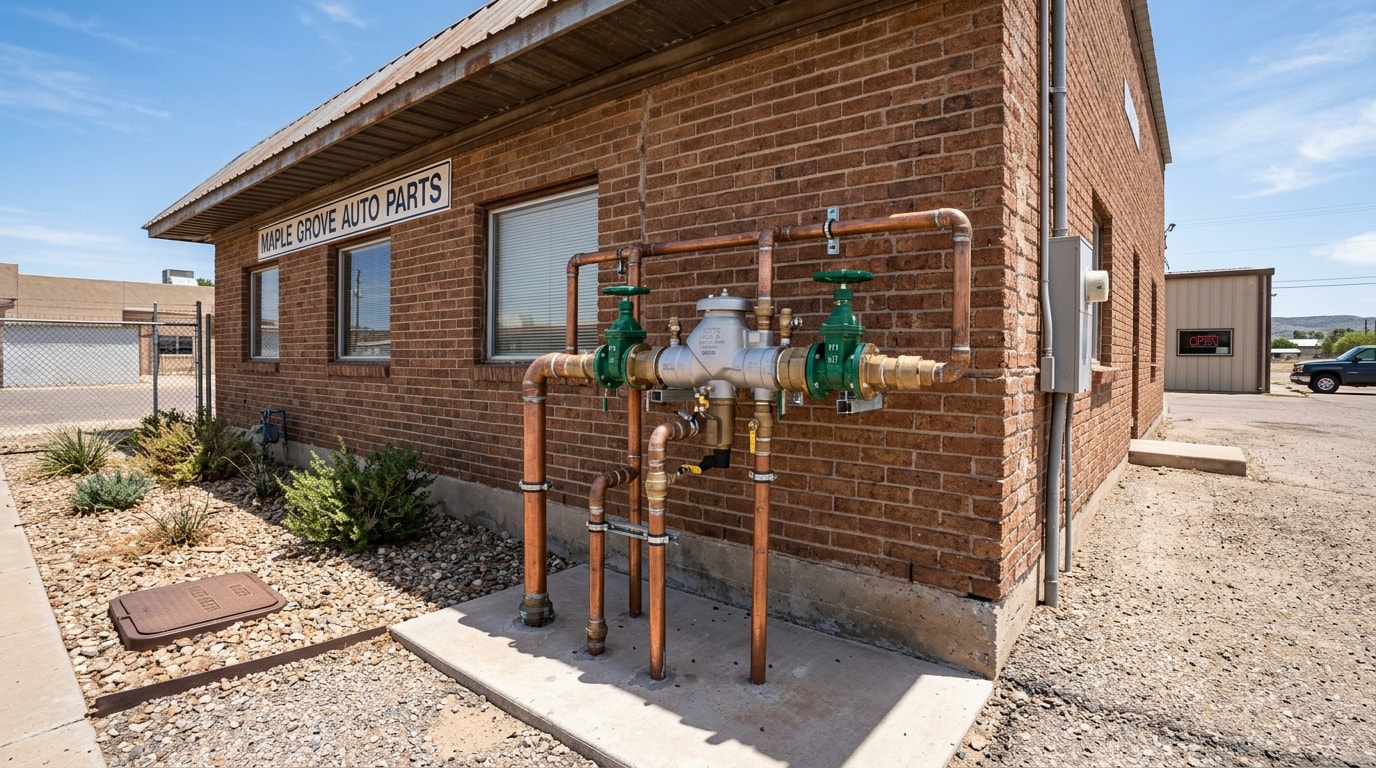
Backflow prevention devices specifically require testing by a certified tester. Texas regulates this through the Texas Commission on Environmental Quality, and certain higher-risk businesses, like mortuaries, minor surgery centers, hospitals, and chemical plants, would be required to install high-grade backflow prevention assemblies and have them tested by a certified tester annually . Confirm your specific testing cycle with the TCEQ's cross-connection control program, since requirements can vary by water system and device type. Skipping this isn't just risky for your plumbing; it can result in fines or water service interruption. For De Leon businesses on a private well or commercial septic system instead of municipal water, a septic site evaluation is worth adding to this same annual review.
Water Heater and Pressure System Maintenance
Water heaters and pressure systems fail more often than almost any other commercial plumbing component, largely because they run constantly and get the least attention until something goes wrong.
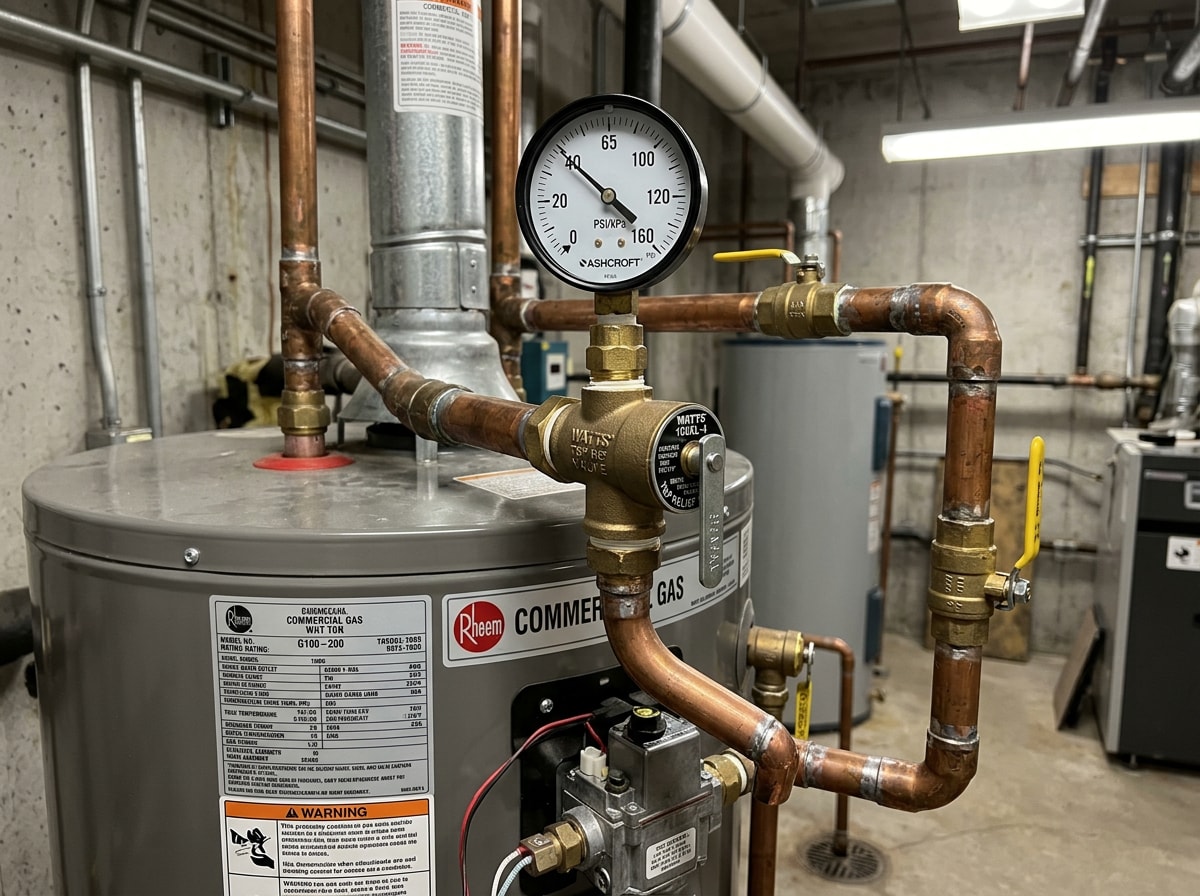
Annual commercial water heater maintenance should include a full flush to clear sediment buildup, which reduces efficiency and shortens tank life if left alone. A technician should also check the anode rod for corrosion and test the pressure-relief valve to confirm it's functioning correctly. Our guide on plumbing water heater repair in Brownwood, TX covers the warning signs worth watching for between service visits.
Water heater flushing matters more in areas with harder well water, since mineral buildup accelerates inside the tank. On the pressure side, commercial systems should maintain water pressure in a safe operating range, typically 40 to 80 PSI for most fixtures, to avoid stressing pipe joints or starving upper-floor fixtures.
Temperature settings deserve their own attention. Setting your water heater temperature to 120ºF is considered safe for most of the population , according to the U.S. Department of Energy's energy-saving guidance, but many commercial plumbing codes call for storing tank water hotter (often 140°F) to limit bacterial growth, with mixing valves blending it down to a safe delivery temperature at the fixture, especially in restrooms accessible to the public or in food-service kitchens. Balancing those two numbers correctly is a job for a licensed plumber, not guesswork.
Smart Monitoring and Sustainability Considerations
Traditional checklists are still the backbone of commercial plumbing maintenance, but more De Leon businesses are adding technology layers on top of manual inspections.
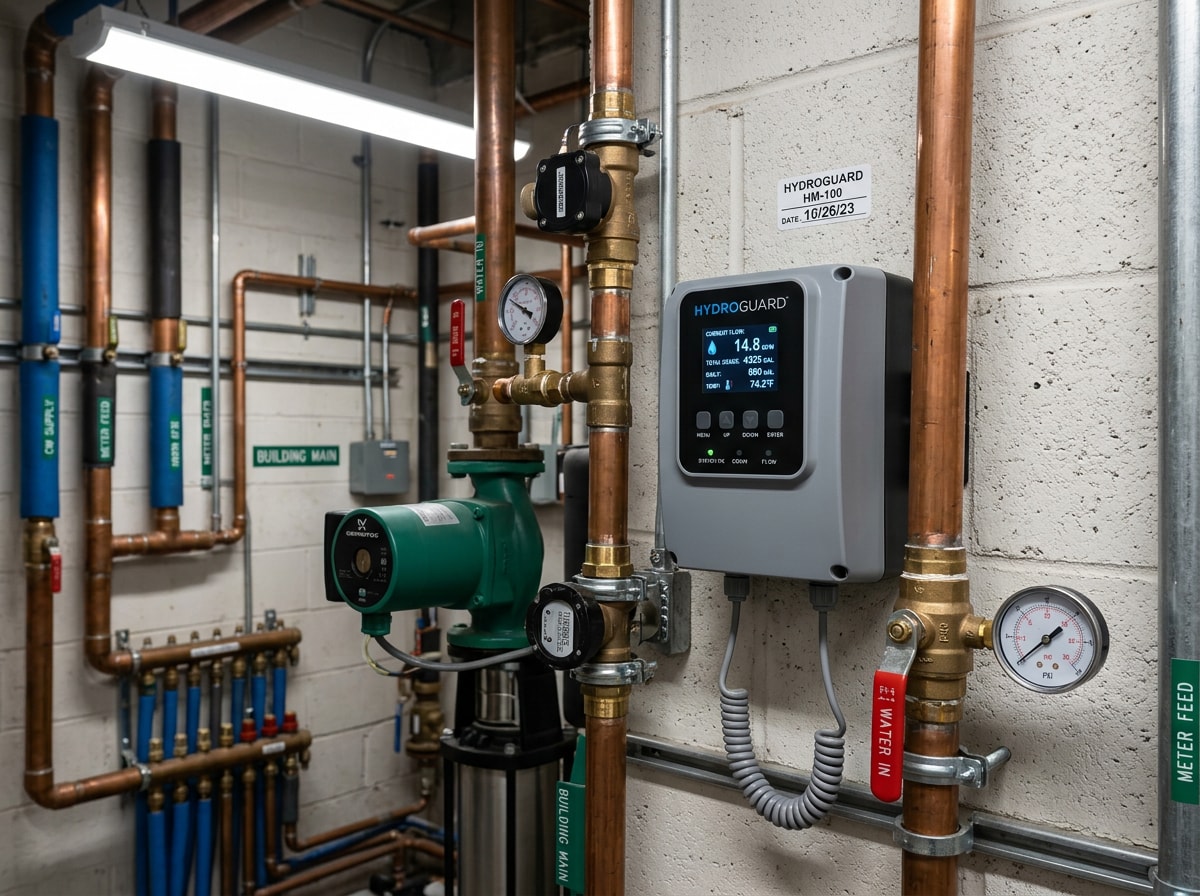
Smart leak detection sensors placed near water heaters, under sinks, and in mechanical rooms can flag a drip long before it's visible to the naked eye, sending an alert to a phone instead of waiting for the next scheduled walkthrough. Automated shutoff valves take it a step further, cutting water supply automatically if a sensor detects a major leak while the building is empty overnight or over a weekend.
Submetering individual zones of a larger facility also helps pinpoint which section of a building is driving unusual usage, which speeds up troubleshooting considerably. Lower water waste means lower utility bills and less strain on De Leon's municipal system, which matters in a smaller town where infrastructure capacity is finite.
None of this replaces the checklist above, but it does reduce how often something slips through the cracks between scheduled inspections.
Warning Signs That Need Prompt Attention
Some plumbing problems don't wait for the next scheduled check. Recognizing them early can save a building from a far more expensive repair.
- A sudden spike in your water bill with no clear explanation.
- Multiple fixtures losing pressure or draining slowly at the same time.
- Recurring sewer-like odors.
- Unexplained banging or rattling sounds in walls or floors.
A single slow drain is usually just a local clog. Several slow drains across different parts of the building at the same time often points to a main line problem, which needs professional attention right away rather than waiting for the next monthly inspection. If standing water or poor drainage keeps coming back in the same spot, it may be a grading or underground line issue rather than a fixture problem; our drainage solutions page covers how that gets diagnosed.
A sudden water bill spike, even without a visible leak anywhere, almost always means water is escaping somewhere in the system, whether underground, behind a wall, or inside a slab. These situations call for a plumber with leak-detection equipment, not a staff-level walkthrough. Low water pressure that develops gradually can often wait for the next scheduled visit, but pressure that drops suddenly across the whole building usually can't.
Keeping Plumbing Maintenance Records Organized
Documentation matters more than most business owners realize, both for insurance claims and for proving compliance if a backflow device or health inspection is ever questioned. A maintenance log also makes it much easier to spot patterns, like a drain that keeps clogging in the same spot every few months.
Maintain Clear Service Records
A complete service record should include:
- The date the work was completed.
- A description of the issue found.
- The specific work performed.
- Any inspection findings worth tracking.
- The name of the technician or staff member who did the check.
Keeping these records in one place, whether a shared spreadsheet, a binder, or dedicated software, turns a scattered history into a usable compliance record. It also gives a new contractor fast context if your regular provider isn't available for an emergency call. If you'd rather hand this off, get a free estimate and we can walk through what a scheduled maintenance visit would cover for your building.
FAQ
How often should commercial plumbing be inspected?
Most commercial buildings need a full inspection annually, with quarterly inspections recommended for high-traffic facilities, restaurants, or older buildings with aging pipes. Daily and monthly checks should happen in between to catch problems before the scheduled professional visit.
What should be included in a commercial plumbing maintenance checklist?
A complete checklist covers daily fixture and restroom checks, monthly pressure and corrosion inspections, and annual professional reviews including backflow testing, sewer camera inspections, and water heater servicing. Each tier catches different types of problems at different stages.
How often should commercial water heaters be serviced?
Commercial water heaters should be flushed and inspected annually, including a check of the pressure-relief valve and anode rod condition. Buildings with hard well water or heavy daily usage may benefit from servicing every six months instead.
Is backflow testing required for businesses in Texas?
Yes, for assemblies protecting against a health hazard. Testing must be performed by a TCEQ-licensed tester, and results get reported to your local water provider. Confirm your building's specific requirement and testing interval with your water utility, since some require it more often than the state minimum.
How much does commercial plumbing maintenance cost?
Cost depends on building size, fixture count, how many backflow devices you have, and whether you choose a per-visit schedule or an annual service plan. The most reliable way to get an accurate number is a walkthrough of your specific building rather than a generic estimate.
What does a commercial plumbing maintenance plan include?
A commercial plumbing maintenance plan is a formal service agreement with a licensed provider covering scheduled inspections, priority response, and documented compliance checks, as opposed to a self-managed checklist run by staff. Many De Leon businesses use a plan to cover the tasks that legally require a licensed plumber while handling daily checks in-house.