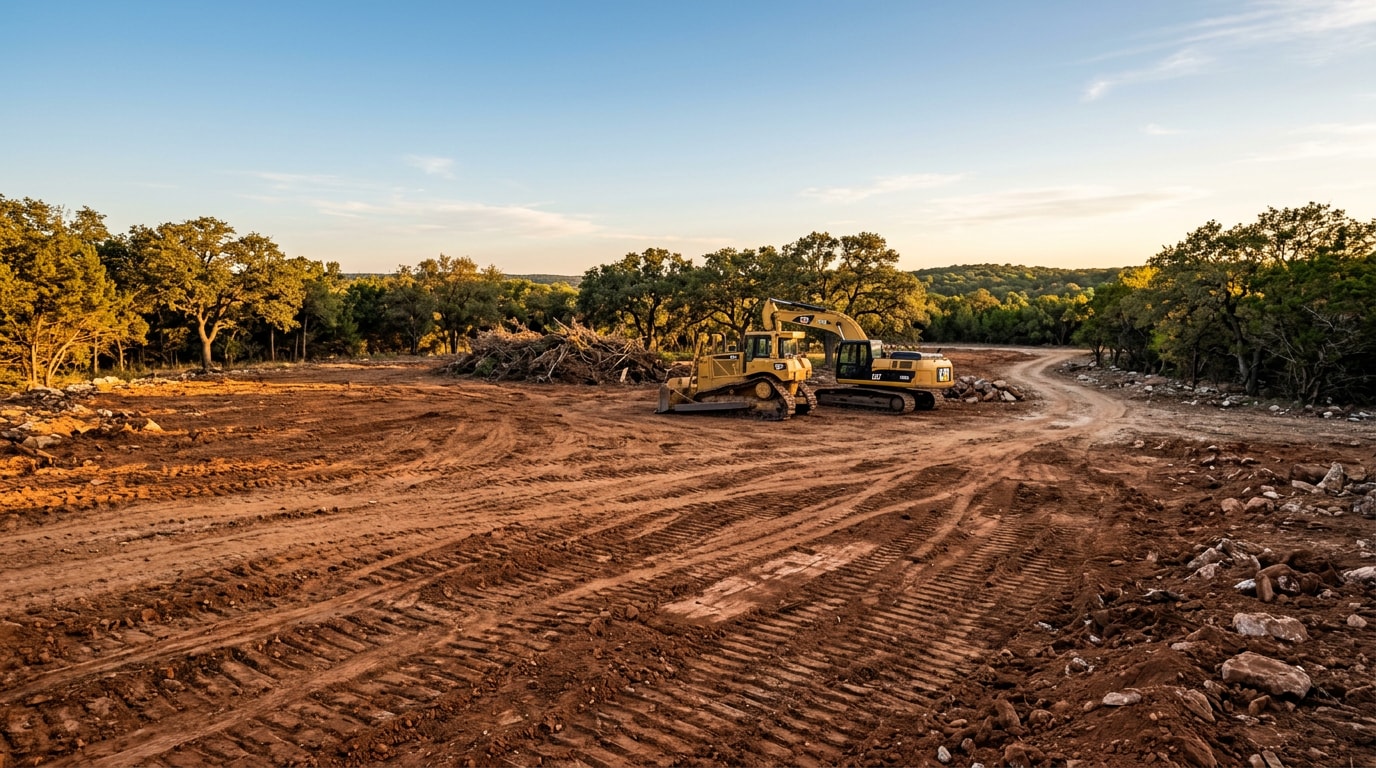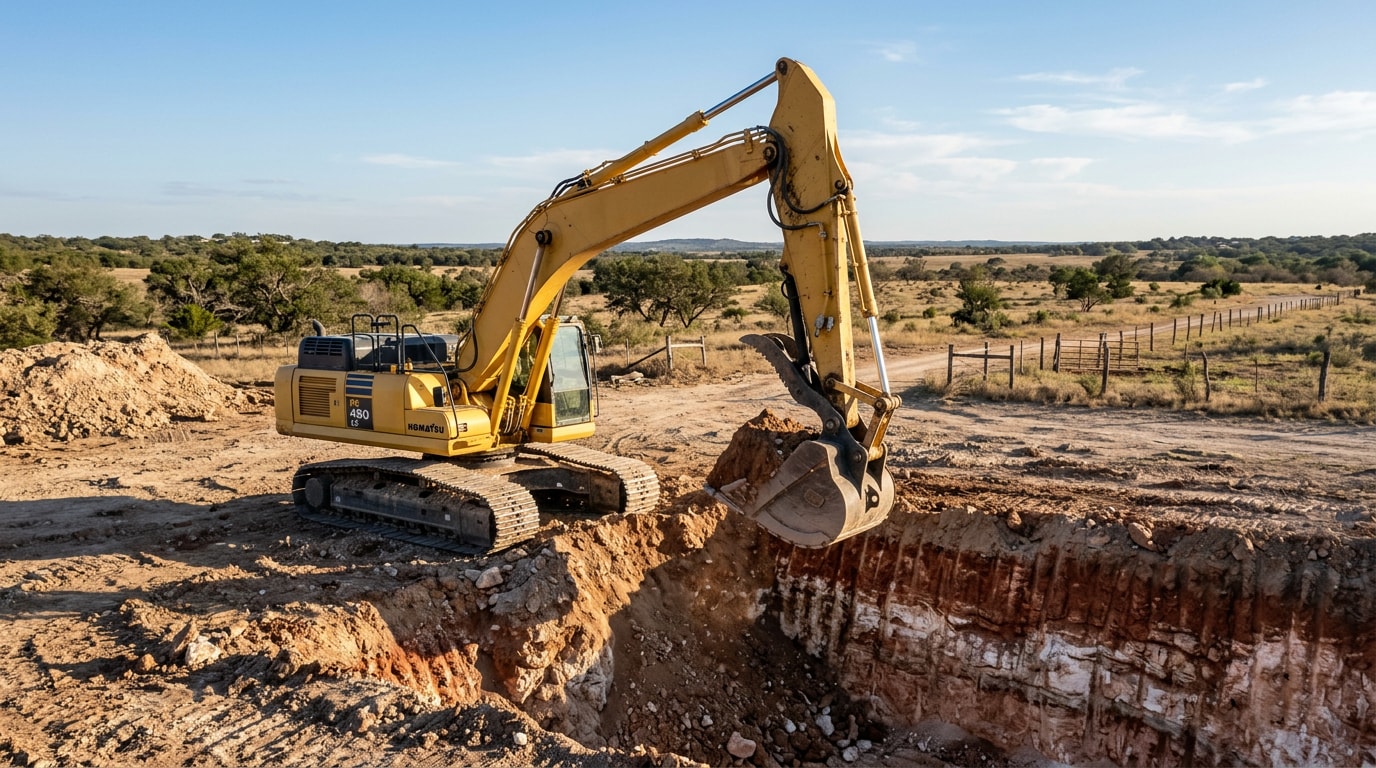
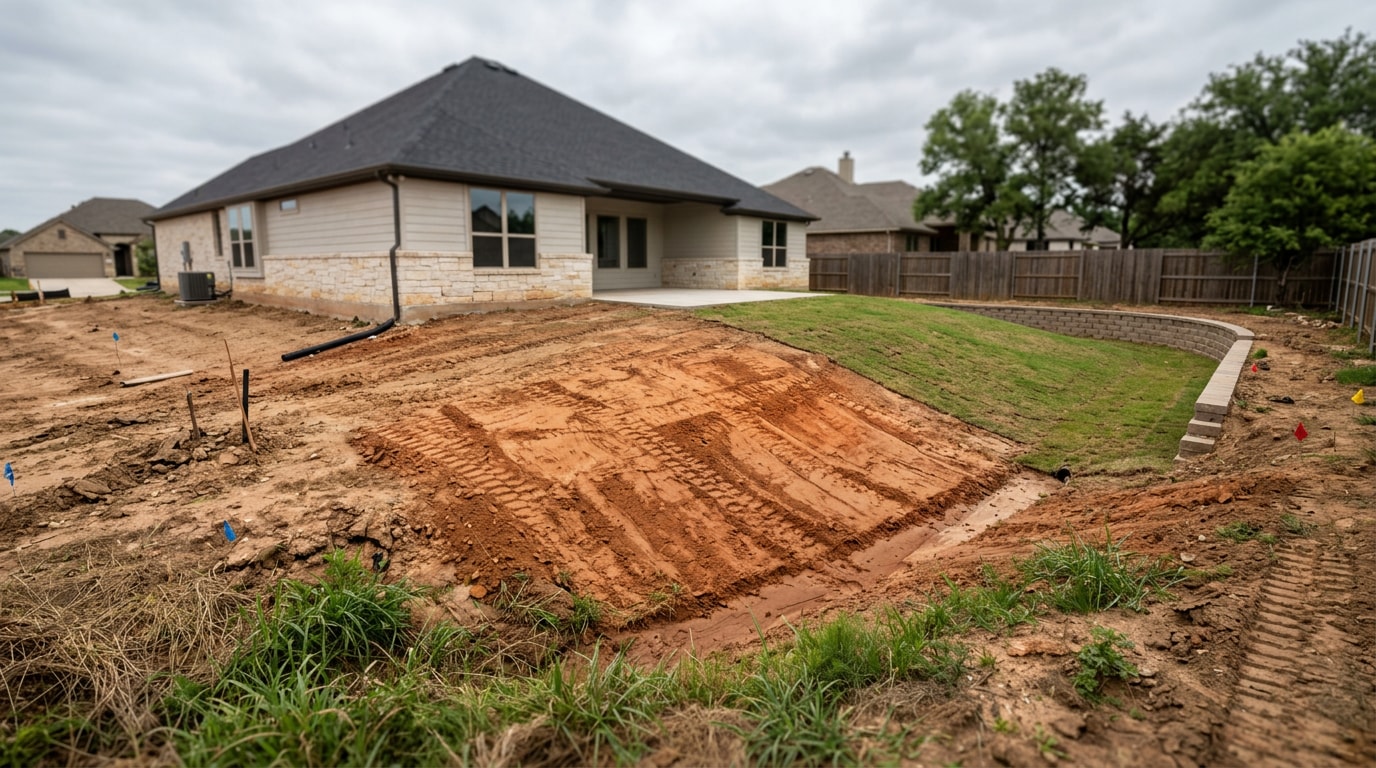
An overflow drain problem in Granbury, TX almost never starts with the drain itself. It starts with grading, discharge points, or a pipe that was undersized the day it went in the ground. This guide breaks down what's actually causing the water in your yard, which fix matches which problem, and when it's time to stop mowing around a wet spot and call an excavation crew.
The Real Causes of Overflow Drain Problems in Granbury, TX
Most Hood County properties that flood during a storm aren't dealing with one cause. They're dealing with two or three stacked on top of each other.
- Grading that slopes toward the house instead of away from it. Years of mowing, mulch buildup, and settling soil flatten out a yard's original slope.
- Downspouts and surface drains discharging too close to the foundation. Water gets collected correctly, then dumped right back where it started.
- Undersized or clogged drain lines. A pipe sized for a smaller roof or a shorter storm event backs up the moment rainfall picks up.
Texas building code is specific about the first issue. Lots must be graded so surface water drains away from foundation walls, with the ground falling at least six inches within the first ten feet, and that water has to be diverted to an approved storm sewer or collection point. If you've never measured your own yard's slope, that's the first thing to check before assuming you need new pipe.
Why Hood County Clay Makes a Small Overflow Problem Worse
Granbury sits on soil that swells when it's wet and shrinks when it dries out. Overflow water that would just soak in on sandy soil instead sits on top of Hood County clay for days, pressing against foundations and slably structures until something moves.
In our own fieldwork around Hood County, the most common callout after a hard spring rain isn't a cracked pipe. It's a yard that never had positive grade to begin with, so every storm sends water to the same low spot next to the slab. That's a grading and drainage problem, not a plumbing one, and it needs an excavation fix rather than a snake or a jetter.
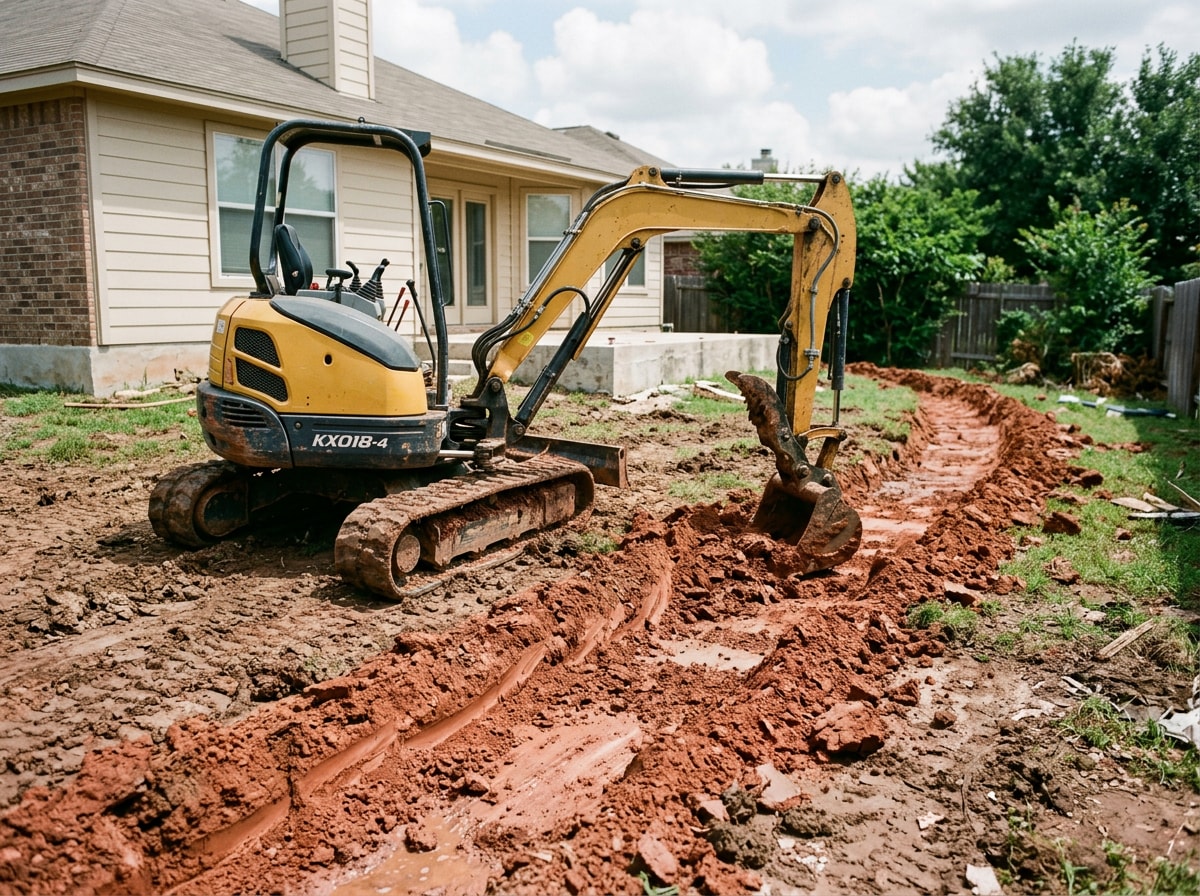
French Drain, Surface Drain, or Regrade: Matching the Fix to the Problem
Not every overflow drain problem in Granbury needs the same solution. The table below breaks down the three most common fixes and when each one actually applies.
| Fix | Best For | Typical Depth | Limitation |
|---|---|---|---|
| Regrading | Flat or reverse-sloped yards near the foundation | Surface only | Won't help if lot lines or structures block the slope |
| Surface drain / catch basin | One low spot collecting runoff from a roof or patio | Shallow, at grade | Only handles the water that reaches that one inlet |
| French drain | Large areas with widespread saturation or a high water table | 18-24 inches | Needs steady fall to the outlet or it just holds water underground |
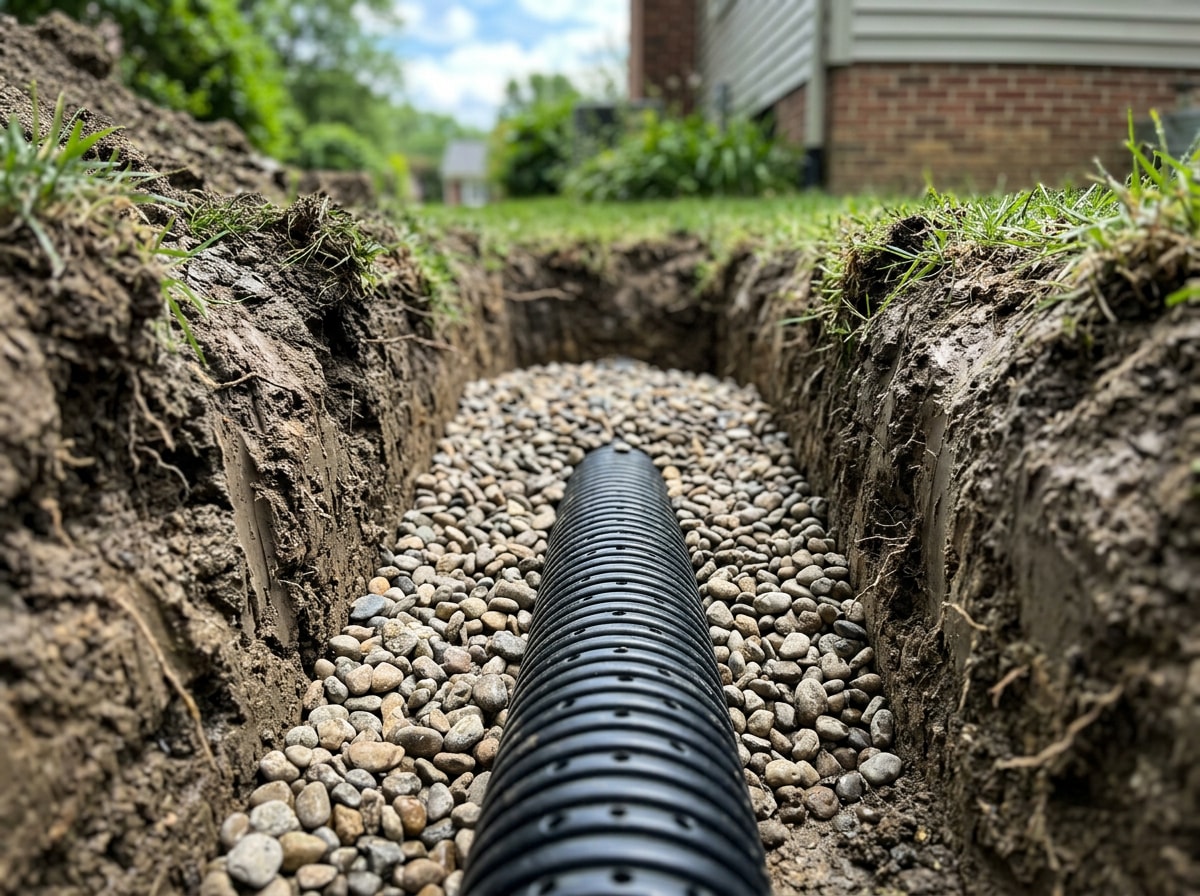
A French drain works by collecting water in a perforated pipe below grade and moving it to a safe discharge point. Where a site is level or slopes toward the house and there isn't room for a surface swale, the standard approach is to install underground French drains to carry water to a drywell, the storm sewer, or a retention area off site. That's the right call for a yard that's consistently soggy across a wide area. It's the wrong call for one isolated puddle below a downspout, where a simple surface drain and a few feet of extended discharge pipe will do the job for a fraction of the cost.
Downspout and Discharge Fixes Homeowners Skip
A properly sloped yard can still flood if every downspout dumps water three feet from the foundation instead of carrying it clear of the slab. Before paying for excavation work, check these:
- Downspout extensions should carry water well clear of the foundation, not just past the gutter edge.
- Splash blocks or buried discharge pipe should empty onto a slope, not a flat patch of ground that just re-pools the water.
- Any surface drain outlet should sit lower than the inlet it's collecting from, with a steady fall the whole way to daylight.
If you've extended every downspout and the yard still floods, the problem has moved past a quick fix and into grading or subsurface drainage territory.
When Overflow Drainage Becomes a Septic Problem
This is the part most gutter and plumbing guides skip entirely, and it matters a lot more in Hood County than people expect. Overflow water that pools over or near a septic drain field doesn't just look bad. It saturates the soil the system depends on to treat effluent.
Texas regulations require surface drainage controls on any on-site sewage facility where the slope is under 2 percent. In plain terms: if your lot is flat and your septic system sits anywhere near the low spot where overflow water collects, you may already be out of compliance, and a failing drain field is a far more expensive repair than a regraded yard. If you're not sure where your system's drain field actually sits relative to your drainage pattern, a septic site evaluation settles it before the next storm does.
DIY Checks vs. When to Call an Excavation Contractor
A few things are worth checking yourself before calling anyone:
- Walk the yard after a hard rain and mark every spot where water sits more than a few hours.
- Measure the slope near the foundation with a level and a string line; less than six inches of drop over ten feet is a red flag.
- Check that every downspout and surface drain outlet is clear of debris and discharging away from the house.
Call a contractor when the water keeps returning to the same spot no matter what you clear, when the low spot sits near a septic drain field, or when the fix requires moving more than a few wheelbarrows of soil. At that point you're not patching a drain, you're correcting the grade the property should have had from the start, and that's site preparation and drainage solutions work, not a weekend project.
Henderson Land Services: Drainage Solutions in Granbury, TX
Henderson Land Services handles overflow drain and yard drainage problems across Granbury, TX as part of our excavation contractor work, from regrading and French drain installation to septic site evaluations when a drainage problem overlaps with a septic system. We've also covered the pipe and material side of these issues in our drain pipes Granbury, TX guide if you're trying to figure out whether the problem is upstream of the yard entirely.
Storm debris and erosion often show up together after a bad season, so if the overflow has already torn up a flower bed or washed out a driveway approach, our storm debris removal crew can clean that up in the same visit. You can see examples of past grading and drainage jobs on our projects page, and we serve the whole Granbury, TX area along with Stephenville, Weatherford, Brownwood, and the surrounding counties.
Get a free estimate and we'll walk the property, find the actual cause, and tell you honestly whether it's a $200 downspout fix or a full regrade.
About the Author
This guide was written with input from Garrett Henderson, co-owner of Henderson Land Services and an OSSF Level 2 Licensed Site Evaluator serving Erath, Hood, and surrounding Texas counties. Garrett and his brother Dustan have run the company's excavation and septic work since 2008. Questions about a specific property can go to {{SITE_URL}}/contact.
FAQ
Why does my yard flood every time it rains in Granbury?
Usually it's grading, not a broken pipe. If the ground near your foundation or low spot doesn't fall at least six inches over the first ten feet, water has nowhere to go but back toward the house.
What's the difference between a French drain and a surface drain?
A surface drain is a catch basin at ground level for one low spot; it's shallow and inexpensive. A French drain is a buried perforated pipe set in gravel, typically 18 to 24 inches deep, built for larger areas with widespread saturation rather than a single wet patch.
Can standing water from an overflow drain hurt my septic system?
Yes. Saturated soil over or near a drain field slows the system's ability to treat effluent properly, and Texas rules already require extra drainage controls on flat septic lots for this reason. If overflow water collects anywhere near your drain field, get it evaluated.
Do downspout extensions actually fix overflow problems?
They fix overflow caused by discharge points that are too close to the foundation. They won't fix a yard with no slope or a drain line that's physically undersized for the roof area.
How deep does a French drain need to be in Texas clay soil?
Most residential French drains run 18 to 24 inches deep. Going deeper doesn't help if the trench lacks steady fall to the outlet; a poorly sloped French drain just becomes an underground bathtub in heavy clay.
Is regrading a yard something I can do myself?
Minor touch-ups near a downspout, yes. Full-yard regrading that involves moving significant soil volume, working around a septic drain field, or re-establishing the six-inch code slope near a foundation is excavation work best left to a contractor with the right equipment.