PEX plumbing tools in Eastland, TX fall into three families (crimp, clamp, and expansion) and picking the wrong one is the fastest way to turn a weekend repair into a wall full of leaks. We've pulled failed PEX joints out of Eastland County crawlspaces more than once, and almost every one traces back to a missing gauge check or the wrong tool for the fitting. This guide breaks down exactly which tools you need, what they cost, and where DIYers usually go wrong.
Why PEX Plumbing Is Popular in Eastland, TX (And Why the Right Tools Matter)
PEX tubing has become the default choice for residential water lines across North Central Texas, and it handles the area's shifting clay soil and seasonal freeze-thaw cycles better than rigid copper or PVC. But PEX isn't installed like either of those materials. It requires a dedicated connection method (crimp, clamp, or expansion) and using the wrong tool on the wrong fitting is one of the most common ways joints fail.
Whether you're buying tools for a single repair or renting equipment for a full repipe, knowing what the job actually requires up front saves a trip back to the hardware store and avoids a callback. If the project involves running new lines out to a septic tank, a well head, or a new addition, it also pays to know when a hand tool is enough and when the job calls for a trenching crew instead of a toolbox.
PEX Connection Types: Crimp, Clamp, Expansion & Press
PEX plumbing relies on a handful of connection systems, and the one you choose determines which tools end up in your cart.
- Crimp connections use a copper ring compressed over the fitting with a crimping tool.
- Clamp (cinch) connections use a stainless steel band tightened with a cinch tool.
- Expansion connections rely on PEX-A tubing that's stretched with an expander tool and allowed to shrink back around the fitting.
- Press connections use a powered tool to compress a sleeve over the tubing, mostly on commercial jobs.
Expansion is often preferred by professionals because the resulting seal has no rubber O-ring to fail over time. Homeowners frequently choose crimp or clamp systems instead, since the tools cost less upfront.
Code compliance adds another layer. All PEX used for potable water must meet NSF/ANSI/CAN 61, the standard covering drinking-water contact. All principal plumbing codes in North America require compliance of all potable water piping products, including PEX tubing and fittings, with NSF/ANSI/CAN 61. Expansion fittings specifically have to meet ASTM F1960, which covers cold expansion fittings and cross-linked PEX reinforcing rings for use with PEX tubing in specific nominal diameters, intended for residential and commercial hot and cold potable water distribution systems . If you're not sure which PEX-A, PEX-B, or PEX-C system your project calls for, check the manufacturer's fitting compatibility before you buy a single tool.
Essential PEX Plumbing Tools for Eastland, TX Jobs
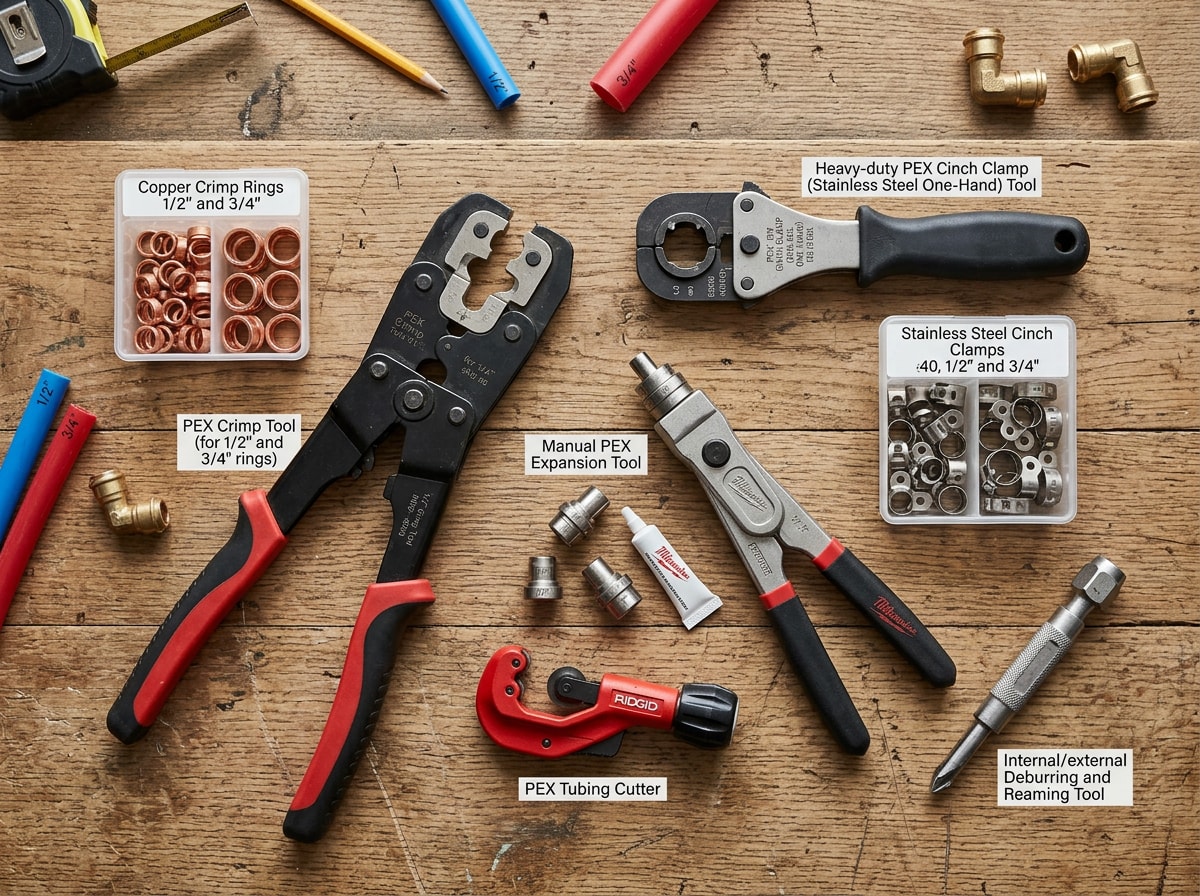
Every PEX installation, regardless of connection type, draws from a small core toolkit. Here's what belongs in it.
PEX Tubing Cutter
Scissors and hacksaws leave jagged, uneven edges that stop a fitting from seating correctly. A dedicated PEX cutter gives a clean, square cut every time. Basic, light-duty cutters handle tubing up to 3/4 inch, while ratcheting cutter models manage sizes up to 1-1/4 inch with far less hand fatigue on long runs.
Crimp Tools (Copper Ring Systems)
A crimp setup is really three tools working together:
- The crimp ring tool itself, which compresses the copper ring.
- A crimp gauge, used before the crimp to check ring positioning.
- A go/no-go gauge, used after the crimp to confirm the ring was compressed to the correct diameter.
Skip that last step and you won't know a crimp failed until the wall is closed up. In our own fieldwork, the go/no-go gauge is the single step DIYers skip most, and it's usually what we find at the root of a leaking joint during a repair call. Crimp tools require properly sized copper crimp rings and work with brass or poly fittings in sizes 3/8 inch to 1 inch, across every PEX type except PEX-AL-PEX.
Clamp Tools (Cinch / Stainless Steel Clamps)
A cinch clamp installation follows a short, repeatable sequence:
- Cut the tubing square.
- Slide the stainless clamp ring onto the tubing.
- Seat the barbed fitting inside the tubing.
- Position the clamp ring back from the tubing end.
- Cinch the tool until it fully compresses the ring's ear.
The result is a tight, flattened band around the joint. Clamp connections are also generally easier to remove than crimp rings, which makes them a practical pick for repair-heavy work where you might need to cut a joint back out later.
Expansion Tools (PEX-A Systems)
Expander tools work exclusively with PEX-A tubing, expander-style fittings, and expansion rings built to the ASTM F1960 standard. The sequence is: expand the ring and tubing together with the tool, then insert the fitting immediately. This is a speed-sensitive step. The tubing starts contracting within seconds, so you insert the fitting as soon as the expansion head comes out. The ProPEX system is the best-known branded version of this method.
Press-Style PEX Systems
Press-style connections use a powered press tool that compresses a stainless sleeve over the tubing. These tools are aimed mainly at professional installers since battery press tools and jaws carry a steep price tag, but they cut labor time dramatically on larger jobs. Jaw and sleeve compatibility is usually brand-specific, so a crew stocking multiple PEX systems has to plan jaw purchases carefully.
Deburring & Reaming Tools
After cutting, PEX tubing often has internal burrs that restrict water flow or chew up O-rings inside fittings. A deburring tool smooths the inside and outside edges in a couple of seconds. It's cheap enough that there's little reason to skip this step on any joint.
Additional PEX Plumbing Tools for Specialty Jobs
A handful of specialty tools cover less common jobs that most DIYers will rarely touch.
PEX Fusion Machine
A PEX fusion machine uses heat to fuse tubing directly to fittings, creating a permanent, high-strength connection. It's typically reserved for larger-diameter tubing and commercial applications rather than everyday residential work.
PEX Fitting Cutter
A PEX fitting cutter trims fittings to a desired length, which is handy when working with pre-fabricated manifolds or when a fitting needs adjusting to fit a tight space.
PEX Pipe Threading Tool
A threading tool cuts threads onto the end of PEX tubing so it can connect directly to threaded fixtures or valves, useful when tying new PEX into older threaded plumbing.
Push-to-Connect Fittings (No Tool Required)
Not every PEX connection needs a dedicated tool. Push-to-connect fittings (the SharkBite-style systems) let you push PEX, copper, or CPVC straight into a fitting with no crimper, cinch tool, or expander at all. They cost more per fitting than crimp or clamp hardware, and most codes limit where they can be used behind a finished wall, but they're a fast, tool-free option for small repairs and emergency shutoffs.
PEX Pipe Support, Clips & Code Spacing Requirements
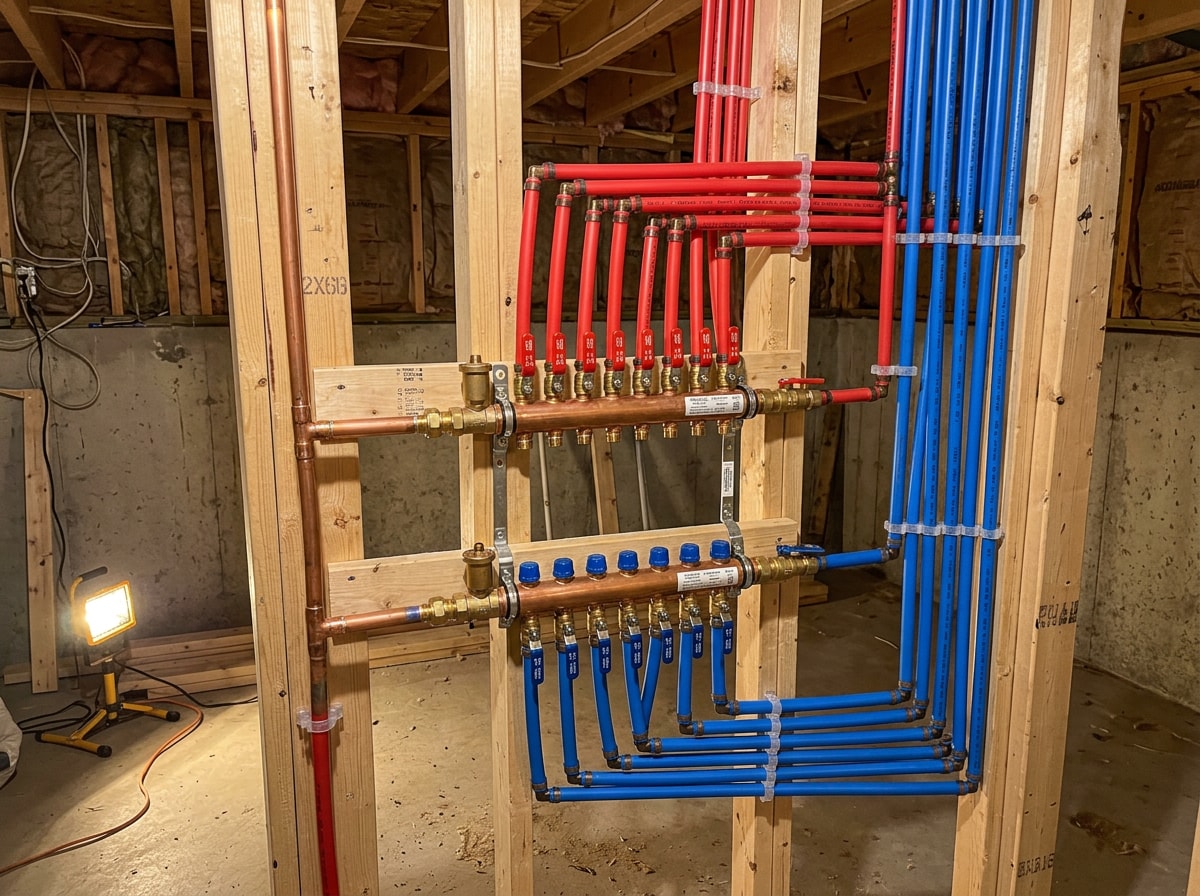
PEX must be secured at regular intervals, and plastic clips are the standard choice over metal staples, which can abrade the tubing over time. Manual and pneumatic clip guns shoot plastic clips that hold tubing to subfloors, walls, or framing, keeping runs straight and cutting down on vibration noise. Foam staplers serve a similar role on radiant floor systems, holding tubing in place before the pour or finish flooring goes down.
Support spacing isn't a matter of preference. PEX tubing must be supported at distances not exceeding those in the code's support table, with a maximum horizontal support spacing of 32 inches and maximum vertical support spacing of 10 feet for sizes 2 inches and smaller . Local amendments can tighten those numbers further, so check with the Eastland County building department before final inspection. The full table is published in the International Plumbing Code under Section 308.5.
Tool Comparison: Crimp vs. Clamp vs. Expansion vs. Press
Choosing between the main PEX connection methods usually comes down to upfront tool cost versus long-term speed per joint.
| Connection Type | Typical Tool Cost | Cost Per Joint | Best For |
|---|---|---|---|
| Crimp | $40–$150 | Pennies (copper ring) | Occasional repairs, budget builds |
| Clamp (cinch) | $50–$180 | Low (stainless clamp) | Repair-heavy work, easier removal |
| Expansion (PEX-A) | $150–$400 | Seconds per joint, no separate gauge step | Whole-house repipes, new construction |
| Press-style | $500+ | Fast, brand-specific jaws | Professional crews, high-volume jobs |
For most single-repair jobs, a crimp or clamp kit is still the more budget-friendly entry point. Expansion tools cost more upfront, but once you're set up, each joint takes only seconds to form, with no separate gauge-checking step. That's part of why expansion has gained ground on new-construction repipes, though all four methods remain code-approved when installed correctly.
If a project goes beyond a single fixture repair and starts involving trenching, a new water line to a septic system, or tying into a well, that's usually the point where it makes sense to bring in a crew rather than add another tool to the cart. Our team handles the excavation and site prep side of those jobs, including site preparation and septic system installation across Eastland County. For a deeper look at how PEX fits into a whole-house repipe, see our guide to plumbing system installation in Eastland, TX.
FAQ
What is the most important tool for PEX plumbing?
For PEX-A installations, the expander is generally the most important tool, since it creates the expansion at the tubing end needed to grip the fitting securely. Crimp or clamp installers should treat their crimping tool or cinch tool as equally essential for their chosen system.
Can I use a regular pipe cutter for PEX tubing?
No. A regular pipe cutter can crush or deform PEX tubing. A dedicated PEX cutter slices cleanly through the tube without damaging the tubing walls.
Do I need a special tool to bend PEX tubing?
A PEX tubing bender creates precise, consistent bends without kinking the pipe. Small-diameter PEX can sometimes be hand-bent within the manufacturer's bend-radius limits, but a bender reduces the risk of weak spots at the bend.
What is a PEX fusion machine used for?
A PEX fusion machine uses heat to fuse tubing directly to fittings, creating a permanent, very strong connection. It's mostly a commercial-grade tool rather than something typical homeowners need.
Do I need different tools for PEX-A and PEX-B?
Yes, partly. PEX-A is the only type that can be expanded, so expansion tools only work with PEX-A. Crimp tools work across PEX-A, PEX-B, and PEX-C (except PEX-AL-PEX), so a crimp kit is the more universal starting point if you're not sure which PEX type you'll be working with.
Can I connect PEX without a crimp or expansion tool?
Yes, with push-to-connect fittings. They let you join PEX, copper, or CPVC by hand with no crimping, cinching, or expanding. They cost more per fitting and some local codes restrict using them inside closed walls, so check with your inspector before relying on them for a permanent repair.
If your Eastland, TX project has grown from a repair into a full water line or septic tie-in, get a free estimate from Henderson Land Services. We're a family-owned excavation and site-utility crew serving Eastland, TX and the surrounding counties, and we'd rather talk through the scope with you before you buy a tool you won't need twice.