A toilet running in Weatherford, TX is rarely just background noise. It's wasted water, a higher bill, and, for the many Parker County homes on a septic system, extra gallons flowing into a tank that wasn't sized for constant flow. Here's how to diagnose it, fix it yourself in most cases, and know when the problem is bigger than a worn part.
Why Weatherford Toilets Run More Than You'd Expect
Two local factors make running toilets a frequent complaint here.
First, much of Texas tests hard to very hard for dissolved minerals. The U.S. Geological Survey explains that hardness is caused by compounds of calcium and magnesium, and by a variety of other metals , and those minerals coat rubber flappers and fill-valve seals until they can't seal tight anymore.
Second, a large share of homes across Stephenville, Weatherford, Granbury, and the surrounding ranch country run on septic rather than city sewer. A toilet that cycles all day isn't just a water bill problem on a septic property. It's extra volume hitting a tank and drainfield built around normal household flow.
That combination, mineral wear plus septic dependence, is why a "simple" running toilet here deserves a faster look than it might in a city on a municipal sewer main.
Diagnosing the Problem Before You Touch Anything
A running toilet in Weatherford almost always fits one of three patterns:
- Ghost flushing – the tank refills on its own every few minutes with no one using it
- Constant running – water never fully shuts off after a flush
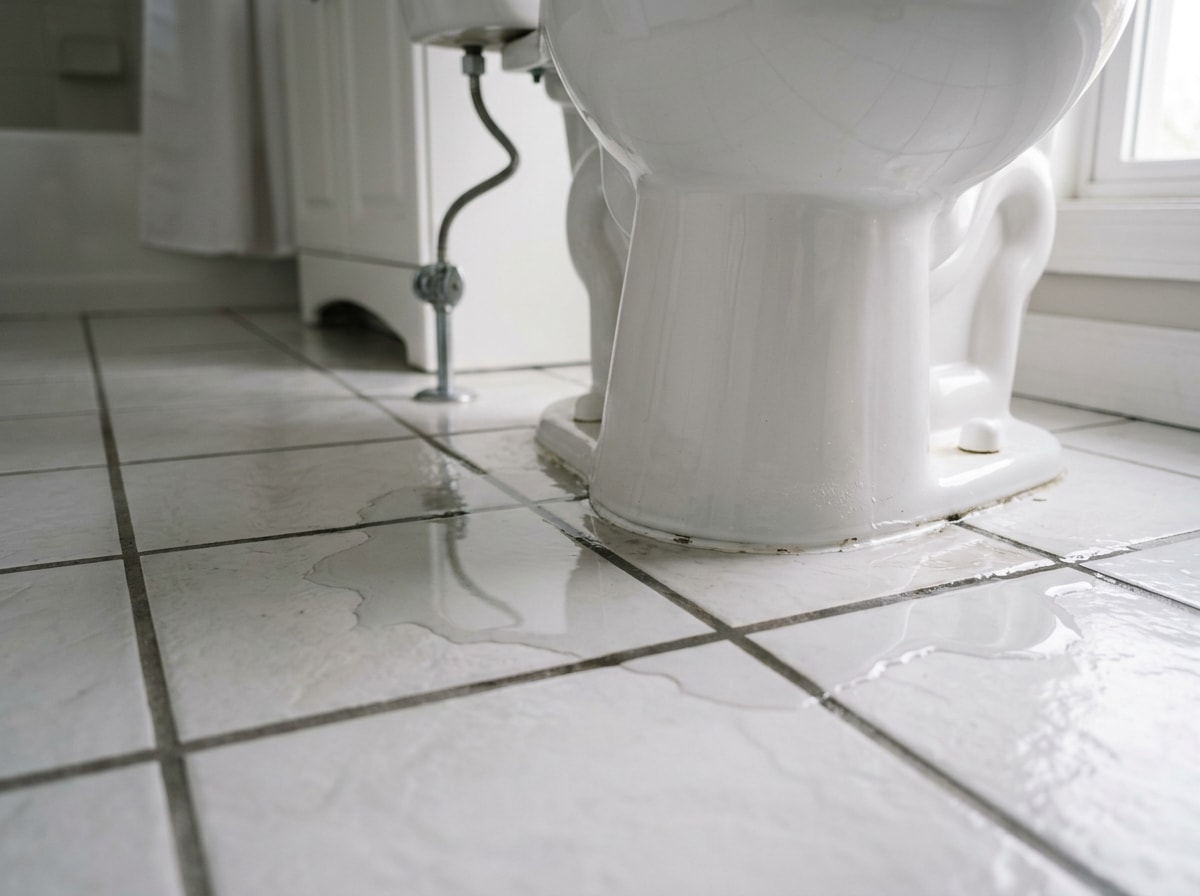
- External leak – water appears outside the tank or pools at the base of the bowl
Find the shut-off valve behind the toilet first and know how to turn it clockwise. That one step keeps a running toilet from turning into a flooded bathroom floor while you sort out the cause.
| Symptom | Likely Cause | DIY or Call a Pro |
|---|---|---|
| Ghost flushing (tank refills periodically) | Worn flapper not sealing | DIY, flapper swap |
| Water running constantly | Fill valve or float misadjusted | DIY, usually manageable |
| Hissing with no visible leak | Fill valve wearing out | DIY, intermediate |
| Water pooling at the base | Tank-to-bowl gasket or wax ring leak | Call a pro |
| Running worsens after buildup | Mineral scale on seals | DIY first, pro if it recurs |
Fixing a Worn Flapper
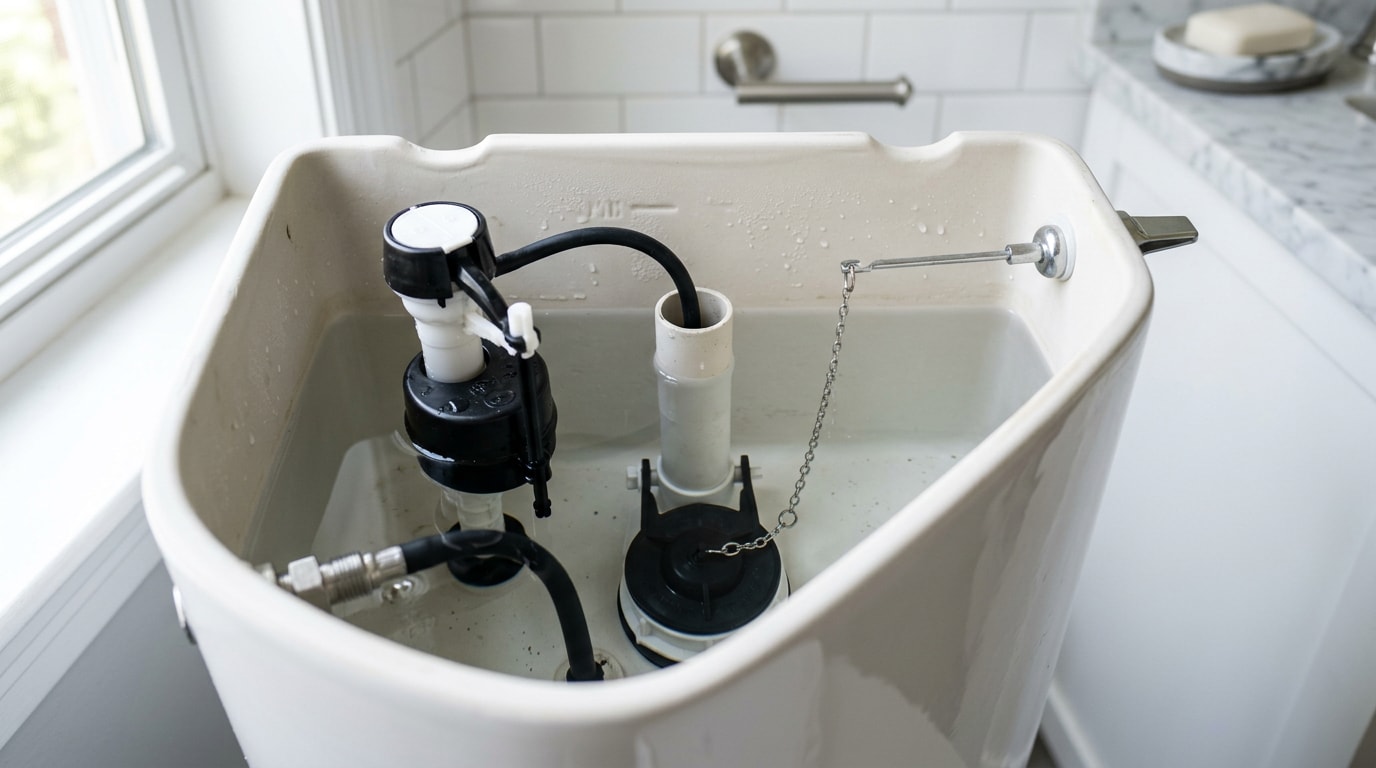
A worn flapper is the single most common reason a toilet keeps running, and it's also the cheapest fix. It sits at the bottom of the tank near the overflow tube and lifts when you flush.
Rubber hardens and warps with age and mineral exposure, which stops it from sealing. Replacing it takes about fifteen minutes and a few dollars in parts.
The EPA doesn't leave this to guesswork. Their guidance is specific: if the rubber flapper in your toilet tank is more than five years old, replace it with a new one, as worn flappers can cause toilets to run or have silent leaks . That five-year mark is a useful rule of thumb even if the toilet sounds fine right now.
Fixing a Fill Valve
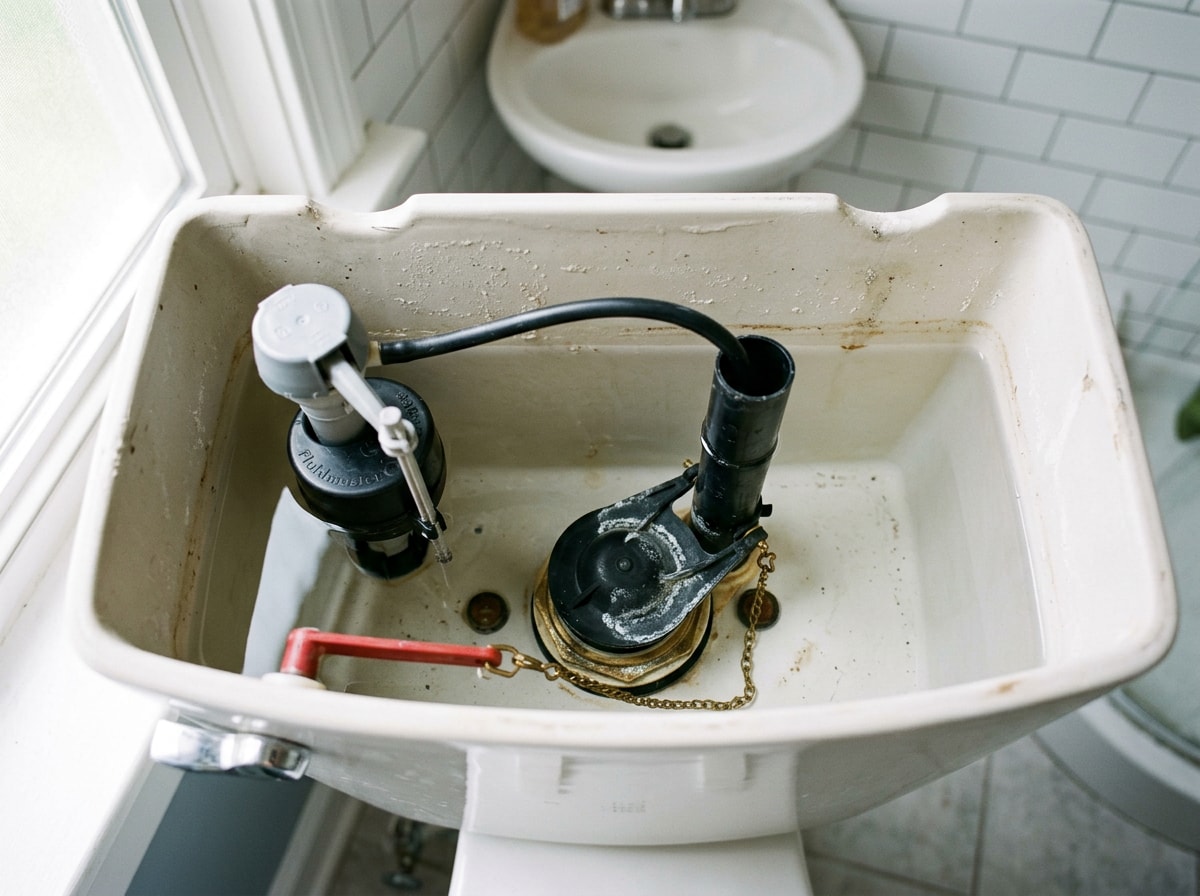
A failing fill valve usually announces itself with a faint hiss or water trickling into the overflow tube with no one flushing. It's the second most common cause, right behind the flapper.
The fix is a fill valve replacement plus a float adjustment to set the correct shutoff height. Universal kits fit most standard tanks and this is a manageable weekend job for most homeowners. For a labeled breakdown of every part inside the tank before you start, our toilet plumbing diagram guide walks through each component.
External Leaks: When It's Not a Tank Problem
If water shows up outside the tank or around the base, you're likely looking at a tank-to-bowl gasket leak or a failed wax ring, not an internal part. That means pulling the tank or the whole fixture to reseal it correctly.
This is where we'd tell you to call a plumber rather than attempt it yourself. Disconnecting water lines and resetting a toilet on a fresh wax ring is unforgiving work, and a bad reseal just repeats the leak in a few months. Left unaddressed, it also risks subfloor rot, which costs far more than the original fix.
When a Running Toilet Points to a Septic Problem, Not a Toilet Problem
Here's the piece most running-toilet guides skip: on a septic system, the toilet itself may be fine while the symptom (constant cycling, slow drains, a soggy spot near the drainfield) is actually the tank or drainfield reaching capacity.
Septic systems in Texas are regulated as on-site sewage facilities, and the state's program covers everything from permitting, maintenance, and construction requirements for on-site sewage facilities, including septic systems , under the Texas Commission on Environmental Quality. A system that's undersized, aging, or already near its limit won't handle the extra daily gallons a running toilet adds on top of normal use.
If a running toilet shows up alongside slow drains elsewhere in the house, standing water near the yard's drainfield, or a tank that hasn't been inspected in years, that's a signal to get the septic system itself evaluated, not just the flapper.
This is where our crew's day-to-day work overlaps with plumbing. We're not a plumbing company, but we are a licensed septic site evaluator, and Henderson Land Services is a family-owned dirt work and septic contractor based in De Leon, TX, with brothers Garrett and Dustan Henderson delivering excavation, drainage solutions, and conventional and aerobic septic system installation across Central Texas . We've walked enough Parker County properties to know that a "toilet problem" homeowners call about sometimes turns into a drainfield inspection once we're on site.
If any of that sounds familiar, start with a septic site evaluation or browse our septic system contractor services before the problem grows past a flapper swap.
Drainage Issues That Mimic a Running Toilet
Standing water near the foundation, a soggy yard patch, or a slow-draining line can sometimes get blamed on a "running toilet" when the actual culprit is poor site drainage pushing water back toward the house. If water keeps finding its way to the same spot no matter what you fix inside, our drainage solutions team can grade the problem out at the source instead of patching it indoors repeatedly.
DIY vs. Calling a Professional
- DIY: ghost flushing, hissing fill valves, flapper swaps, float adjustments
- Call a licensed plumber: external leaks at the base, flange damage, anything requiring the tank or bowl to come off
- Call a septic or excavation crew: recurring running-toilet symptoms paired with slow drains, yard saturation, or a septic tank that hasn't been inspected in 3+ years
Get a Free Estimate
If the DIY fixes above don't solve it, or if you suspect the real issue is on the septic side, get a free estimate from our crew. We serve Weatherford and the surrounding area, along with Stephenville, Granbury, Brownwood, and Dublin. You can also see examples of completed septic and drainage work on our projects page or start at the homepage for a full list of services.
FAQ
How much does it cost to fix a running toilet in Weatherford, TX?
Most flapper or fill-valve repairs cost between $75 and $250 in parts and labor if you hire it out, and only a few dollars if you do it yourself. External leaks at the tank-to-bowl seal or base run higher because the fixture has to come apart and go back together correctly.
Why does my toilet keep running constantly?
A worn flapper or a fill valve that won't fully shut off are the two most common causes. Mineral buildup from hard water speeds up that wear, which is why the EPA recommends replacing flappers older than five years even if nothing seems wrong yet.
Is a running toilet a plumbing emergency?
Not usually in the urgent, call-right-now sense, unless water is actively pooling on the floor. But the water waste adds up fast, and on a septic system, ignoring it for months adds unnecessary load to a tank and drainfield that are already working.
Can a running toilet overload my septic system?
Yes, if it runs long enough. A septic system is sized around normal household water use, and days or weeks of a cycling toilet pushes extra gallons into the tank every single day. If you're also seeing slow drains or a soggy drainfield area, it's worth getting the system checked rather than assuming the toilet fix solved everything.
How long do toilets last in Weatherford, TX?
Toilets themselves typically last 15 to 25 years, but hard water shortens the life of internal rubber and plastic components to closer to 10 to 15 years. That's a more useful number for deciding when to replace parts versus the whole fixture.